
Supply Ministry source: Mobile number registration to be prerequisite for access to household subsidies

The Supply Ministry is planning to suspend access to subsidy cards — through which around two thirds of the population can claim household commodities at a discounted price — for any beneficiaries who do not register their mobile phone numbers with the ministry, a source from the ministry told Mada Masr.
Yet, Supply Minister Ali Meselhy affirmed last week that no beneficiary will be suspended for not registering their mobile number, pointing out that the ministry is only taking this measure to update its database and provide better services to citizens.
In March, the ministry began a process of filtering its database of subsidy card beneficiaries. Instructions were printed on the vouchers exchanged for subsidized bread, informing holders that they must visit ration offices to submit the income-related data listed on the voucher.
The information required includes a statement of the comprehensive household income, proof that they do not own a 2018 or later car model, national identity information for all members of the household, and finally, a mobile number to link to the subsidy card.
The government plans to finish collecting data before the end of the current fiscal year, on June 30, “to ascertain who is eligible” for the subsidy cards, according to the ministry source, who spoke to Mada Masr on condition of anonymity.
According to the same source, who is well-connected to the process of updating subsidy card data, the ministry wishes to implement a subsidy card system more similar to bank card systems by establishing a “digital identity” for all card holders.
Ideally, the source said, the ministry will then be able to contact citizens directly through text messages to provide updates on the status of their card, the suspension of a particular household member’s subsidy quota, or the suspension of the card entirely in the event that its holder becomes ineligible for subsidies.
The ministry also wants to use the process as a measure to ensure that the card holder — normally the primary earner in the household — is the same person the card is officially registered to, said the source, noting that in a lot of cases, the actual person the card is registered to is found to be deceased.
Following previous attempts to tighten the database of beneficiaries, in which the ministry said it was looking to erase the data of deceased cardholders, criticism has been leveled at the ministry for inaccurately or randomly nullifying cards.
The next stage of updating the data will target private sector workers who hold subsidy cards, the same source said, noting that the current data-collection process is only intended for public sector employees. There will be a follow up registration phase for all those who could not register during the first data collection period, or those whose income or social status no longer qualify them for government subsidies.
“The Social Justice Committee has not yet settled on the final number of subsidy card beneficiaries, as all data will be reviewed by “higher authorities” with the participation of “administrative control” before the decision is announced.
Yet, given the prevailing economic circumstances, the process is to be extended over the coming FY 2022/23. Amid spiraling global inflation, worsened by the economic repercussions of Russia’s invasion of Ukraine, the base of the population vulnerable to the rising cost of living has broadened, prompting the Cabinet committee on social justice, which includes the ministries of supply, finance, planning, solidarity, communications, military production, local development, and the Administrative Control Authority, to push back the deadline of data collection.
The draft general budget for the coming FY 2022/23, of which Mada Masr reviewed a copy, shows an eight percent drop in allocations for food commodity subsidies. With inflation expected to hit nine percent for FY 2022-23 according to projections in the draft, real expenditure on food commodity support will decrease by 17 percent.
The draft provides for the removal of 200,000 Egyptians from the subsidy card system.
The Supply Ministry has been undertaking efforts to whittle down the number of eligible beneficiaries for years. At the end of 2016, Egypt announced a program meant to reform the system by removing people whose income was determined to be above a certain threshold. Since then, the standards by which people are made ineligible have been repeatedly amended.
In December 2021, President Abdel Fattah al-Sisi declared that the government will likely stop issuing new subsidy ration cards to newborns and will limit the number of beneficiaries to two family members per card, stating that state expenditures on the subsidy card system are holding the country back.
أخبار ذات صلة
Egypt’s new budget: Electricity subsidies boosted by 2900% alongside slashes to fuel subsidies
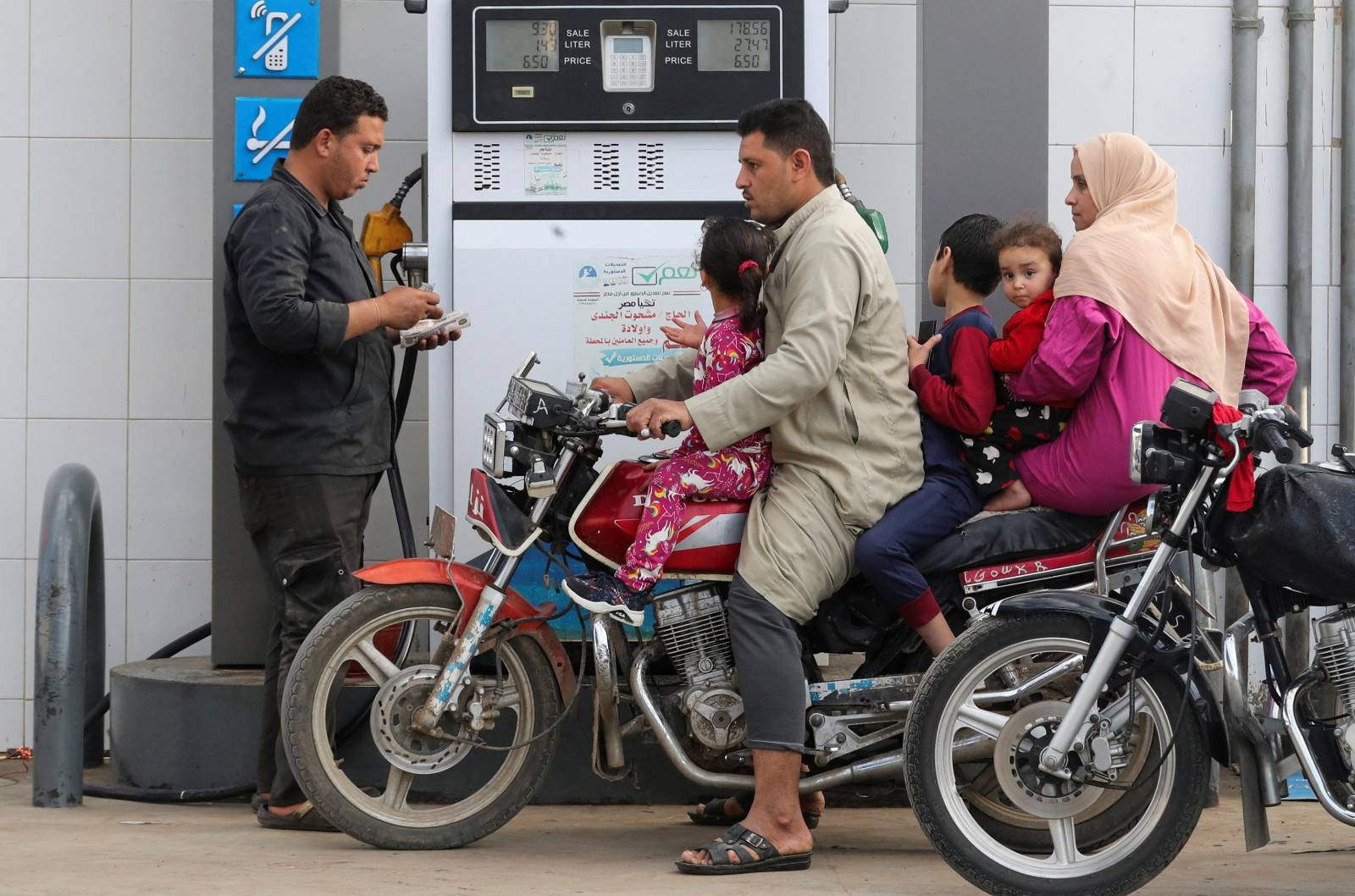
The Egyptian government plans to cut spending on fuel subsidies by more than 51 percent, a Cabinet statement on the draft budget…

Egypt launches program to fortify subsidized bread against iron deficiency
A source in the Supply Ministry said that the fortified bread will be distributed in 13 governorates
Exporters seek to reverse govt plans to condition subsidies on conversion of revenues into Egyptian pounds
Export councils are seeking a meeting with Prime Minister Mostafa Madbuly within the next two weeks to push against the implementation of…

Supply Ministry introduces new penalties for bakeries, mills amid changes to bread subsidy system
Supply Minister Sherif Farouk imposed new regulations on the production of subsidized bread this week, introducing fines for bakeries and mills found…
Your support is the only way to ensure independent, progressive journalism survives.
You have a right to access accurate information, be stimulated by innovative and nuanced reporting, and be moved by compelling storytelling. Subscribe now to become part of the growing community of members who help us maintain our editorial independence.
Join us