
Sources: Egypt pushing for September meeting between Palestinian, Israeli leaders as US pressures Israel to loosen Gaza blockade
Egypt is working to bring about a meeting between the leaders of Israel and Palestine before the United Nations General Assembly convenes later this month, according to an Egyptian diplomatic source who spoke to Mada Masr.
According to the diplomatic source, who spoke on condition of anonymity, the impetus to resume talks is particularly strong given the urgency of addressing the dire conditions in the Gaza Strip. Sources also told Mada Masr that Israel is under pressure from the United States to ensure conditions in Gaza improve.
“The situation is unprecedented [in Gaza], especially after Israel temporarily suspended Egyptian efforts to rebuild the city and, until last week, obstructed the passage of Qatari aid funds to the Palestinians,” the source said.
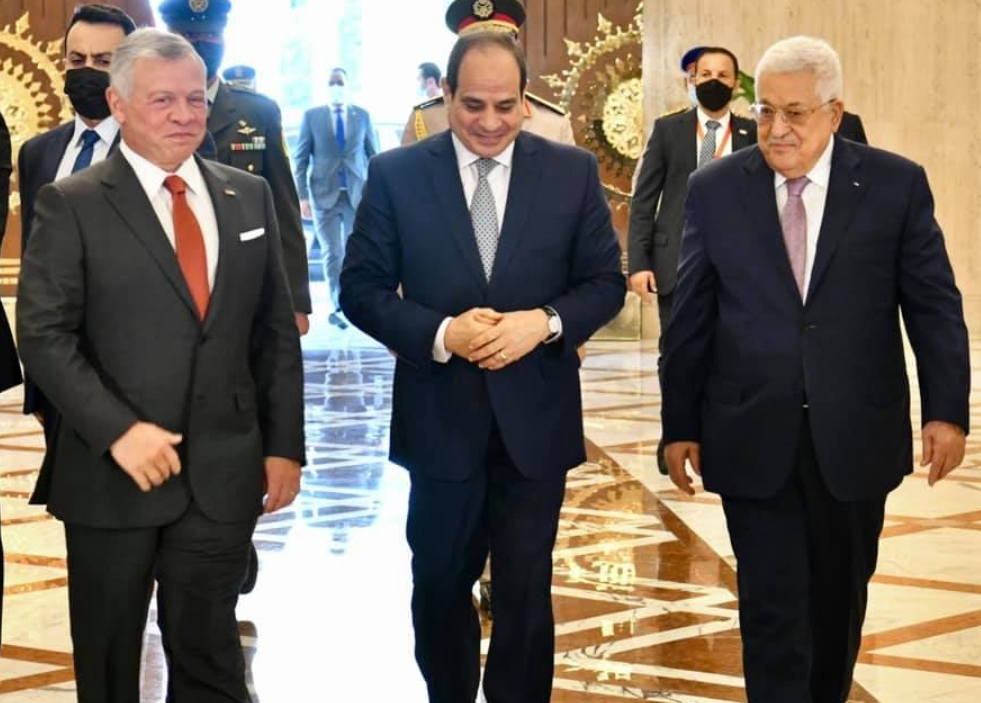
A meeting on Thursday between Egypt’s president and the premiers of Jordan and Palestine was broadly intended to push for peace talks between Israel and Palestine and for the relaunching of the Palestinian reconciliation process, according to the source, who added that Egypt’s aim is to convene a meeting between the leaders of Israel and Palestine “to get things moving” before the UN General Assembly meeting in September.
The source clarified that Thursday’s summit comes against the backdrop of ‘pledges’ the Egyptian General Intelligence Service Chief Abbas Kamel got from Palestinian Authority President Mahmoud Abbas and Israeli Prime Minister Naftali Bennett during his visits to Ramallah in August where he sought to secure an agreement to relaunch Israel-Palestine negotiations. A security source told Mada Masr at the time that Israeli Prime Minister Naftali Bennett is set to visit Egypt in September, while Israeli media also reported at the time that Egypt’s GIS chief invited Bennett to visit Egypt on behalf of President Abdel Fattah al-Sisi.
The diplomatic source said that while it's unlikely a rapid solution will materialize, diplomats would be aiming to improve conditions for people living in occupied Palestine, particularly in the Gaza Strip where conditions have deteriorated rapidly.
Israel and Palestine’s foreign ministers were due to meet during the September UN assembly, said an Arab diplomatic source based in Washington, but it seems that a window has opened for a higher-level meeting. Egypt appears to be keen for the presidents themselves to meet: “It would be useful to hold a summit bringing together Abbas and Bennett to lobby for serious international support,” the source said.
The push for high level coordination comes as Gazans exert pressure on the border with Israel with protests against the blockade. After the disbursal of Qatari funds via the United Nations was stalled, Gazan groups launched protests on August 21, sending incendiary balloons into land occupied by Israel. Israel retaliated by launching airstrikes into the strip. So far, three Palestinians and one member of Israel’s border police have been killed in the clashes.
Washington DC put pressure on Israel to mitigate the humanitarian situation in the Gaza Strip during the Israeli prime minister’s recent visit to the United States’ capital, a well-informed Egyptian security source and the Egyptian diplomat both told Mada Masr. The diplomatic source also said that Director of the US Central Intelligence Agency Bill Burns had confirmed during his visit to the region in August that Washington supports Israeli restrictions on Gaza being lifted and supports the enhancement of security coordination between the Palestinian Authority and Israel.
The clashes threaten a shaky ceasefire, which Egypt helped to mediate, that brought an end to an 11-day battle during which hundreds of rockets were fired from the Gaza Strip into territory occupied by Israel while Israeli airstrikes ravaged Gaza, killing over 250 Palestinians, the majority of whom were civilians.
Exacerbating already poor conditions for around two million Palestinians stuck in Gaza, the airstrikes also destroyed and destabilized infrastructure in the strip, from the widely condemned targeting of Associated Press and Al-Jazeera press towers to the more insidious damage of 53 schools, six hospitals and 11 clinics and roads that were key logistical arteries.
Though Egypt pledged US$500 million in funds to reconstruct Gaza, with Qatar pledging the same amount, Israel has insisted that these funds should not be handed straight to the Hamas government in the strip.
An initial agreement was to see the money from Qatar distributed through the UN’s World Food Program directly to 100,000 families, with an initial $10 million chalked to arrive before the end of August. The funds, however, are yet to enter the strip.
After Gazans began to protest the blockade on August 21, Cairo put pressure on Hamas by temporarily closing the border crossing at Rafah to force leaders in Gaza to prevent fire balloons being launched towards Israel and to pave the way towards initiating political talks, the Arab diplomatic source in Washington told Mada Masr. Hamas eventually complied, especially after what the source said was a “critical phone call” from the head of Egyptian intelligence to Ismail Haniyeh, former Director of the Political Bureau of Hamas, described by the diplomatic source as “decisive.”
The Interior Ministry in the Gaza Strip announced that the Rafah crossing would be opened on an exceptional basis on August 26 to allow the return of those stranded on either side, while the crossing was opened on August 29 in both directions.
Three Palestinians were killed in a tunnel on the border between the Gaza Strip and Egypt, the Interior Ministry in Gaza announced on September 3, without explaining the cause of death. An informed security source who spoke to Mada Masr denied that coordination between Cairo and Hamas would be affected by the deaths.
Although niether Hamas nor any other factions directly connected Egypt to the three deaths, a number of media outlets affiliated with some Palestinian factions accused Cairo of spraying poisonous gas inside the commercial border tunnels south of Rafah, while some groups expressed “regret” at the deaths “especially given the cooperation of Gaza security services in protecting common borders with Egypt.” Yet, the security source denied to Mada Masr that this was the official position of Hamas or the official position of Islamic Jihad, the other main faction active in Gaza, adding that the deaths will not impede “the overall coordination with Hamas.”
Another security source denied that the three Palestinians were affiliated with Hamas. Hamas was informed at the time that Cairo will not tolerate any infiltration into its territories or any smuggling activities, said the source, especially at a time when the Rafah border crossing is open most of the time.
The source added that the crossing has not often been closed recently, and that when it has been closed, it was due to a lack of cooperation from Hamas in following through with its commitments regarding the truce with Israel. The source confirmed that there are “tensions from time to time” between Cairo and Hamas over a number of issues, including what they described as “some tough positions that Hamas adopts regarding some files, such as the calmness on the border with Israel,” but added that “in general, relations remain reasonable. And when things get very tense, there are high-level communications to contain the differences or reduce tension.”
Yet, with the Qatari funds still not forthcoming, incendiary balloons were once again launched from Gaza into Israel on Saturday.
The Egyptian diplomatic source and the Arab diplomatic source claimed that the block on funds was initially overridden after an August 29 meeting between Mahmoud Abbas and Israeli Defense Minister Benny Gantz in Ramallah, the first direct Palestinian-Israeli meeting in more than a decade, while reports at the time noted that Israel had agreed to disburse a $155 million loan to the Palestinian Authority.
Yet, Israeli media reported over the weekend that a meeting between the Qatari ambassador and head of the Hamas Political Bureau Yehia al-Sinwar saw the Qatari money held up once again, as Hamas did not approve the UN disbursal mechanism since it said Israel had altered the list of beneficiaries due to receive the funds.
أخبار ذات صلة
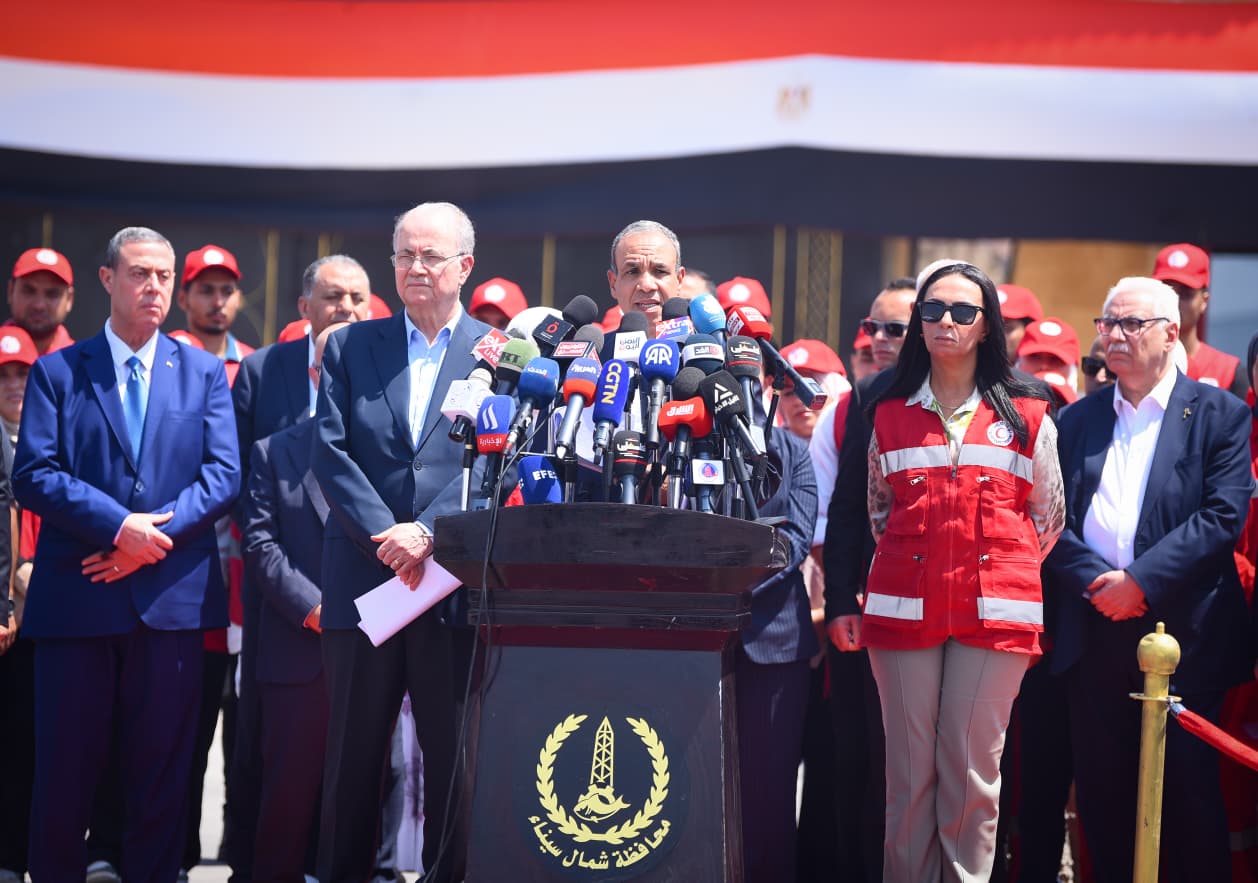
Abdel Atty sketches ambitious vision for PA governance in Gaza despite ‘prohibitive conditions’ preventing ceasefire
In a press conference held at the Rafah border crossing on Monday as Israeli forces advance on Gaza City, Foreign Minister Badr…
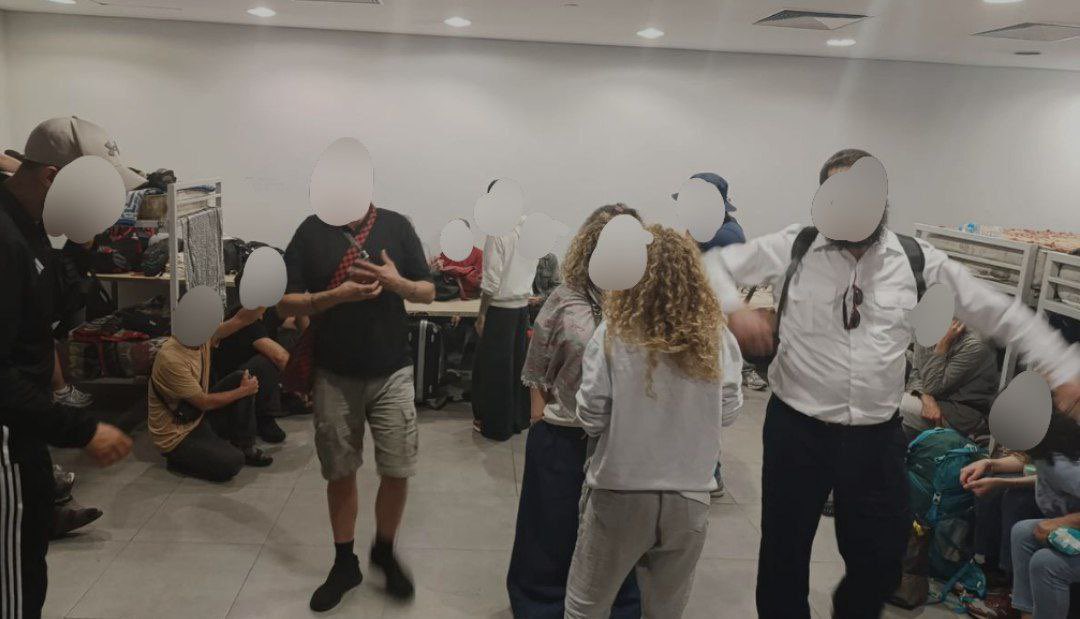
Cairo authorities detain, deport dozens of foreign nationals entering Egypt for Global March to Gaza
Though the march has been coordinated over recent weeks, Egyptian authorities remained tight-lipped
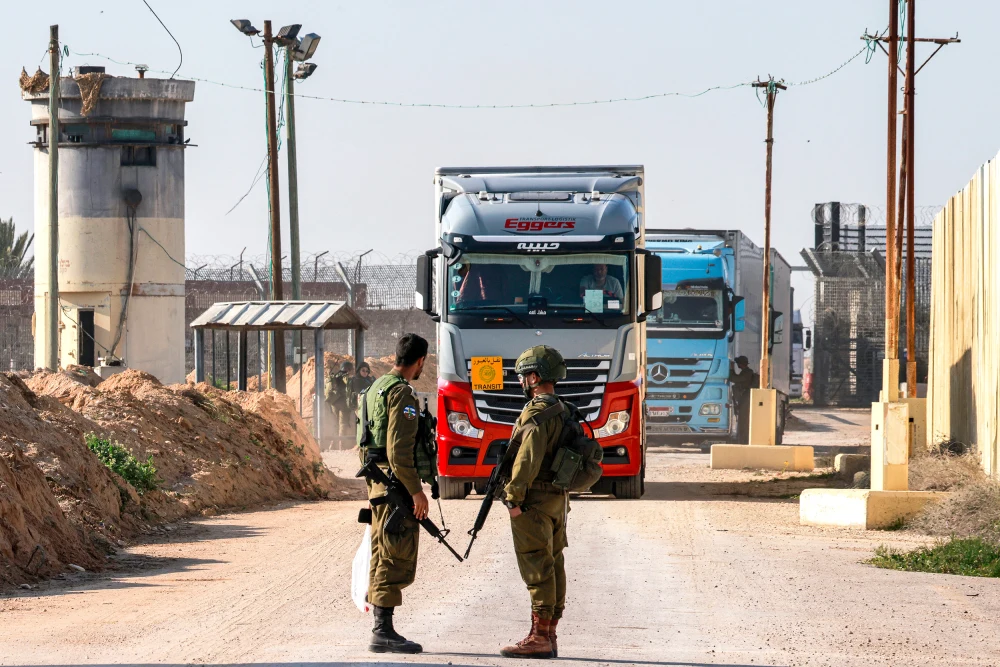
Egypt pushing for Gaza aid deliveries during hiatus to Israel’s attacks expected when Trump visits region
With wheels still spinning on the long-term truce proposal put forward last week, Egypt is pushing
Arab states sign off on Gaza reconstruction plan, postponing details to ‘as soon as possible’
The emergency Arab League summit concluded in Cairo with some Arab leaders notably absent
Your support is the only way to ensure independent, progressive journalism survives.
You have a right to access accurate information, be stimulated by innovative and nuanced reporting, and be moved by compelling storytelling. Subscribe now to become part of the growing community of members who help us maintain our editorial independence.
Join us