
Sisi decrees forming of legislative reform committee
Abdel Fattah al-Sisi issued his first presidential decree on Monday, forming what has been dubbed the “Supreme Committee for Legislative Reform,” with the objective of preparing and drafting new laws, decrees, and bills in compliance with Egypt’s 2014 Constitution.
This committee is to be presided over by Prime Minister Ibrahim Mehleb, who was housing minister under Hosni Mubarak.
According to details published in the Official Gazette, the “Supreme Committee for Legislative Reform” also includes the membership of the minister of transitional justice, minister of parliamentary affairs, chief justice of the state council court, Egypt’s state mufti, and the deputy chief of Al-Azhar, along with representatives from the ministry of justice, and cabinet advisors.
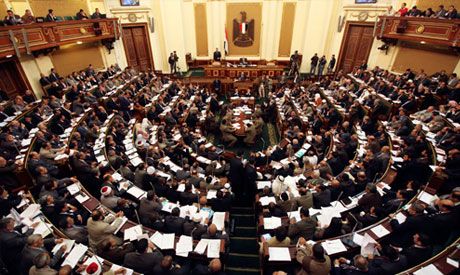
Also consisting of lawyers, professors of law, judges, and religious leaders, this committee appears to fill some of parliament’s functions in terms of its legal oversight — in the current absence of this legislative body of government.
The Supreme Constitutional Court dissolved the Muslim Brotherhood-dominated lower house of parliament (or People’s Assembly) — on technical grounds — in June 2012.
Two days after the military-led ouster of Islamist President Mohamed Morsi, the upper house of parliament was dissolved on July 5, 2013, by order of the then-Interim President Adly Mansour.
Before serving as Egypt’s interim president, Mansour was the chief justice of the Supreme Constitutional Court.
Egypt’s upper house of parliament, the Shura Council (or consultative council) was scrapped in the new constitution of 2014.
The official preparatory phase ahead of Egypt’s upcoming parliamentary elections is scheduled for mid July, although official dates haven’t yet been announced.

Your support is the only way to ensure independent, progressive journalism survives.
You have a right to access accurate information, be stimulated by innovative and nuanced reporting, and be moved by compelling storytelling. Subscribe now to become part of the growing community of members who help us maintain our editorial independence.
Join us