
Singing march in Aswan lands 24 Nubian protesters in detention
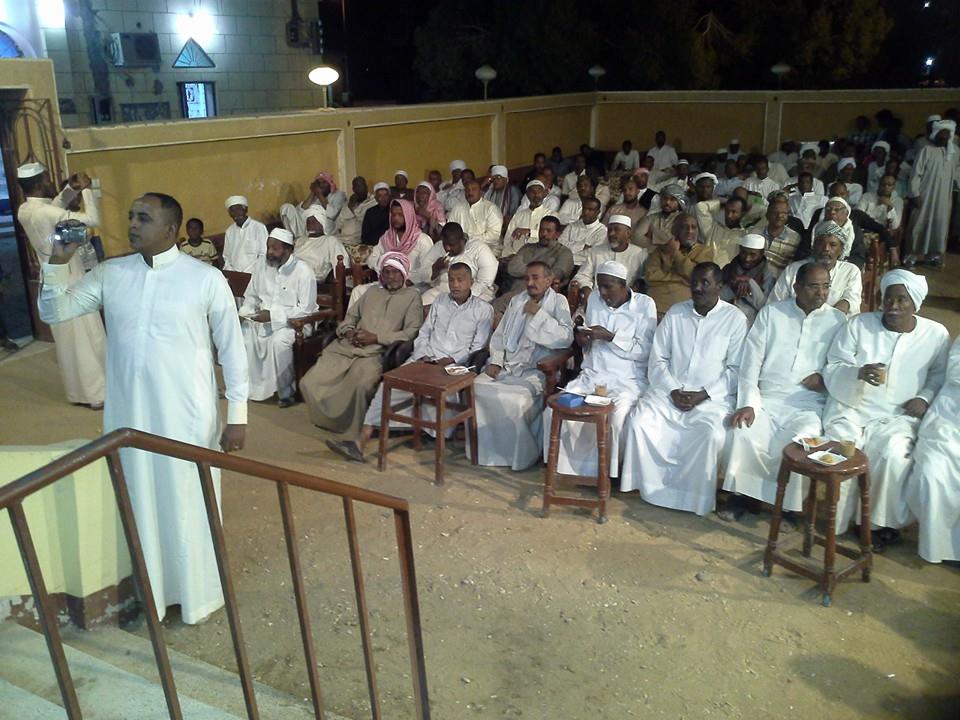
Twenty four Nubians were ordered to remain in detention for four days late on Monday, after they were arrested in Aswan on Sunday during a singing march over the return of their lands.
They were charged with inciting protests, protesting without a permit and obstructing public transport, Ahmed Rizk, a member of the Lawyers Syndicate in Aswan, told Mada Masr.
The march, dubbed “The Day of Nubian Assembly,” was organized to demand the return of Nubians to their ancestral lands, as mandated by Article 236 of the Egyptian Constitution, which states, “The state shall work on developing and implementing projects to return the residents of Nubia to their native areas and develop them within 10 years.”
The detainees were remanded by security forces in a camp outside Aswan and interrogated without lawyers before their whereabouts was revealed, lawyer Abdel Aty Abu Ters told Mada Masr.
The detainees include lawyers Mohamed Azmy and Mounir Bishara, president of the Egyptian Association for Nubian Lawyers.
Protesters had planned to head to the Nile Cornish in Aswan, but changed direction for Gezira Square due to a heavy security presence, Basma Othman, the sister of Mohamed Othman, one of the detained protesters, told Mada Masr. They were singing Nubian songs accompanied by drums when security forces stormed the protest and made several arrests, she explained.
The crackdown marks an “unprecedented escalation from the government” against Nubians, activist Fatma Emam Sakory says, explaining that Nubians are demonstrating because they have exhausted all means of acquiring the right to return to their lands through participation in government initiatives that have never materialized.
Nubian activists, such as Ashraf al-Ashmawy, a legal consultant for the former Transitional Justice and National Reconciliation Ministry, now part of the Parliamentary Affairs committee, participated in the drafting of a law guaranteeing Nubians the right of return. He and others are surprised it has never been enacted.
Nubians began mobilizing to ensure their constitutionally-mandated right to return after a 2014 decree threatened it. President Abdel Fattah al-Sisi issued decree 444, listing 16 Nubian villages within a military zone that civilians are not permitted to inhabit.
A number of Nubian activists were able to secure a recommendation from the State Council’s Advisory Committee last August that the decree be reversed.
Large numbers of Nubians were dispossessed from their lands originally by British occupying forces in 1902 during the building of the Aswan Low Dam, and subsequently when the dam was raised in 1912 and 1933, and again during the construction of the High Dam by former President Gamal Abdel Nasser in 1963-64.

أخبار ذات صلة

For organizing cultural event, Saudi court sentences 10 Nubian Egyptians to 10–18 years in prison
The event commemorated Nubians who fought in the October 1973 war
Rights organization calls for release of 10 Nubian Egyptian nationals detained without trial in Saudi Arabia
Rights organization calls for the release of 10 Nubian Egyptian nationals arrested in Saudi Arabia.
Upper Egypt development law shifts attention from Nubians’ constitutional right to return
A law approved by Parliament on Tuesday is set to bring "economic development" to Upper Egypt

Judges recuse themselves from Nubian activists case
Judges in the Nubian activists case recused themselves from the trial due to issues of impartiality
Your support is the only way to ensure independent, progressive journalism survives.
You have a right to access accurate information, be stimulated by innovative and nuanced reporting, and be moved by compelling storytelling. Subscribe now to become part of the growing community of members who help us maintain our editorial independence.
Join us