
Rules announced for parliamentary elections
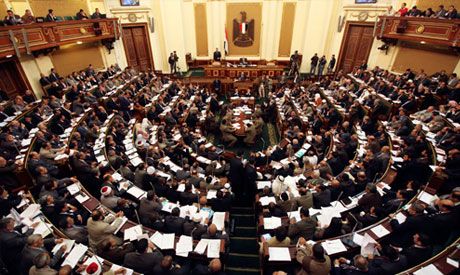
Following a delay of more than a year, the High Elections Commission (HEC) held a press conference on Sunday in which they announced regulations regarding the upcoming parliamentary elections process, which is scheduled to take place from September to December.
The voting process itself, both domestically and at Egyptian diplomatic missions abroad, is due to take place from October to November.
Egypt has not had an elected parliament since June 2012 when the Islamist-dominated People's Assembly was dissolved by order of the Supreme Constitutional Court. All state legislation has since been issued exclusively by the executive and judicial branches of government.
Head of the HEC, Judge Ayman Abbas, announced that Egypt would have an elected parliament by the end of 2015. Judge Abbas said that this election represents the country's third and last stage of "the political road map" drawn out by ruling authorities.
This "road map" previously included a constitutional referendum in January 2014 and a presidential election in May of the same year. However, parliamentary elections were due to take place six months after the issuing of the Constitution — starting from June 2014 (according to the provisions of Constitutional Article 230).
A previous attempt to issue a parliamentary election law via presidential decree was ruled unconstitutional on March 1.
During Sunday's press conference, the HEC spokesperson confirmed that elections would be held in accordance with lists of political parties as well as individual candidates. Specifics regarding these procedures are due to be revealed on Monday when the parliamentary elections law is published in the Official Gazette.
Laws, regulations and results are also due to be published on the official website of the HEC
Judge Abbas specified that the door to nominations would be open from September 1 for a duration of 12 days.
He added that the elections would be held in two stages. The first stage will be held on October 17 and 18 for overseas voters while domestic voters will cast their ballots on October 18 and 19. If need be, electoral run-offs would be held on October 26 and 27, while domestic run-offs would be held on October 27 and 28.
This first phase of elections includes 14 governorates including Giza, Fayoum, Beni Suef, Minya, Assiut, the New Valley, Sohag, Qena, Luxor, Aswan, the Red Sea, Alexandria, Beheira and Matrouh.
The second phase of elections will be held on November 21 and 22 for overseas voters and on November 22 and 23 for domestic voters. Run-offs will be held on November 30/December 1 and December 1/December 2 respectively.
The second phase of elections includes 13 governorates including: Cairo, Qalyubiya, Daqahliya, Damietta, Monifiya, Gharbiya, Sharqiya, Kafr al-Sheikh, Ismailia, Port Said, Suez, along with both North and South Sinai.
The HEC is tasked with assigning the electoral signs and symbols for these elections, along with physical evaluations of the candidate via medical examinations and assessments.
The HEC announced that priority in terms of electoral symbols and distribution would be granted to those candidates who apply first.
These differential priorities, along with differentials in the duration allotted for electoral campaigns, have already caused concern among candidates, voters and analysts alike. According to these regulations, some candidates would have both prominent electoral symbols along with longer opportunities for campaigning.

أخبار ذات صلة
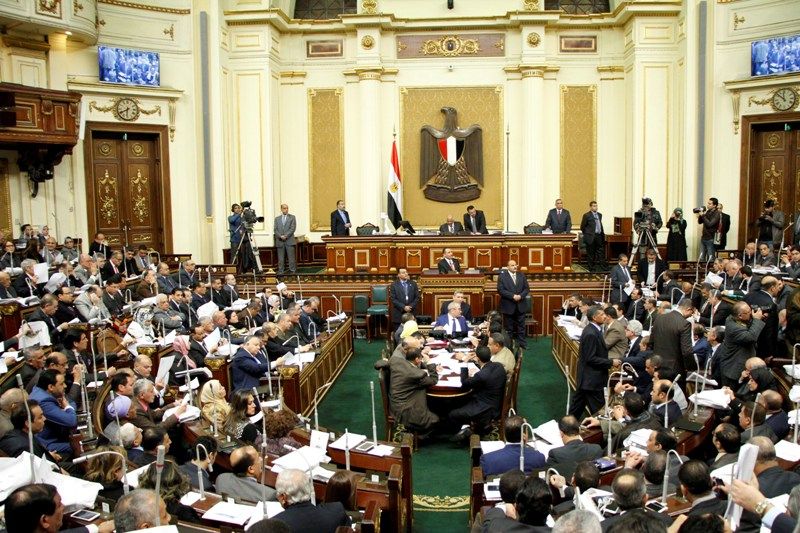
A presidential directive to freeze Parliament
New parliamentary formation to be engineered by the National Security Agency
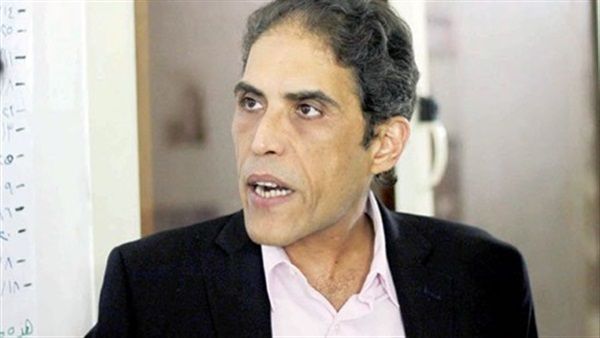
A disintegrating coalition: Rifts re-emerge after Dostour Party’s default leadership election
Rifts have re-emerged within the Dostour Party days after the default election of Khaled Dawoud as party president
Anatomy of an election
"For the Love of Egypt … was born in this meeting. Yes, inside the Egyptian General Intelligence Agency. I was there, at the invitation of the presidency."
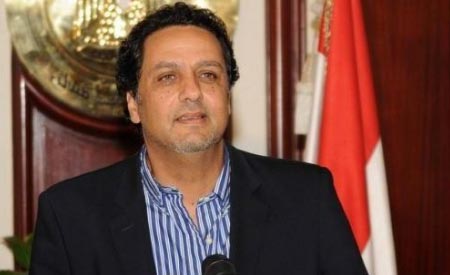
Hazem Abdel Azeem faces backlash following controversial testimonial on parliament
Telecommunications professor and liberal politician Hazem Abdel Azeem has been the subject of much scrutiny this week following a testimonial he published directly…
Your support is the only way to ensure independent, progressive journalism survives.
You have a right to access accurate information, be stimulated by innovative and nuanced reporting, and be moved by compelling storytelling. Subscribe now to become part of the growing community of members who help us maintain our editorial independence.
Join us