
Parliament selects temporary committee heads to hasten law-reviewing process

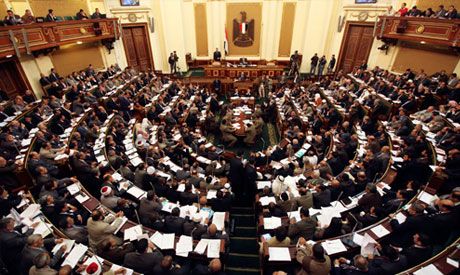
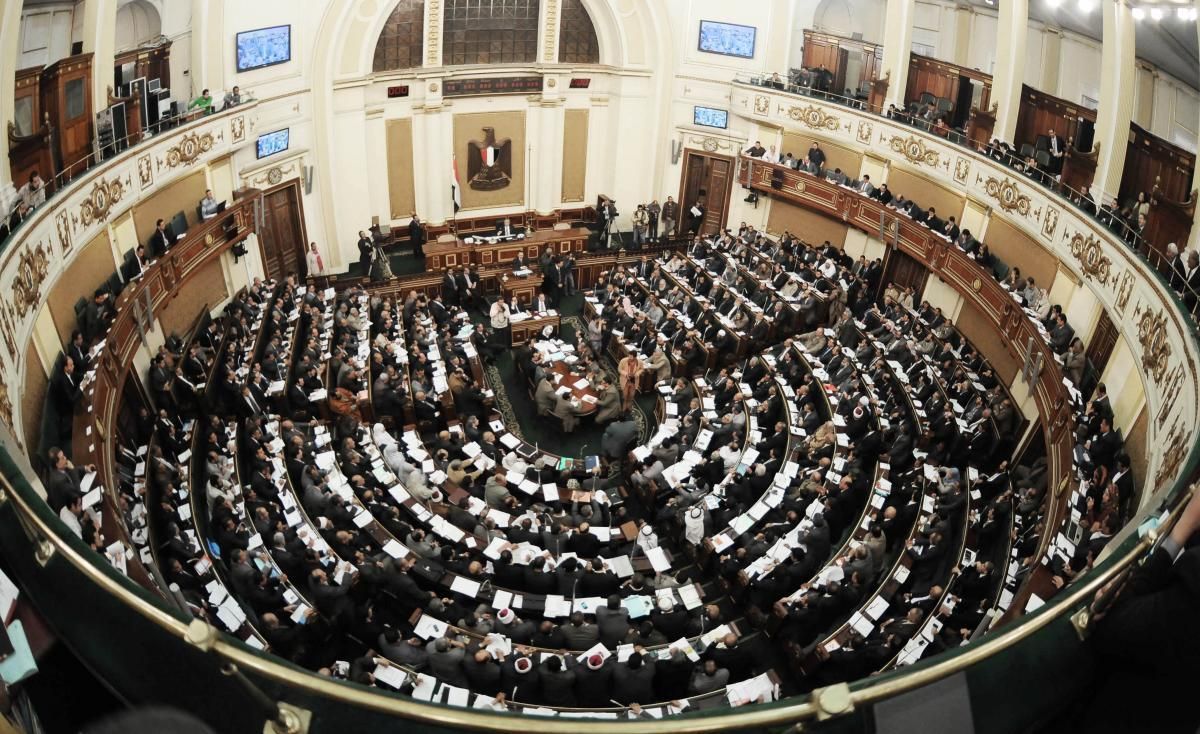
Members of parliament were allocated to 19 different committees on Tuesday and elected temporary committee heads to speed up the first task of reviewing laws issued by President Abdel Fattah al-Sisi and his predecessor interim President Adly Mansour.
Facing a tight deadline to revise over 300 laws issued since the ratification of the constitution on January 18, 2014, the legislative body decided to skip the election of committee heads and prioritize according to seniority, which led to some controversial selections. According to the constitution, parliament should revise all laws issued in its absence within 15 days of convening, which this parliament did on January 10. Laws that are not revised within this timeframe should be retroactively revoked.
After a stormy session on Tuesday, in which members refuted the speaker’s suggestion to form six temporary committees to revise the laws, parliament determined to create 19 committees and appoint temporary heads, who will later be replaced through elections.
The 19 committees formed relate to constitutional and legislative matters, planning and the budget, the economy, foreign relations, Arab affairs, defense and national security, suggestions and complaints, employment and the workforce, manufacture and energy, agriculture and irrigation, religion, culture and media, education and scientific research, health, transport, housing and facilities, local governance, human rights and youth and sports.
Mahmoud Yehia, head of the parliamentary block of the Nation's Future Party explained to Mada Masr that the general assembly rejected the speaker’s suggestion to have six committees because it wouldn’t allow all members to participate in the revision of the laws.
The parliament agreed on Tuesday to let the speaker and deputies compose the councils based on requests from members. They decided to temporarily appoint the oldest member in each committee as its head and the youngest as its secretary in order to save time.
Most notably, the head of the Zamalek Club, Mortada Mansour, ended up heading the human rights committee. This appointment was received by many with sarcasm, as Mansour has a history of making outlandish statements and fronting personal attacks against his opponents.
Among other controversial appointments is the 70-year-old parliamentarian Qassem Farag Abu Zeid, who told the privately owned ONA News Agency he's been working on youth issues for 35 years. "We have done everything for this new generation. I know what the youth needs and what their problems are," he said, adding that he wouldn't give up the position and would nominate himself for the role when the heads of committees are formally elected.
Lawyer at the Egyptian Initiative for Personal Rights’ civil liberties unit, Adel Ramadan, says this is one of the drawbacks to allowing members of parliament to determine which committees they wish to join themselves.
While the move could be seen as justifiable, given the tight timeframe, and parliament’s bylaws allow it, Ramadan emphasizes the importance of electing permanent heads of each committee after the laws have been revised.
There have been extended battles between various factions in parliament over who should head the committees, which isn’t reflected in the temporary arrangement. Independents ended up heading 10 committees, while the parties with the highest number of seats — the Nation's Future Party and Free Egyptians Party — were only represented in secretarial positions.
The Wafd Party’s Mohamed Abdo is heading the committee for culture and media, Youssef Abdel Dayem from the Conference Party is heading the health committee and Hassan Mohamed al-Sayed of the Nation’s Party is heading the transport committee.
Members who ran under For the Love of Egypt’s list, which has formed the largest parliamentary alliance, In Support of Egypt, are heading the committees for foreign relations, Arab affairs and defense and national security.
Although Ramadan says it’s too early to identify the power dynamics in parliament at this stage, it is starting to become apparent that the big partisan blocks, such as Free Egyptians, are being marginalized.
Each committee will discuss the laws relevant to it and present its recommendations to the general assembly following an internal voting process. All laws will then be put to a wider vote.

أخبار ذات صلة
What has happened to the NGO law?
More than 30 days have passed since Parliament approved the NGO law and there is still no word from the president. According to the Constitution, this is the deadline for the president to have a say on any law submitted to him.

Infighting among the Free Egyptians
The leading liberal party is drowning in internal disputes, as another post-2011 party disintegrates
MPs, Justice Ministry face off over contempt of religion article
Members of Parliament and the Justice Ministry are going head-to-head over Article 98 of the Penal Code, which criminalizes contempt of religion,…
Sisi approves Parliament bylaws
President Abdel Fattah al-Sisi has issued a decree approving the Parliament’s bylaws, thus putting them into effect, the state-owned Middle East News…
Your support is the only way to ensure independent, progressive journalism survives.
You have a right to access accurate information, be stimulated by innovative and nuanced reporting, and be moved by compelling storytelling. Subscribe now to become part of the growing community of members who help us maintain our editorial independence.
Join us