
New models for parliament proposed
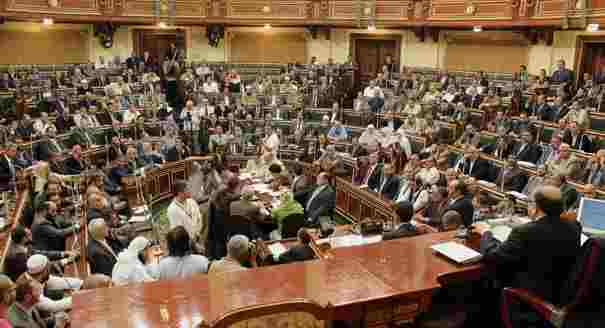
Amid on going discussions within the 50 committee tasked with drafting Egypt’s new constitution about the country’s ruling system, some commentators have been suggesting paths different from those under discussion among the committee members.
While the committee is talking about a mixed ruling system which allows for a majority of parliament to name the prime minister in a nomination that would be binding on the president, the way this parliament how would be elected is seeing controversy.
Before the January 25 revolution, the parliament was elected through the single winner system in which the now disbanded National Democratic Party (NDP) gained the majority in elections described as fraudulent, with a negligible appearance for the opposition. Egypt’s previous constitutions gave the president alone the right to name the prime minister.
The post revolutionary elections in 2011 employed a mixed system, whereby two thirds of seats were voted on according to a proportional list system, and one third according a single winner vote. Islamist forces were able to win a majority of 74 percent, with a very weak showing for for the former NDP, dubbed “feloul” or remnants of the old regime.
Hassan Heikal, a businessman and columnist, suggests a new elaboration for what he called a “parliament that increases accountability.”
“My suggestion is to form a parliament consisting of only 100 members instead of a parliament consisting of 500 members,” Heikal wrote in his column in privately-owned daily Al-Shorouk Wednesdsay.
Heikal says that the high number of parliament members means that people choose figures who do not know them well, which opens up the way for the influence of political money and interests networks. “But if there were only 100, the winner could be someone beneficial for Egypt, whether or not the vote was held according to proportional representation or winner takes all.”
He suggests that the new constitution could give the president the right to appoint 20 figures from among different political powers as liberal politician Amr Moussa, former Jama’a al-Islamiya leader Nageh Ibrahim and leftist lawyer Khaled Ali.
However, Diaa Rashwan, chairperson of the journalists syndicate and member of the committee of 50, suggests a different doctrine.
In an op-ed for privately-owned daily Al-Masry Al-Youm published in September, Rashwan proposed a mixed system election, whereby 450 seats would be chosen according to the old system and there would be a list of 120 members voted on according to proportional representation.
“I know that Egyptian popular culture generally prefers the single winner system as neither parties and voters are prepared to draw up programs that people will be convinced by,” he wrote.
However, he says that having a compiled proportional list could give the parties more room in terms of democratic practices.

أخبار ذات صلة

Interim period to be extended?
Drafters of the new constitution are considering major amendments to the so-called road map just one week before the draft is due…
Tamarod to compete in elections
The Tamarod campaign announced its intention to contest all seats in the next parliamentary elections at a press conference Tuesday. Tamarod is…
Two liberal parties to merge
The Social Democratic Party and Adl Party will hold a meeting next Sunday announcing the merging of the parties. The decision comes…
The acquiescing opposition
After former President Hosni Mubarak’s fall, non-Islamist political parties formed that self-identified as civil and democratic forces, and defined themselves largely in opposition against the interim military rulers and then…
Your support is the only way to ensure independent, progressive journalism survives.
You have a right to access accurate information, be stimulated by innovative and nuanced reporting, and be moved by compelling storytelling. Subscribe now to become part of the growing community of members who help us maintain our editorial independence.
Join us