
New import ban on tuk tuk parts could leave drivers, feeder industries and passengers stranded

As of Thursday morning, it became unlawful to import components of three-wheeled tuk tuk vehicles into Egypt, including their bases, chassis, and engines, after Trade and Industry Minister Neveen Gamea issued an executive decision.
Though the decision was preceded by a long-standing policy direction to curb the vehicles’ popularity, importers, manufacturers and traders said they were not informed of the decision before its issuance, expressing concern about the impact on the millions of households that rely on tuk tuks for transportation or for work.
Industry figures also questioned whether sufficient contingencies had been laid out by the government to protect those who will be left stranded by the ban, while commenting on the implications for investor confidence in the market.
In 2014, the Trade and Industry Ministry issued an order to stop all imports for trade purposes of complete tuk-tuks, motorcycles and their chassis.
Mostafa al-Mekkawy, the owner of a tuk tuk spare parts factory and member of the General Division of Importers told Mada Masr that before 2014, traders imported all the components in a single package that were then assembled in Egypt.
After 2014, however, 60 percent of the components were imported while feeder industries flourished as they met increasing demand for the remaining 40 percent of the parts, according to Mekkawy.
“The decision is catastrophic,” Mekkawy said, pointing both to the economic and the labor repercussions. Investments in manufacturing, from imports to assembly lines between 60 to 80 feeder factories, are equal to around LE5 billion, he said, while estimating that some 10 million people rely on tuk tuks for income as drivers, workers in feeder industries, or traders.
While 226,710 licensed tuk tuks have been estimated to operate on Egypt’s streets by head of economic statistics at the Central Agency for Public Mobilization and Statistics (CAPMAS), Mekkawy suggested the total number is likely closer to three million.
Mansour Kabbani, a board member of GB Auto which assembles tuk tuks in Egypt among other profit lines, told Mada Masr that big factories like GB Auto will only suffer a “hiccup” in operations, which they will be able to weather since they have major investments.
Feeder industries that manufacture spare parts for the vehicle will be hit the hardest, said Kabbani. These factories have no other alternative, he said, adding that within three months, they will all be out of work, as the remaining spare parts in the market are disposed of.
Samir Allam, deputy head of the Transportation Division at the Federation of Egyptian Industries, agreed that assembly companies would likely be easily able to recoup losses, and suggested that tuk tuk owners will be the most disadvantaged by the ban. They will be forced either to buy a minivan, which could well be too expensive for many, or to search for alternative work, he told Mada Masr.
The implications also reverberate through the broader market environment. Kabbani pointed out the reputational damage that the decision could cause Egypt’s investment climate. “GB Auto is listed on the Egyptian Exchange. If an investor suddenly finds that his share price has slipped by 10 percent because of a decision, how can you rest assured that he will invest here again?” Since the decision was issued, the price of GB Auto shares have dipped over 3 percent. The company issued a statement on Wednesday, reassuring its shareholders that it has begun “formulating alternative sale strategies.”
Despite a longstanding discussion at the policy level around phasing the tuk tuk out of Egypt’s transport environment, head of the Transportation Division at the Federation of Egyptian Industries, Ayman Saeed said that the decision came as a surprise, and that factories were not given prior warning.
While the division supports the decision, said Saeed, it urged the government to set a deadline for factories to adjust their workflows and dispose of their stocks to ensure that factories do not suffer losses as a result.
Gamea, meanwhile, said that the decision came after careful consultation between all concerned agencies, noting that the government had identified minivans as the appropriate replacement vehicle and would offer financial facilitations to tuk tuk owners under the presidential initiative to replace aging vehicles.
While steps have been taken to create a program whereby tuk tuks owners could swap in their vehicles for a replacement vehicle sanctioned by the initiative at a reduced rate, the framework is not yet in place.
Spokesperson for the vehicle-replacement initiative, Tarek Awad, told Mada Masr that a presidential mandate has been put in place to expand the base of the initiative to cater to tuk tuks and their owners, adding that the prime minister has formed a technical committee headed by the Trade and Industry minister whose task is to look into including the tuk tuk in the program.
In June, the Interior, Petroleum, Local Development, Environment, and Finance ministries began working in two tracks, said Awad. The first one was set in place to ensure that tuk tuks can be licensed like any other vehicle on the street, and the second to categorize minivans as a mass means of transportation instead of their current status as private passenger vehicles.
Once this is finished, tuk tuks can be included in the vehicle replacement initiative, and the entire plan, along with the financial facilitations, will be announced. Awad did not respond to the question about the precise time frame for the plan, however. He said that it would be in place "as soon as possible,” noting that the first three-year phase of the initiative began in January.
Without the infrastructure in place to replace the gap in the domestic transport network, it is not clear how commuters will cope at the local level, where tuk tuks are at their most functional. A 2015 study from N Gage Consulting, an economic and government consultancy, said that some 30 million citizens rely on tuk tuks as a means of transportation.
While speaking to Mada Masr, Kabbani wondered about what lies in store for passengers, particularly in the countryside where tuk-tuks are the main form of transportation. “Will they ride the monorail or the electric train?” he said.

أخبار ذات صلة
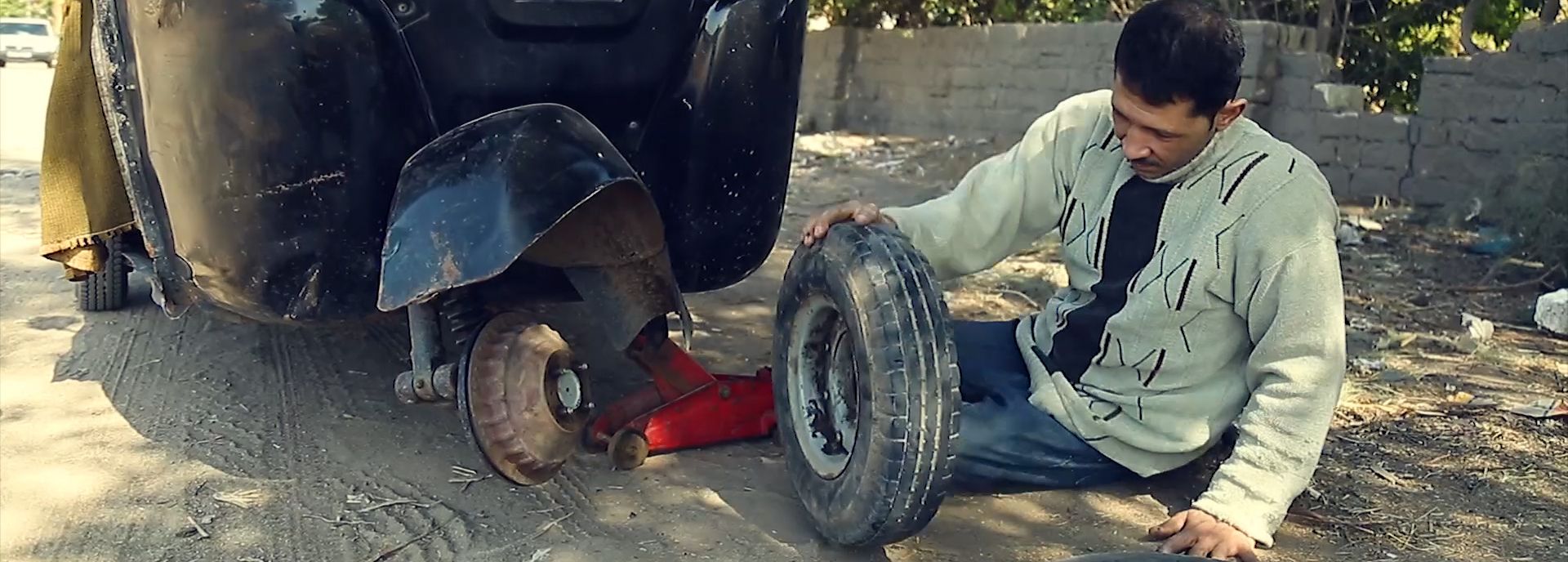
Video | Rizk
Mohamed Rizk was infected with poliovirus as a child, losing his ability to walk at an early age.
Funeral held in Monufiya for tuk tuk driver shot dead by police officer
After being hospitalized for nearly one week, tuk tuk driver Mohamed Abdel Razeq died of his injuries on Monday
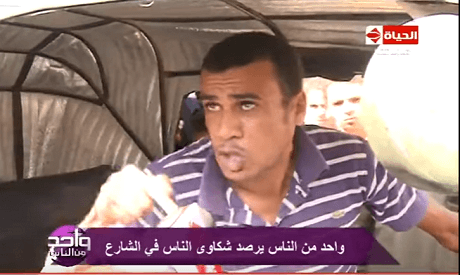
TV show goes on holiday following broadcast of contentious tuk tuk video
Amr al-Leithy, the television host of “Wahid min al-Nas” (One of the People), has temporarily suspended broadcast of his show for an…
Video of tuk tuk driver railing against the state goes viral
A video showing a tuk tuk driver airing his grievances about the economy and the Egyptian state has gone viral.
Your support is the only way to ensure independent, progressive journalism survives.
You have a right to access accurate information, be stimulated by innovative and nuanced reporting, and be moved by compelling storytelling. Subscribe now to become part of the growing community of members who help us maintain our editorial independence.
Join us