
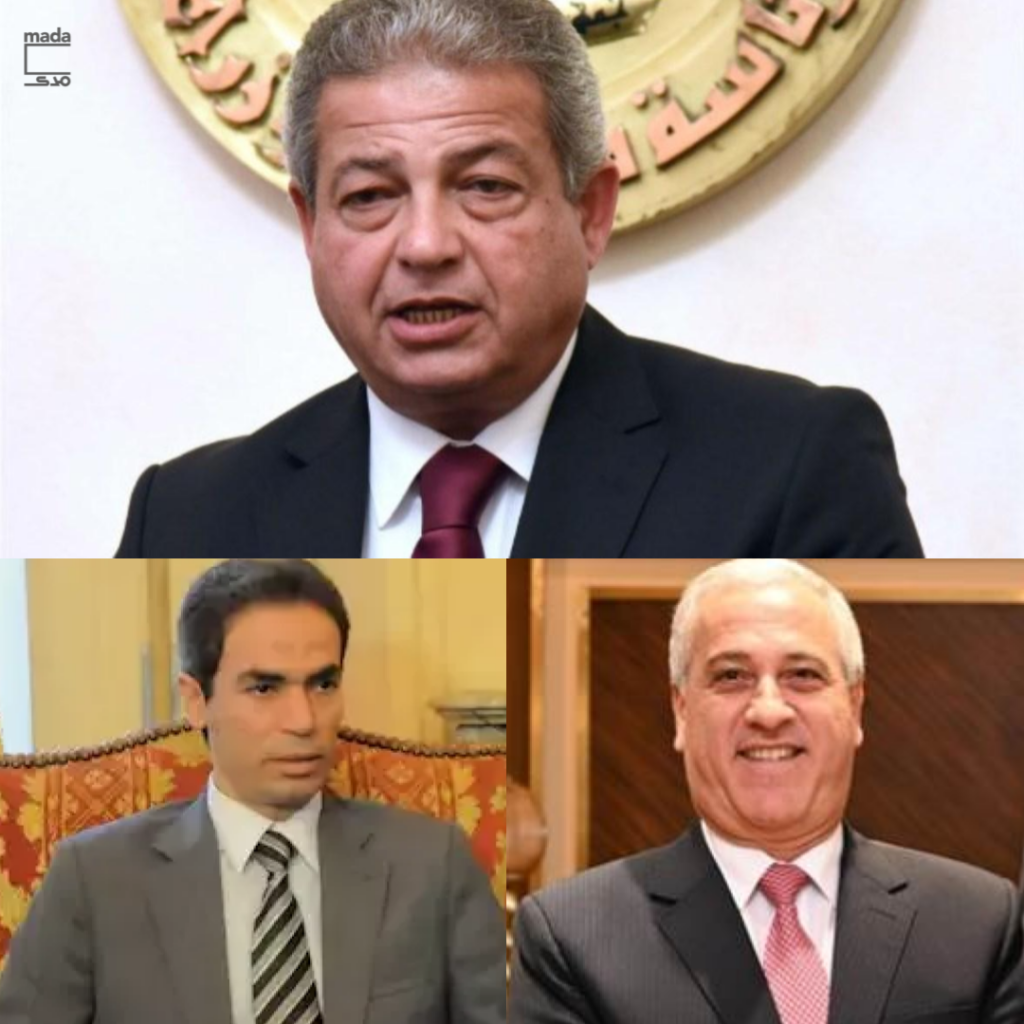
A new cast of media and judicial figures was appointed on Monday to the three bodies that monitor and regulate Egypt’s print and audiovisual media.
Since the bodies were formed in 2018, they have overseen a tightly controlled media landscape subject to careful state direction.
Commenting to Mada Masr, Mahmoud Kamel, a board member of the Journalists Syndicate, hoped that a new direction, more supportive of press and media freedoms, would emerge from the new representatives appointed to the three bodies.
Kamel acknowledged that the new appointments may not satisfy all parties or reflect a huge degree of intellectual diversity, but he expressed hope that the new leadership would recognize the independence of the press and media as representatives of the people, not the government or ruling system.
Under a presidential decree, the Supreme Media Regulatory Council will now be headed by Khaled Abdel Aziz, who also chairs the board of trustees at a state-aligned civil society agency and was formerly minister for youth and sports. The council oversees national and independent media and press in Egypt.
The National Press Authority for print media is to be headed by Abdel Sadeq al-Shorbagy, and the National Media Authority by Ahmed al-Moslemany.
The prior formulation of the Supreme Media Regulatory Council was headed by writer Karam Gaber. Its term came to an end earlier this year, with a five-month intermission preceding the publication of Presidential Decree 518/2024 in the Official Gazette on Monday, which formed the new council.
Abdel Aziz’s appointment came despite predictions that the current State Information Services head, Diaa Rashwan, would likely continue heading the body. A source close to the council speaking to Mada Masr on condition of anonymity said that Rashwan was initially among the leading candidates for chair, a view that was shared by sources within the security-led United Media Services conglomeration who spoke to Mada Masr back in June.
The first source said that the delay in issuing the decree was due to objections from a security agency to certain nominations for presidency and membership positions.
Abdel Aziz will be joined on the council by former Journalists Syndicate head and the former editor-in-chief of the state-owned Al-Ahram newspaper, Abdel Mohsen Salama, as well as the founding editor-in-chief of Al-Fagr newspaper, Adel Hammoud. Salama and Hammouda hold council membership as representatives of public figures.
Representing journalists is Youm7 Editor-in-Chief Ola al-Shafei, while former head of the Radio and Television Union Essam al-Amir is to represent media professionals.
Other members include the judge, Abdel Salam al-Naggar, who will represent the State Council, and Cairo University Media Professor Mona al-Hadidi and Hossam Saqr, who represent the National Telecommunications Regulatory Authority, both reappointed for a new four-year term.
Abdel Sadek al-Shorbagy is to remain in his position as the head of the National Press Authority, which manages national press institutions, until November 2028 under another new presidential decree.
The new decree also appointed as members of the NPA journalist Hamdy Rezk, former editor-in-chief of Al-Musawwar magazine; Alaa Thabet, former editor-in-chief of Al-Ahram; Amr al-Khayat, former editor-in-chief of Al-Akhbar Al-Youm; and Samy Mahrous, managing editor of Al-Gomhurriya.
Other appointees include Osama Abu Basha, representing national press institution workers, and writer Sahar al-Gaara, representing public figures. Judge Mohamed Fouad is to represent the State Council, and Yasser Samir Sobhi will represent the Finance Ministry.
Ahmed al-Moslemany is to take over from Hussein Zein as head of the National Media Authority, restructured under a third presidential decree. The National Media Authority oversees public media institutions and broadcasting and television and radio production services.
New members include media personalities Osama Kamal and Reham al-Deeb; Safiya Mostafa Amin, head of the board of trustees of the Mostafa and Ali Amin Foundation; and judge Hamada Mukarram, representing the State Council.
The authority also retained half of its members initially appointed in June 2020, such as Hala Hashish, representing the Media Syndicate, and Sami Saadoun, representing the General Union for Press and Media Workers. Representatives from the Finance Ministry and the National Telecommunications Regulatory Authority, Khaled Noufal and Waleed Zakariya, respectively, also remain in place.
Kamal, commenting on some of the more urgent matters for the three bodies to address, stressed to Mada Masr the need for the bodies to move beyond obstructing the licensing of independent media and blocking news websites.
Mada Masr is among dozens of media websites that have been subject to blocks inside Egypt.

أخبار ذات صلة
Court blocks appeal in Mada Masr’s battle for legal recognition
The administrative court refused the lawsuit earlier this year.
Saheeh Masr under investigation for exposing electoral media censorship
Saheeh Masr, an independent fact-checking outlet, is to be subject to immediate investigation by the state media watchdog, which has accused it…
On 6th anniversary of block of Mada’s website, State Council rejects lawsuit challenging license denial
Mada Masr intends to appeal the ruling before the Supreme Administrative Court
Four years late, media regulator submits rationale for rejecting Mada Masr’s license application
Mada Masr applied for a license in 2018
Your support is the only way to ensure independent, progressive journalism survives.
You have a right to access accurate information, be stimulated by innovative and nuanced reporting, and be moved by compelling storytelling. Subscribe now to become part of the growing community of members who help us maintain our editorial independence.
Join us