
Mahalla textile workers strike for 3rd day over unpaid bonuses
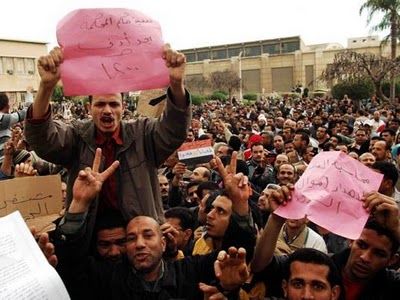
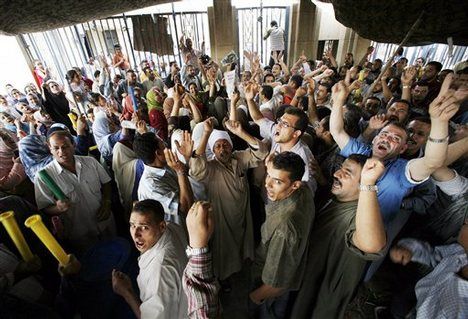
Hundreds of workers from the Mahalla Textile Company completed their third day of strikes on Thursday as they continue to demand their overdue annual bonuses, a labor leader told Mada Masr.
The strikers claim working conditions have steadily deteriorated, as the company — a leader in the sector — has purportedly lost 25 percent of operational capacity due to lack of government investments.
Workers’ demands included reforming the wage system, injecting more investment into the industry, paying annual bonuses at the scheduled time and implementing a new investment and production plan for the company to grow its operational capacity.
“The workers initially wanted their late bonuses, but the government’s reluctance to pay them pressured them to escalate their demands,” labor leader Faisal Lakousha explained.
The workers also call for the resignation of the company’s general commissioner his "unprecedented negligence" in failing to meet their demands.
A recent government decision to lift cotton farming subsidies has also taken a toll on the striking workers, who believe that the cuts will threaten the industry.
“This is a major mistake committed by the government and will pressure farmers to abandon cotton production. Where will we get raw material from to run the factories? Will we import raw materials as well?” Lakousha added, speculating that the government was intent on destroying the industry.
Since 2006, strikes by Mahalla textile workers marked the front line of the opposition movement against former President Hosni Mubarak’s administration. In 2008, a nationwide general strike was launched with similar demands to those of the current strike, leading to a vicious police crackdown against thousands of protesting workers.
Police forces killed several demonstrators and injured hundreds that day, which later was viewed as the birth of the April 6 Youth Movement. Within the next three years, the movement helped galvanize millions of Egyptians to take to the streets in January 2011 and demand bread, freedom and social justice.
Now, years after this robust opposition movement erupted, Mahalla’s labor movement seems stuck in a never-ending cycle of protests against government policies.
Mostafa Bassiouny, a leading figure in the Revolutionary Socialists movement who has led protest actions in Mahalla since 2006, told Mada Masr that the standoff between the workers and the government is due to shifting labor relations.
According to Bassiouny, public sector workers are accustomed to certain rules that structure their relationship with the government, a relationship that was institutionalized back in 1960s.
But “the government started to shift this working relationship, which is highly opposed by the workers” by ramping up economic liberalization policies over the last 20 years, he said.
The issue of bonuses is at the heart of the latest face-off, according to Bassiouny. Given the troubled structure of the Egyptian wage system, bonuses constitute an integral part of the workers’ wages.
“The government is intent on eliminating workers’ wages by refusing to pay the bonuses,” he asserted.
In 2003, amendments to the Labor Law gave factory owners wide powers that left workers at the mercy of businessmen, Bassiouny argued.
The confrontation is likely to continue, especially given the general crackdown on freedoms of assembly and expression with the recently passed and highly restrictive Protest and NGO Laws. But Bassiouny is optimistic that the labor movement can survive the crackdown, which has sent thousands to prison on politically motivated charges over the past year.
“State policies toward the labor movement have been always repressive, but it never negatively affected the movement. Workers continue to force the government into negotiations,” he asserted.
Workers survived Mubarak’s oppression, and then survived the Supreme Council of Armed Forces' (SCAF) 2011 decree banning labor strikes under penalty of military trial, Bassiouny pointed out.
“Workers also survived the Muslim Brotherhood’s crackdown under former President Mohamed Morsi’s administration, when the authorities forcibly dispersed labor strikes,” he said. “Under President Abdel Fattah al-Sisi’s administration, the state continues to arrest workers and disperse strikes, but the movement is still continuing to voice its demands, and nothing will stop it.”

أخبار ذات صلة
Ghazl al-Mahalla: Beleaguered public company steps up to help combat pandemic
The company's move will eventually increase domestic face mask production by nearly 30 percent
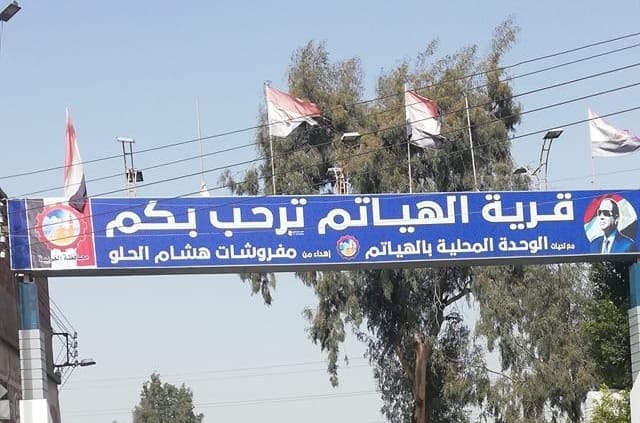
For locked-down village near Mahalla, solidarity and dignity are keys to surviving quarantine
Some Hayatem residents have chafed at the state’s intervention, choosing to organize themselves.
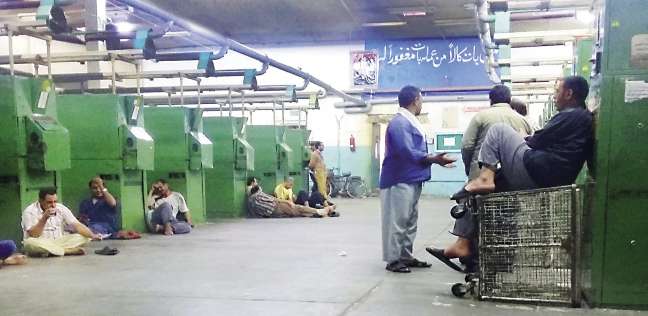
16,000 workers on strike at Mahalla Textile Company
Workers at the company have protested several times in the past decade, once every year from 2012 to 2015
Mahalla textile workers temporarily call off strike, 5 strike leaders face disciplinary hearings
Textile workers in Mahalla called off their partial strike on Wednesday, while 5 strike leaders face disciplinary hearings
Your support is the only way to ensure independent, progressive journalism survives.
You have a right to access accurate information, be stimulated by innovative and nuanced reporting, and be moved by compelling storytelling. Subscribe now to become part of the growing community of members who help us maintain our editorial independence.
Join us