
Judge commends new draft constitution
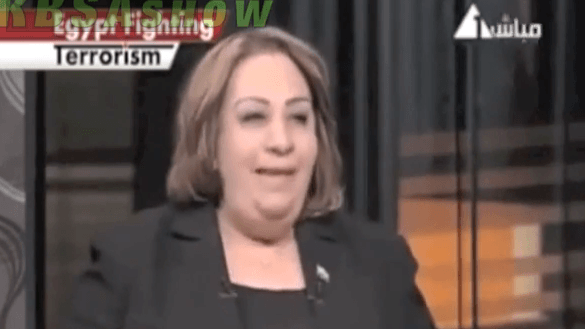
A senior member of Egypt’s Supreme Constitution Court (SCC) has voiced her support for the draft constitution. Tahany al-Gibaly, vice president of the Supreme Constitutional Court, says the new constitution is a very important step for the country’s development because it restores the role of the court in the state.
The 247-article draft document was to be sent to interim President Adly Mansour on Tuesday. This follows a two-day vote over the weekend, during which the 50-member committee passed all of the articles. A special, four-hour closed session was held late Sunday to resolve issues on four articles that failed to receive the required 75 percent of the vote on the first round.
Speaking with the London-based Asharq Al-Awsat newspaper, Gibaly said that the new document reverses the 2012 Constitution, which was passed by a predominantly Islamist assembly. She described that constitution as establishing “the roots of a religious state.”
Gibaly, who was a staunch critic of the Muslim Brotherhood during President Mohamed Morsi’s rule, said that that constitution had weakened the jurisdiction of the Supreme Constitution Court and empowered senior scholars at Al-Azhar.
According to her, this was evident when the 2012 Constitution granted Al-Azhar's senior scholars the right to give advice on matters related to Sharia principles, which is the main source of legislation, a right seen by the SCC as its exclusive jurisdiction.
Regarding the new draft constitution, Gibaly was also happy that the description of Egypt as an “Islamic nation” has been removed. In the new document, Egypt is referred to as being part of the Islamic world. According to the judge, being an Arab nation is a political notion, while being an Islamic nation is a doctrinal one.
Gibaly also praised the new draft for limiting the powers of the president and for creating a balance between his authorities and those of the prime minister. Meanwhile, she supported the controversial stipulation to give immunity to the post of minister of defense, by giving the Armed Forces the right to approve it for two presidential rounds. According to Gibaly, the article is necessary to protect national security.
But for Ahmad Mekky, former minister of justice during Morsi’s rule, the new draft leaves much to be desired, as it has, he says, left some critical issues unattended and focused on what he considered to be marginal ones.
Speaking to Asharq Al-Awsat, Mekky said that the current draft includes unnecessary details that don't concern the constitution per se, but are primarily meant to organize relations between different branches of government. For example, he doesn’t believe that the current draft has enough guarantees for the independence of the judiciary.
He also objected to the fact that the parliament can be dissolved, even though it is voted for by the people. Mekky said that there should be a clause banning the dissolution of parliament. As it stands in the current draft, the president can only dissolve parliament “if necessary” and following a referendum.
Mekky added that the draft should have provided further details on several issues, including setting the rules for parliamentary elections, which was left for legislators to decide.
Amr Moussa, head of the draft constitution committee, called on voters to say “yes” to the new draft in the referendum, set to be held in early January. His comments were criticized by some observers, who said that committee members should refrain from promoting passage of the draft now that their job is over.
Local newspapers, including the privately owned Al-Masry Al-Youm and Al-Shorouk newspapers, pledged to print extra copies of the draft constitution for their readers. The latter ran the headline: “This is our constitution.” The state-owned Al-Ahram daily led its front page with, “The constitution of the new Egypt is with the president.”

أخبار ذات صلة
Voting in the dark: Ramming the constitutional amendments through
“What difference does it make what [voters] know or don’t know?” says one parliamentary source.
Ballot-box politics: What has pushed Egypt’s opposition to vote ‘no’?
Unlike in previous votes, more opposition members are calling for a 'no' vote than for a boycott.
National referendum on constitutional amendments to begin 3 days after parliamentary approval
A national referendum on amendments to the Constitution will be held this weekend
A disintegrating coalition: Rifts re-emerge after Dostour Party’s default leadership election
Rifts have re-emerged within the Dostour Party days after the default election of Khaled Dawoud as party president
Your support is the only way to ensure independent, progressive journalism survives.
You have a right to access accurate information, be stimulated by innovative and nuanced reporting, and be moved by compelling storytelling. Subscribe now to become part of the growing community of members who help us maintain our editorial independence.
Join us