
Journalists turn to syndicate to protest courtroom bans

A group of journalists are preparing a petition requesting that the Journalists Syndicate refer to the Supreme Judicial Council after two judges decided to ban journalists from party-affiliated and privately owned media outlets from their court sessions, and only allow journalists from state-owned media to attend.
Last Thursday, Judge Mohamed Sherine Fahmy, who heads the Cairo Criminal Court, as well as Judge Nagy Shehata, made the decision without offering any explanation.
Mohamed Basal, who heads the judiciary section at the privately owned Al-Shorouk newspaper, called the step "unprecedented" and "unacceptable."
“This step discriminates between the journalists in party-affiliated and independent outlets on one side and state media on the other. It also violates the principle that court sessions are public and expands the powers of the presiding judge, allowing him to control who attends sessions,” Basal says.
While declaring certain sessions as "closed" or limiting the number of journalists in courtrooms falls under the authority of the presiding judge, Basal explains that selecting certain categories of journalists to attend oversteps this power and can escalate further, resulting in cases where judges are selective about relatives or lawyers allowed to attend hearings.
Mohamed Gomaa, a reporter with Al-Shorouk and one of the journalists who was recently banned from entering trial sessions presided by both judges, told Mada Masr that the problem started last week when a number of journalists commented on their social media accounts on a session in the case popularly referred to as as the "Aboul Ela events," calling it a "charade."
The case pertains to violent clashes that took place in Bulaq Aboul Ela following the violent dispersal of the Rabea al-Adaweya protests in August 2013, and in which 104 defendants have been charged. In the session in question, which was presided over by Fahmy, photojournalist Ahmed Ramadan was summoned to testify and his account contradicted the prosecution's case.
Since then, Gomaa has been turned away from sessions presided over by both Fahmy and Shehata, in which state media representatives have been allowed.
Gomaa, along with other journalists affected by the decision, are preparing a petition demanding the syndicate to take the issue to the Supreme Judicial Council.
Fahmy presides over prominent cases including former President Mohamed Morsi's espionage trial, as well as the case of the murder of journalist Mayada Ashraf.
Shehata is notorious for issuing mass death sentences in several cases involving members and sympathizers of the Muslim Brotherhood, which he recently claimed that he is "proud of" in an interview with a local paper, Following the controversy that the alleged interview caused, Shehata retracted his comments, saying that the privately owned paper fabricated the interview.

أخبار ذات صلة
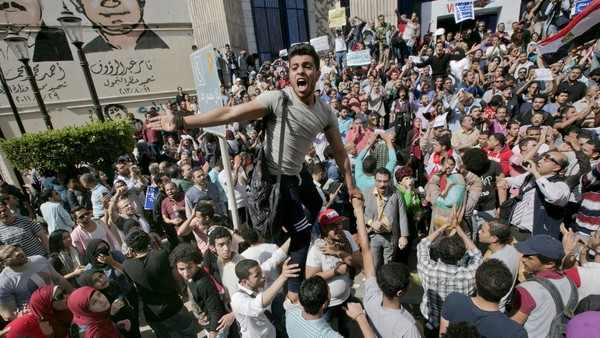
Presidency denies report claiming no tolerance for April 25 protests
Egypt’s presidency denied a report in Al-Shorouk newspaper claiming President Abdel Fattah al-Sisi said he has no tolerance for April 25 protests.…
Journalist claims illegal detention, files complaint with prosecutor general
Al-Shorouk journalist Haitham Radwan filed a complaint at the prosecutor general’s office on Tuesday against Talbiya police station for his illegal detention.…
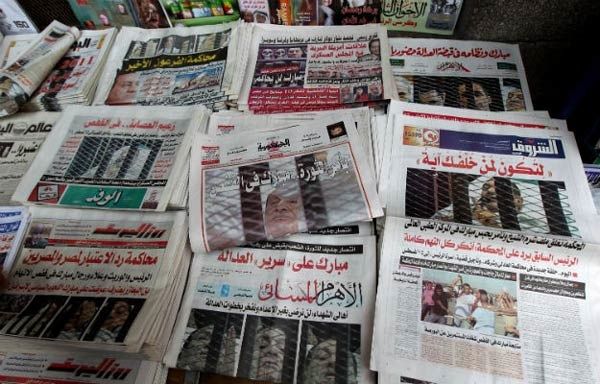
Egyptian media isn’t taking prisoners, state’s line is only line
The country’s media apparatus is displaying an iron-willed determination to uphold the state narrative. Within a week, two major television talk show hosts have been muzzled by their stations, and…
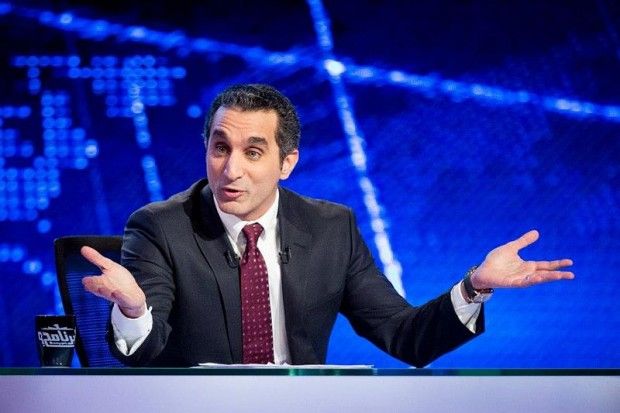
Bassem Youssef suspends weekly column over plagiarism backlash
Satirist Bassem Youssef decided to suspend his weekly column in privately owned daily Al-Shorouk following accusations of plagiarizing his last article about the…
Your support is the only way to ensure independent, progressive journalism survives.
You have a right to access accurate information, be stimulated by innovative and nuanced reporting, and be moved by compelling storytelling. Subscribe now to become part of the growing community of members who help us maintain our editorial independence.
Join us