
Interior Ministry denies wrongdoing in Minya, Dar al-Salem deaths, despite family claims of torture, police wrongdoing
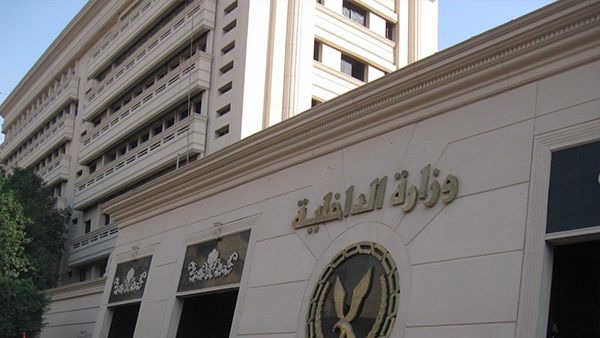
The families of two men who died in exchanges with the police in the past week told Mada Masr that their relatives were killed as a result of excessive or deadly force used by authorities.
The Interior Ministry issued statements to deny any wrongdoing on the part of police officers in the killing of both men. The ministry attributed the death of Ramy Hussein — who was detained in a police station in the Cairo neighborhood of Dar al-Salem — to a sharp drop in blood pressure followed by cardiac arrest and rumors about police involvement in the death of Khalaf Rady — who was shot and killed in the Minya village of Shalqam — to rumors spread by the channels affiliated with the “terrorist” group the Muslim Brotherhood.
The Interior Ministry’s account and that of family members who spoke to Mada Masr diverge at several key points.
For Hussein, that starts with the day he was arrested.
The Public Prosecution ordered Hussein to be detained in remand on July 29, according to a statement released by the Interior Ministry on Monday.
However, family members stated that police officers stormed Hussein’s house a few days earlier, without any order from the prosecution. The arresting officers beat him in an attempt to gain information about a woman they were looking for who lived in the same building and had left months ago. Hussein denied knowing anything about her.
Hussein’s brother Islam was also arrested. He was only released after telling the officers he would help them find the woman they were searching for, a promise he later retracted.
In the days after Hussein’s detention, his three brothers and wife filed a complaint at the Maadi prosecutor's office against Dar al-Salam police station officials, accusing them of assaulting Hussein.
According to a member of the family, Hussein later appeared before the prosecution on drug trafficking charges, where he was handed a detention order pending investigations.
On Monday, the family received calls from detainees in Dar al-Salam Prison who had access to mobile phones, telling them that Hussein was being subject to torture, the family member told Mada Masr.
On the same day that the family was called by detainees, Islam received a call from an officer in the Dar al-Salam police station to tell him that Hussein was being transferred to the hospital. Islam was asked to come to the police station. Minutes later, Islam received a call from one of the detainees in the police station telling him that Ramy had been killed.
When the family accompanied his body to the morgue, there were clear signs of torture, the family member said, pointing to “bleeding from his nose and mouth, bruises and swelling on his face.”
After his death, members of the family were pressured not to make an official accusation against the police station during the investigations, the family member told Mada Masr.
The Public Prosecution heard testimony from Hussein’s family on Monday. During the session, a Dar al-Salam police department officer was deployed near the Maadi prosecution, according to an eyewitness. The police closed nearby cafes to prevent Hussein’s relatives from sitting in them.
On Tuesday, Hussein’s brother Mohamed was arrested in front of the Maadi prosecution.
The public prosecution has yet to release a statement on the case.
Days before Hussein’s death, another police-involved death was in the news. This time, it was Khalaf Rady, from the Minya village of Shalqam, who, according to the Interior Ministry, had fired a weapon at police officers as they were approaching because he is wanted for a 19-year prison sentence. The officers, per the ministry’s account, fired back, wounding Rady in his left arm. Rady was then transferred to the hospital where he died.
However, social media accounts attributed Rady’s death to a verbal altercation that got out of hand and led to one of the officers firing at Rady. The Interior Ministry issued a statement to deny this account, attributing it to “satellite channels affiliated with the terrorist Muslim Brotherhood.”
One of Rady’s relatives told Mada Masr that "he did not have a weapon, as the Interior Ministry claimed,” adding that Rady was in fact shot twice: once in the arm and once in the head.
Following Rady's death, a number of Shalqam residents demonstrated in front of the area’s district court, accusing the police of murdering the man.
Egypt has a long history of systematic use of physical violence and torture in detention centers and police stations, which continues despite persistent international and local condemnations as well as promises of “criminal justice reform” in the human rights strategy announced in 2021.
Recent years have witnessed multiple reports of detained activists beaten and tortured in prison, as well as several cases of detainees being tortured to death by security officers, including the murder of Italian doctoral student Giulio Regeni in 2016.
In July, protests erupted in the western coastal city of Sidi Barrani after police officer Ali Lamie shot and killed Hafeez Hawya Abd Rabbo. Protesters stormed the police station, killing a junior member of the force.
Abd Rabbo was killed during a routine stop-and-search operation carried out to control migration to the city near the Libyan border. When Abd Rabbo refused a police officer’s instructions to halt, the officer fired six shots at Abd Rabbo six times, relatives of the deceased told Mada Masr.
The officer was initially detained by the Armed Forces and then released, before being charged by the prosecution on July 16.
On Tuesday, the officer’s hearing was postponed until September 3 by the Alexandria Criminal Court “in order to consider the requests of both parties and summon the forensic doctor to discuss the case,” lawyer Gomaa Hamad al-Sarihi told Mada Masr.
On Thursday, the trial of five Sidi Berani residents who were arrested and charged with storming the police station and killing the officer was postponed until September 5.
The incident in Sidi Barrani was the second instance in July in which an official is to face trial after killing a member of the public.
أخبار ذات صلة
Lax procedures, higher costs: Burying the dead amid the coronavirus
Healthcare workers and families who buried relatives say the measures are rarely followed in full
Your support is the only way to ensure independent, progressive journalism survives.
You have a right to access accurate information, be stimulated by innovative and nuanced reporting, and be moved by compelling storytelling. Subscribe now to become part of the growing community of members who help us maintain our editorial independence.
Join us