
Hezbollah holds off advances at Khiam, Taybeh as Israel pushes to cut off southern towns
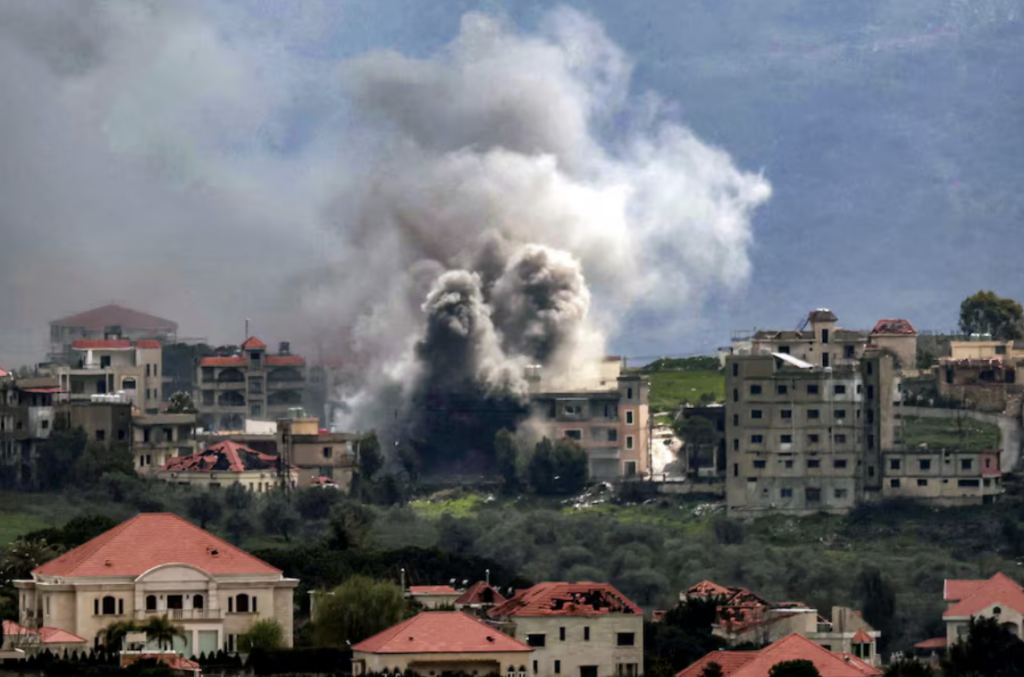
Israeli forces have taken control of most of Khiam’s outskirts, including the eastern, northern and southern edges, in an attempt to control the strategically important hilltop where the town is located, according to a former local official from the area and a security source, who spoke to Mada Masr on condition of anonymity. Other local sources described a similar situation at the nearby town of Taybeh.
The advances, however, are facing fierce resistance in both towns from Hezbollah fighters who have stymied their ascent up the hill, according to retired general Ali Abi Raad.
The two-week old ground invasion, which Israel’s military described as “limited” on Tuesday, has seen its forces intensify their push to seize control of Khiam, a key strategic town a few kilometers deep into Lebanon’s southeastern border. The town sits at the center of a wider front that connects the southern border with key routes toward the Beqaa Valley to its northeast. Its capture would give Israel a foothold to dominate surrounding areas, disrupt supply lines and potentially isolate parts of southern Lebanon from the rest of the country.
Hezbollah said on Wednesday that its fighters repelled a bid by Israeli forces to advance in the vicinity of Khiam prison in the town’s center.
“Khiam is facing movements from Marjeyoun to its west to the middle and western parts,” the security source told Mada Masr. “Resistance forces are present, preventing Israeli tanks from fully entering the town.”
Hezbollah also targeted gatherings of Israeli soldiers on Wednesday morning near several southern border towns along the frontier on either side of Khiam — Aitaroun, Odeisseh, Maroun al-Ras, Mays al-Jabal, Taybeh and Markaba — using artillery shells, rockets and attack drones to block the attacks along the wider front from which Israeli forces are advancing.
Despite nearly a week of fighting, Israeli forces have only reached some eastern and northern-western neighborhoods of Khiam and have not secured the town center. Ali Abi Raad, a retired general from the Lebanese military, told Mada Masr that this is largely due to Hezbollah’s use of guerrilla tactics. “It’s not just about reaching the area,” he said. “The real question is whether they can hold it, establish positions or create a defensive base to launch the next phase. So far, none of that has happened because of the fierce resistance they face in Khiam.”
Abi Raad described how resistance fighters create “kill pockets” to lure advancing forces from border areas like Odeisseh, or the Serda farm to the west of Khiam, striking and then shifting positions in classic guerrilla fashion.
He noted the same approach to Khiam’s west along what is known as the Taybeh axis, which leads from the border town of Aitaroun toward the village of Taybeh, another strategically important site that lies only three kilometers from the Litani River.
At the same time as the battle at Khiam, Israeli forces have advanced from Odeisseh toward Taybeh, a strategic point overlooking several villages and the Litani River. “They’ve taken control of some of the hills and the Taybeh project, where they are positioned near the water and electricity facilities, but they don’t yet fully control the town of Taybeh,” local resident Hussein al-Ashqar told Mada Masr.
Control of Taybeh would give Israeli forces access to the river via Wadi al-Hujeir, a valley that provides a natural corridor toward the river and allows movement between surrounding high ground.
“Israeli forces are trying to secure the river, but resistance fighters have staged heavy ambushes. Yesterday alone, six Israeli Merkavas were destroyed, and even supporting Israeli reserve troops came under anti-armor fire,” said Abi Raad.
Beyond Khiam, around 10 to 15 kilometers east along the border, Israeli forces have begun to enter and exit villages along the border frequently. In Kfarshouba, a local official from the village told Mada Masr on Tuesday that Israeli forces entered the village overnight, searching three houses, including those of a local mukhtar and a Lebanese Army soldier whose families were present, and temporarily abducting resident Kassem Kaderi before releasing him.
"The incident caused a state of fear among the residents of the village and the neighboring villages," the municipality said in a statement.
Many families who had previously insisted on staying in the village and requested protection from the Lebanese military have since fled, the local official said. The municipality reiterated calls for the Lebanese military and international protection forces such as UNIFIL to intervene.
Further east in Chebaa, which lies along the southeastern border near the occupied Golan Heights, two local residents told Mada Masr that Israeli troops continue to encroach on the outskirts of the village, where they killed two shepherds two days ago. They said that in the adjacent Wazany area, forces have made partial advances but have not fully entered the villages.
Military researcher Ali Hamieh told Mada Masr that the overarching goal of these moves is to encircle Khiam, where Hezbollah fighters remain repelling the Israeli forces’ advances. The move would then allow Israel to control the main Marjeyoun-Western Bekaa road in order to cut the south off from the Beqaa Valley in the east. “If Israel takes Khiam completely, Marjeyoun, Kfarkila and Deir Mimas would effectively fall, creating a corridor along the Litani River,” said Hamieh.
He added that the area between Marjeyoun and Nabatieh would become isolated, giving Israeli forces access to key points along the river while maintaining control over surrounding hills.
Such a move would open a corridor toward the Litani River and allow Israeli forces to operate from surrounding high ground, while continuing to target villages north of the river, including Arnoun, Nabatieh, Kfartebnit and Zawtar, where Hezbollah forces and missile capabilities are present.
Earlier strikes also damaged the Zararieh bridge, which connected the Zahrani villages to the Bint Jbeil area along the river’s corridor.
On Wednesday, the Israeli military announced plans to target bridges over the Litani River in southern Lebanon, with spokesperson Avichay Adraee issuing an urgent warning to residents about imminent attacks. Soon after, Israeli forces struck the Kinayat Bridge in the Qasmiyeh area first, followed by an attack on the nearby coastal road connecting Saida and Sur.
The main aim of these strikes appears to be cutting off Hezbollah’s supply lines, as Israeli forces have struggled to advance further into southern Lebanon. By damaging these crossings, Israel seeks to disrupt the movement of fighters and supplies across the Litani River.
However, Abi Raad noted that Hezbollah’s preparations for the war mean its capabilities are not reliant on well-known routes or conventional transport such as trucks carrying arms.
“The next couple of days will be difficult,” he said, because “Israel is trying every possible way to achieve its objectives and gain leverage in any upcoming negotiations.”
أخبار ذات صلة
We will sit together on Srifa hill, Qassem
Two friends try to reclaim a memory other than what the Israeli genocidal machine carved into them.

Delayed for a phone call that didn’t happen: US declares ceasefire in Lebanon
The ceasefire was ready 24 hours before it was announced. Trump wasn't ready yet.
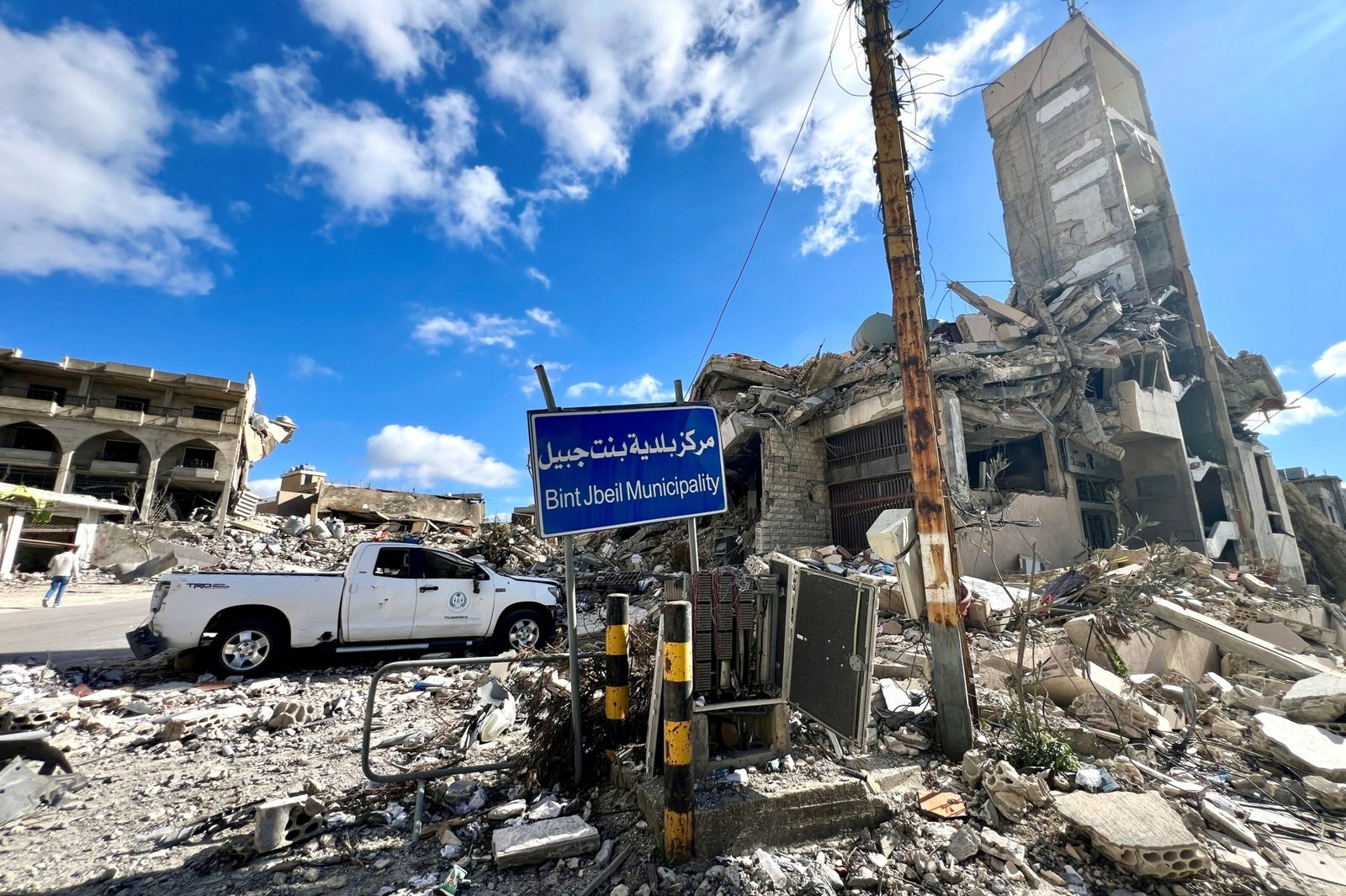
Israeli forces encircle Bint Jbeil but fail to enter town, as Netanyahu looks to Lebanese front to spoil Islamabad talks
Lebanon has become the focal point of two parallel — and competing — ceasefire tracks, one unfolding in Islamabad and another in…

Iran’s insistence on Lebanon ceasefire a test for regional sway
After authorizing the deadliest strikes on Lebanon in years on Wednesday, Israeli Prime Minister Benjamin Netanyahu took to the podium in a national address to assure his audience that Tel…
Your support is the only way to ensure independent, progressive journalism survives.
You have a right to access accurate information, be stimulated by innovative and nuanced reporting, and be moved by compelling storytelling. Subscribe now to become part of the growing community of members who help us maintain our editorial independence.
Join us