
Govt suspends activity in Lake Bardawil in response to trade demands, thousands unable to work

All fishing activities in North Sinai’s Lake Bardawil were suspended on Saturday by the lake’s administration until further notice, cutting off access to work and income for thousands of people who make their living through fishing.
Prior to the lake’s closure, fishers had taken action to protest new regulations which are limiting their capacity to keep working, according to three fishers who spoke to Mada Masr. They had refused to work, while tribal elders and senior fishers relayed to the lake’s administration a list of demands — a copy of which Mada Masr reviewed — that would make fishing conditions sustainable for them.
Instead of engaging with the demands, the lake administration, which was taken over at the end of last year by the military-controlled Egypt’s Future for Sustainable Development Agency, closed the lake for an unspecified period.
The fishing season that began on April 25 is the first to be managed by the agency, which has introduced a drastically different system.
Fishers say the changes have significantly driven up their operating costs and slashed the size of their catch, while the price of fishing permits has also risen “to an excessive degree.” By the end of the fishing week on Wednesday, nearly all of the lake’s 1,228 boats — employing an estimated 3,500 fishers — had decided to stop work as of Saturday, except for the crews of 40 boats, the fishers said.
Among the new rules are requirements for fishers to use nets with larger mesh sizes, ostensibly to protect immature fish. But fishers say these nets have sharply reduced their yield as they only allow them to catch very large fish species, leading to a depletion as a result of the overfishing and leaving crab as the only viable catch. The new net specifications have also made it impossible for them to catch shrimp or small-sized bream, both of which have long served as critical sources of income for the local fishing community.
The resulting market disturbance has been difficult to deal with, one of the fishers, Khaled*, told Mada Masr. “Now the market is flooded with crab,” he said, driving prices down even as fees have gone up.
The fees collected by the administration per kilogram are known locally as “the bill.” Egypt’s Future for Sustainable Development Agency has increased the fees for female crab from LE2 to LE12 per kilo, and for bream from LE10 to LE20, and then up to LE22, without explanation, according to the fishers.
They have also received information that the agency is planning to bring in fishers from other governorates, equip them with boats and allow them to fish in the lake — a move they see as threatening the livelihoods of local fishing communities.
The agency has also sought to alter the demand side of the industry, bringing in new traders and sidelining local buyers from Bir al-Abd and Arish. According to the fishers, the administration brought in traders from other governorates and forced fishers to sell their catch to them at lower prices, sparking widespread anger among both fishers and local traders.
Fathi*, another fisher, told Mada Masr that the traders brought from further afield by the Bardawil administration normally deal in different kinds of fish: tilapia, flathead mullet and farmed fish, which he said are known for being much cheaper than Bardawil’s fish.
Even though fishers were forced to sell their catch at marked down prices, the new traders struggled to sell the higher-end Bardawil fish elsewhere. These traders eventually left and didn’t return to the lake’s docks — allowing Sinai-based merchants to resume trade — but fishers say they’ve heard that the administration is now negotiating to grant larger traders lake access to buy the fishers’ catch instead.
Issues with access to the lake for fishers have also transpired since the agency took over. It prepared 25 boats at the start of the season, which fishers heard were meant to be rented out to Sinai residents. Instead, the agency confiscated boats from local fishers who had been unable to repair or prepare theirs and leased them to fishers from outside North Sinai, two fishers said.
“We’ve had licenses since 1979. We pay insurance and taxes. It’s unacceptable for the agency to bring in fishers from outside the governorate, open up the fishing village in Taloul for them, hand them boats and let them into the lake,” said Khaled.
Khaled also said that while the agency seized trawling equipment — an illegal fishing method — it was later refurbished in full view of local fishers, amid reports that it was handed over to outsiders to use. “Restrictions are imposed on local fishers,” he said, “but people affiliated with the agency from outside Sinai are allowed to operate above the law.”
The fishers are calling for permission to fish for shrimp, a review of per-kilo fees — particularly those levied on crab — and an end to interference in their direct dealings with fish traders, with limitations to keep the agency’s role to one of collecting the “bill.” They are also demanding permission to fish within 500 meters of the lake’s sea inlets and a ban on boats affiliated with the agency — even if operated by civilian fishers — from working the lake.
The elders and senior fishers reached out to the agency to discuss the protestors’ demands, according to the fishers who spoke to Mada Masr, but the administration’s only response was that the demands required further study. The fishers said they were told that “it was the fishers who chose to leave the lake, and we’ll let them back in when we feel like it. There are 35 people who incited the protest — we’ll take legal action against them.”
The Egypt’s Future for Sustainable Development Agency, established in 2022, has increasingly tightened its grip on Egypt’s food security sector, from land reclamation and lake management to taking over wheat imports from the General Authority for Supply Commodities, and holding a majority stake in the Egyptian Mercantile Exchange.
Its role has since expanded to include importing wheat — previously the mandate of the General Authority for Supply Commodities — supplying local wheat for the Supply Ministry and overseeing Lake Manzala.
It was tasked with overseeing Lake Bardawil late last year following directives from the country’s “political leadership.”
At the time the agency was tasked with managing Bardawil, the Cabinet said the goal was to restore the lake and increase its production and “drive its economic development,” promising upgrades to fishing docks, improved transport and trade logistics and a package of social support programs for fishers.
Before the transition, Bardawil Lake was managed by the Lakes and Fish Resources Protection and Development Authority in partnership with the military–affiliated National Company for Fisheries and Aquaculture under a contract in place since 2016, according to a source in the authority’s North Sinai branch who spoke to Mada Masr.
* Pseudonyms
أخبار ذات صلة
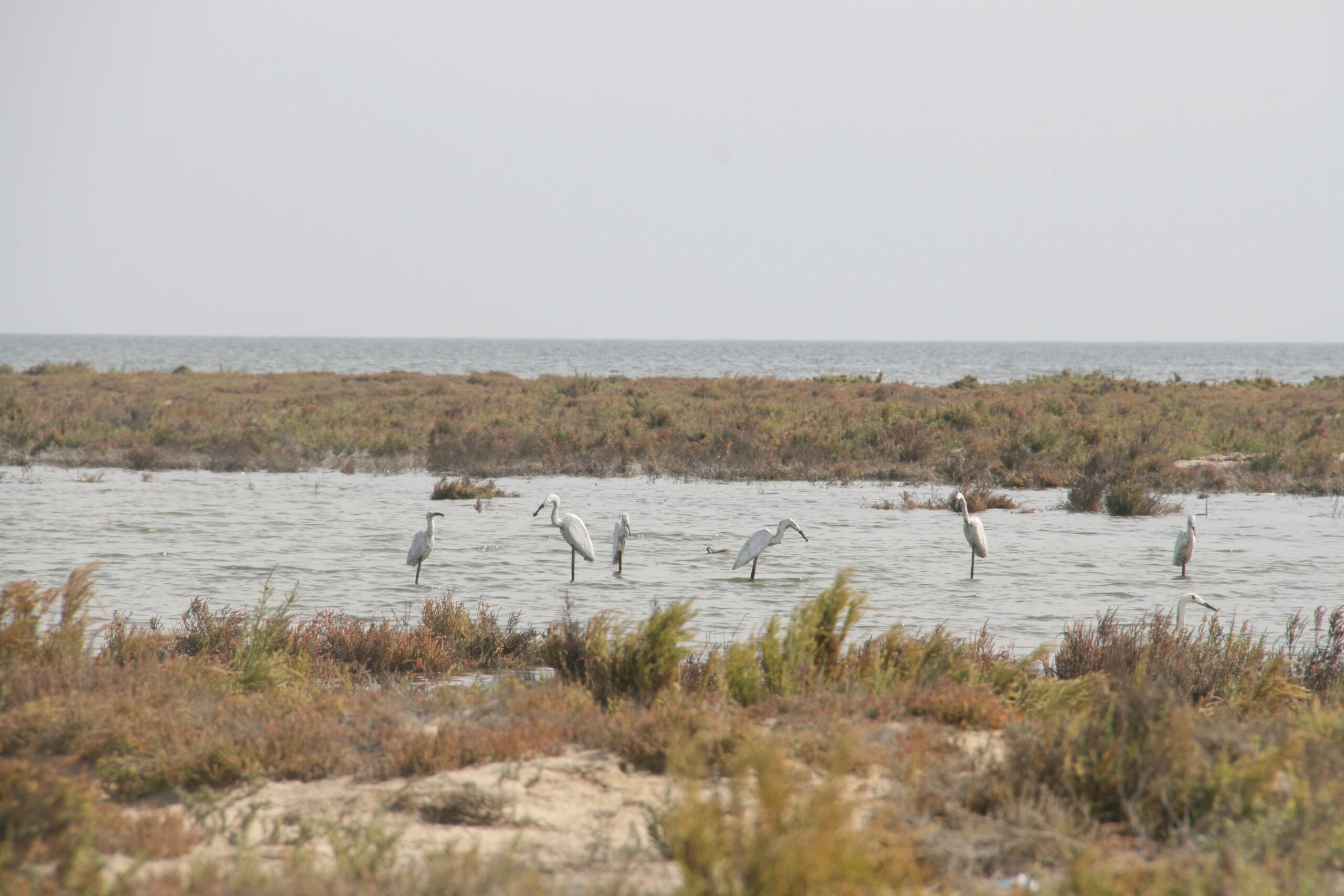
Authorities reopen Lake Bardawil after negotiations to end fishers’ strike, key restrictions still in effect
Fishers at Lake Bardawil were allowed to resume work on Friday, a week after the lake’s administration — under the military-run Egypt’s…
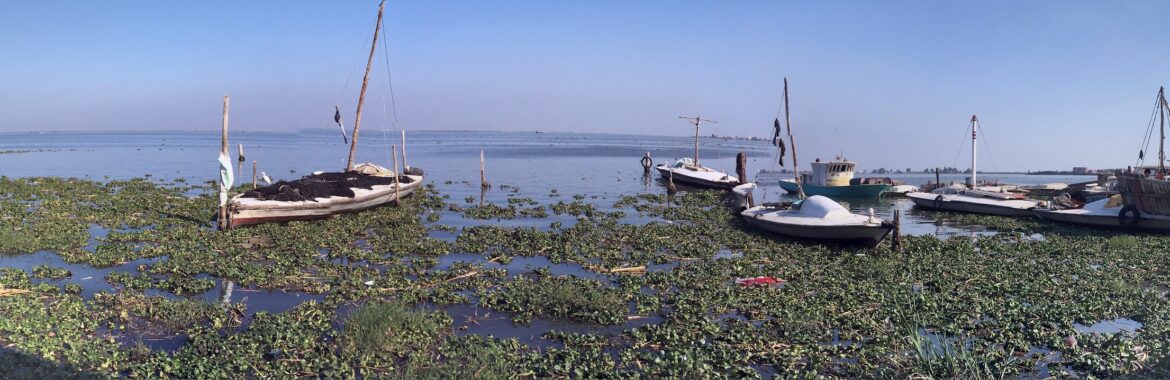
A lake remade: How Manzala’s waters became clear enough to fish for money
Mada Masr spoke to fishers, researchers and government officials about the lake's rehabilitation

Video | Angry seas in al-Mex
Residents in Alexandria's historical al-Mex were handed eviction notices last month

Experts look at human factors to explain Ain Sokhna shark attack
Following a shark attack on a swimmer near the Red Sea resort Ain Sokhna on Saturday, the Ministry of Environment has commissioned a…
Your support is the only way to ensure independent, progressive journalism survives.
You have a right to access accurate information, be stimulated by innovative and nuanced reporting, and be moved by compelling storytelling. Subscribe now to become part of the growing community of members who help us maintain our editorial independence.
Join us