
Egypt imposes heavy taxes on gas to Gaza, retreats from reconciliation as punishment for Hamas leader’s Iran visit
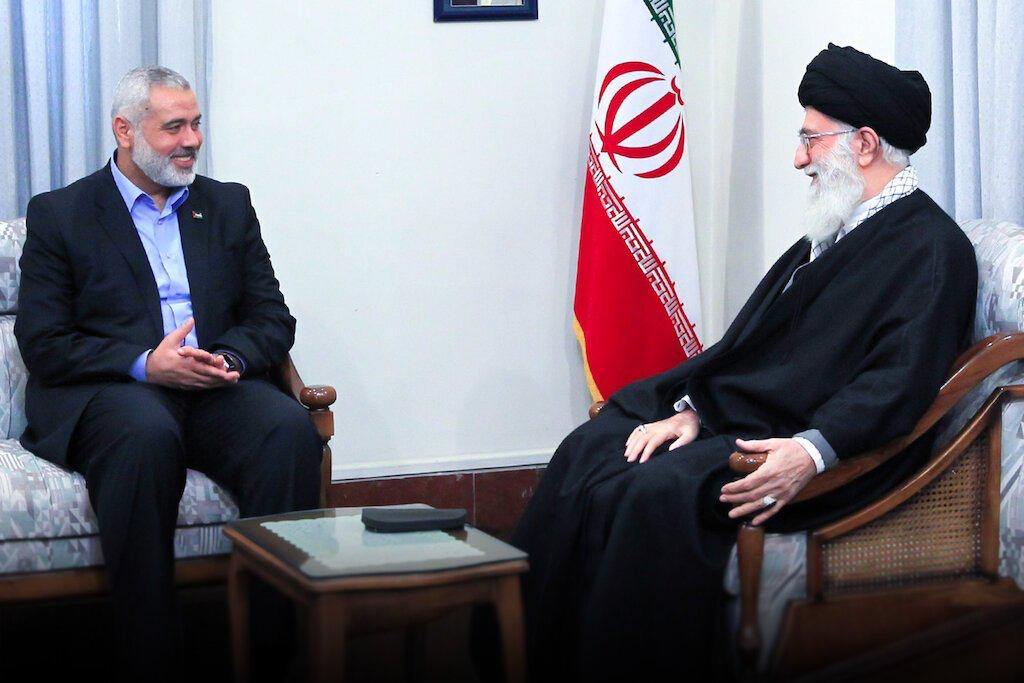
While Hamas has been able to reap certain benefits from its rapprochement with Iran in recent years, the visit of leader Ismail Haniyeh’s to Tehran in early January for the funeral of Qassem Soleimani has landed the group in hot water with Egypt.
Haniyeh’s visit to Tehran in early January to attend the funeral of the leading Iranian figure, who was killed by a United States targeted strike On January 3, had not been agreed upon with Cairo, who controls all movement in and out of southern Gaza through the Rafah border crossing.
On the day following Haniyeh’s arrival in Iran, Egyptian officials contacted Hamas, asking for an explanation for the unexpected visit, according to the source. By the end of the day, Cairo had canceled the planned visit of an intelligence delegation to discuss the implementation of a humanitarian project in Gaza that would include a gas-power electricity plant and the facilitation of goods across the borders with Egypt and Israel, a source close to Hamas added.
“Hamas leaders in Gaza knew by the time Haniyeh arrived in Iran that Egypt would be angry, so they held an emergency meeting to decide how to respond to the backlash, a meeting that finished with very little options. The only option was to remain peaceful and continue to offer apologies,” the same source said.
Iran has increasingly been a vital backer for Hamas, providing financial and military support for the Gaza-based group that faces a blockade enforced by Israel and Egypt.
The cancellation of the meeting was not the end of the punitive measures Cairo imposed.
According to the source, who spoke to Mada Masr on condition of anonymity, Egypt next turned to an onerous tax on the entrance of liquefied petroleum gas (LPG) to the Gaza Strip and introduced new restrictions on Gazans’ passage through the Rafah border crossing, while also withdrawing from the long-standing mediation role it has played between Hamas and Israel.
As soon as the new tax came into effect, Cairo halted all LPG shipments to the strip until the Hamas-controlled Finance Ministry agreed to the new price.
The tax on LPG hit the already precarious energy resource-depleted enclave particularly hard. According to Gazan economist Mohamed Abu Jayyab, 95 percent of Gaza’s supply of LPS comes from Egypt.
The group immediately accepted the Egyptian taxes, asking Egypt to enter shipments as soon as possible to Gaza Strip, the source close to Hamas said.
Rather than pass along the tax burden to consumers in Gaza, Hamas leaders held a meeting and agreed that the Finance Ministry would pay for the increase in price directly from the government’s budget.
“During the meeting, one member of Hamas’s political bureau said that we can’t show the people of Gaza that our foreign tour affected their livelihoods,” the Hamas source told Mada Masr.
Hamas’s attempts to repair relations with Egypt, however, have amounted to nothing, as Cairo has refused to take their calls, the source said.
“After several meetings and calls with leaders traveling abroad, Hamas’s leadership approved the decision to apply pressure on Israel, whom they expected to request Egyptian mediation to stop the use of violence, a move that they didn’t like, but felt they had to carry out,” pointed out the Hamas source.
The source added that Hamas approved at the same time a media campaign, in which the group’s leaders would issue statements declaring that, while Egypt “may be mad at Hamas,” Egypt remains Gaza’s closest ally.
At the start of last week, several groups led by the Nasser Salah al-Deen Brigades, Islamic Jihad and Hamas began launching incendiary balloons into Israeli territory.
“We plan to keep up with the current level of violence against Israel, while saving the night disturbance units in case we need to raise the levels for more pressure,” the Hamas source told Mada Masr.
The success of Hamas’s efforts to bring Egypt back to the table, however, is unclear.
When Egypt halted the supply of LPS to Gaza, Israel temporarily followed suit, according to the source, who added that Israel has taken advantage of the tension between the two sides, halting any recently agreed upon facilitations.

أخبار ذات صلة

In meeting with Board of Peace director-general, Hamas refuses UN disarmament plans until Israel commits to withdrawal
Hamas has refused to commit to the plans proposed by the United Nations for its disarmament, citing lack of advancement in Israel’s…

Ten killed in Maghazi after Israeli-backed group crosses into camp, clashing with Hamas under Israeli fire
Fighters from an Israeli-backed armed group crossed from the occupied eastern part of the Gaza Strip into the Maghazi camp on Monday…

Hamas delivers dead prisoner in bid to preserve ceasefire as political differences multiply
Hamas delivered the body of an Israeli who died in captivity in Gaza to the Red Cross on Tuesday. Earlier, the organization…
In another escalation, Israel kills 20 in airstrikes on sites across Gaza, including family homes
Israel launched a series of airstrikes across the Gaza Strip on Saturday afternoon after the Occupation military claimed that an armed man…
Your support is the only way to ensure independent, progressive journalism survives.
You have a right to access accurate information, be stimulated by innovative and nuanced reporting, and be moved by compelling storytelling. Subscribe now to become part of the growing community of members who help us maintain our editorial independence.
Join us