
Egypt extends opening of Rafah border by two days, 1429 smuggling tunnels destroyed
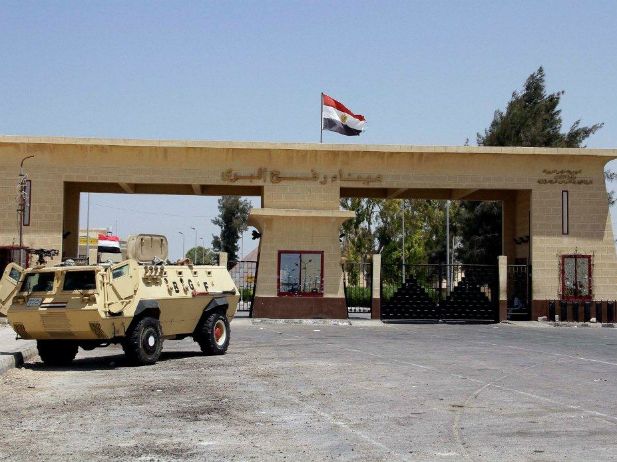
Egyptian authorities agreed on Monday to extend the three-day opening of the Rafah border crossing for another two days, thus facilitating travel to and from the Gaza Strip until Wednesday.
This comes as Egypt’s Armed Forces announced they have destroyed over 1,400 smuggling tunnels leading into Gaza in the past 18 months.
Despite this, local media reports indicate that diplomatic relations between Egypt and Gaza appear to be gradually improving, citing a recent Egyptian court ruling, which overturned the classification of Gaza’s ruling Islamic Resistance Movement Hamas as a terrorist organization.
Citing Egyptian border authorities, the privately owned Al-Shorouk newspaper reported on Monday that during the first two days of the opening of the Rafah border, a total of 1,767 individuals (the vast majority of whom are Palestinian) were able to travel to and from the Gaza Strip.
Palestinian news outlets reported that over 15,000 Gazans applied for permits to travel over the next few days, including nearly 3,000 medical patients, hundreds of study-abroad students, expatriate workers, and pilgrims, amongst others.
Gazans have also been requesting that Egyptian and Israeli border authorities allow for the flow of construction materials into this war-torn Palestinian territory to facilitate the process of rebuilding.
Al-Shorouk reported that 70 trucks, bearing tons of cement and other construction materials, were allowed into the war-scarred Gaza Strip on Saturday and Sunday. Both Egypt and Israel have restricted the entry of such construction materials, particularly since Hamas assumed governance of Gaza in 2007.
The Egyptian government has tightened its grip over the Gaza Strip since the ouster of Islamist President Mohamed Morsi on July 3, 2013.
According to reports published in Palestinian news outlets, Egyptian authorities opened the Rafah crossing for a total of 125 days in 2014, while it remained closed for 241 days.
On Sunday, a statement issued by the Egyptian Armed Forces claimed that over the past year and half, border guards had discovered and demolished 1,429 tunnels “used by terrorists and criminal elements to smuggle across the border with the Gaza Strip.”
Over the past few years, authorities in Cairo have been claiming that Hamas operatives and other militants from the Gaza Strip have been involved in deadly attacks against Egyptian security forces in the Sinai Peninsula. Hamas has, however, denied these accusations.
While Gaza’s smuggling tunnels have been used to smuggle weapons and other contraband materials, they have also proven to be a vital lifeline to more than 1.8 million residents of this densely populated Palestinian territory.
Last year the United Nation’s World Food Program issued a report asserting that Egypt’s closure of these tunnels since 2013 “hampers the few remaining drivers of economic growth in the Gaza strip.”

أخبار ذات صلة
Abdel Atty sketches ambitious vision for PA governance in Gaza despite ‘prohibitive conditions’ preventing ceasefire
In a press conference held at the Rafah border crossing on Monday as Israeli forces advance on Gaza City, Foreign Minister Badr…

Cairo authorities detain, deport dozens of foreign nationals entering Egypt for Global March to Gaza
Though the march has been coordinated over recent weeks, Egyptian authorities remained tight-lipped
Egypt pushing for Gaza aid deliveries during hiatus to Israel’s attacks expected when Trump visits region
With wheels still spinning on the long-term truce proposal put forward last week, Egypt is pushing

Arab states sign off on Gaza reconstruction plan, postponing details to ‘as soon as possible’
The emergency Arab League summit concluded in Cairo with some Arab leaders notably absent
Your support is the only way to ensure independent, progressive journalism survives.
You have a right to access accurate information, be stimulated by innovative and nuanced reporting, and be moved by compelling storytelling. Subscribe now to become part of the growing community of members who help us maintain our editorial independence.
Join us