
Court rescinds court order which saw 1,500 people listed as terrorists

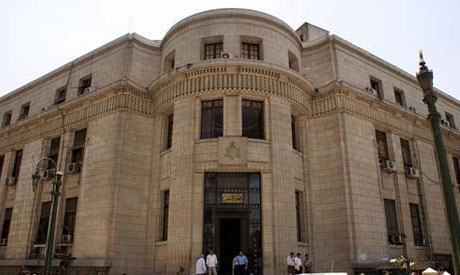
Egypt’s highest criminal court, the Court of Cassation, ruled on Saturday to overturn a decision which classified over 1,500 names, including those of politicians, public figures and prominent former football player Mohamed Aboutrika, as under suspicion of terrorism.
Court orders adding individuals or organizations to national terrorist lists impose travel bans, asset freezes, bans on running for public office and other legal and security restrictions on the designated party.
According to the Court of Cassation’s Saturday ruling, the 2018 Criminal Court decision in Supreme State Security Prosecution Case 620/2018 is overturned, and the case will be referred for re-litigation to another court.
The prosecution submitted a new request in 2018 to include the 1,500 defendants on terrorist lists for a five-year period expiring in 2023, which was approved by the criminal court and all appeals against it were rejected. In April 2023, the prosecution once again requested to extend the listing for another five years. The criminal court approved the request and included the defendants on the terrorist lists on April 12, 2023 until Saturday’s new decision struck it down.
Among the names included in the ruling are Wasat Party head Aboul Ela Mady, former MP Essam Sultan, journalist Hisham Gaafar, and football player Mohamed Aboutrika, along with 1,522 others listed in the same case. With the decision to add their names to terrorist lists overturned, the consequent legal and security restrictions should also be nullified, lawyer Ahmed Abu al-Ela Mady told Mada Masr.
Some of the individuals affected by the court order may still be implicated in other cases, however, Mady said, meaning that they would still be liable for asset freezes, pre-arrival screening and travel bans issued by the public prosecutor for reasons other than suspicion of terrorism. The names could also be added to terrorist lists again if the court re-adjudicating the prosecution request decides to add their names to the lists.
Many of the individuals on the list have been subject to criminal investigations on terror charges for almost a decade, as well as facing restrictions.
A structure built out following the 2013 ouster of the Muslim Brotherhood and its designation as a terrorist group allowed for a judicial committee formed by the government to freeze, seize and oversee the disposal of assets belonging to individuals and organizations on state terrorism lists into the state treasury.
The constitutionality of this committee and its competency to designate as terrorist individuals and organizations that have not been ruled terrorist in the criminal courts has been challenged at the Court of Administrative Justice, while the Court of Cassation has repeatedly overturned past decisions adding hundreds of names to terrorist lists.
The assets committee, meanwhile, has seized the funds of scores of individuals whose addition to terrorist lists has been previously upheld by the Cassation Court, adding them to the treasury.
In February 2024, President Abdel Fattah al-Sisi endorsed a new law creating an agency for managing and disposing of recovered and confiscated funds. Under its current iteration, it would have a more far-reaching mandate and be subject to less formal oversight than previous mechanisms made for a similar purpose.

أخبار ذات صلة

Court upholds ruling 2 content creators violated ‘family values,’ lawyers intend to appeal
A court rejected on Monday an appeal against the verdict and sentencing of two content creators.

Door of justice slammed shut in high-profile sectarian case, Thabet now faces civil suit from men who assaulted her
The state habitually resorts to customary reconciliation when dealing with sectarian violence
High-stakes rape trial for woman seeking to record biological father on daughter’s birth certificate goes to final appeal
Abdel Hameed’s court battle brings further scrutiny to the heavy toll women face in parentage cases
Judicial officials: Constitutional amendments final battleground in struggle for judicial independence
A judicial source describes the amendments as a way of “constitutionalizing dictatorship”
Your support is the only way to ensure independent, progressive journalism survives.
You have a right to access accurate information, be stimulated by innovative and nuanced reporting, and be moved by compelling storytelling. Subscribe now to become part of the growing community of members who help us maintain our editorial independence.
Join us