
Coronavirus on the rise again in Egypt, and fewer precautions for airport arrivals

In a statement released on August 9, the Health Ministry stressed the need to resume preventative measures against coronavirus, such as avoiding family gatherings, adhering to social distancing, and wearing face masks as positive COVID-19 cases increase, especially following the rise in gatherings during Eid al-Adha.
The last few days saw a slight increase in new infections announced by the ministry. There were 131 new cases last Thursday, 141 on Friday, 167 on Saturday and 178 cases on Sunday. This comes after a notable decline in recorded cases in recent weeks.
Meanwhile, the ministry also denied that Egypt is entering a second wave of the virus spread, as Hossam Hosni, the head of the ministry’s coronavirus committee, told a TV show that the main reason behind the rise in numbers is that citizens haven’t taken precaution measures seriously. Hosni said that the ministry has taken account of the fact that there are lower sales of sanitizers and face masks recently, for example.
The head of a fever hospital, said the number of people with suspected infections showing up at hospitals remains low. “Coronavirus infections right now are similar to the numbers of mid-March,” he added.
The source, who spoke to Mada Masr on condition of anonymity, said that the reopening of quarantine hospitals, which were gradually set up since last March nationwide to isolate coronavirus-infected patients, is primarily aimed at organization and not merely a response to the increase in cases. He also said that many of the quarantine hospitals had been closed because cases were low in the last weeks, while the cost of their operation is high. But the return of 21 quarantine hospitals is connected to the fact that the Health Ministry wants its other public hospitals to keep offering their normal pre-coronavirus medical services.
The current government plan, the source explained, is based on all Health Ministry hospitals nationwide (an estimated 376 hospitals) receiving coronavirus cases, with 25 percent capacity allocated to coronavirus cases in different sections as well as in intensive care units. In fever and pulmonary hospitals, the allocated capacity is at 70 percent.
The source said that most public hospitals had stopped receiving coronavirus cases in the last few days now that work in other specializations has resumed normally. This, in turn, created a burden on fever and pulmonary hospitals, some heads of which complained to the health minister, who held a meeting with them last Sunday to communicate the plan.
The hospital head, who attended the meeting, added that a patient will need to go to the public hospital closest to where they live to be examined. If symptoms are mild, the doctor said, the patient is given flu medicine. If they are exhibiting moderate to severe symptoms, X-rays are conducted and based on the results, a PCR test is conducted. While waiting for PCR results, the patient is either kept in the hospital or sent back home, depending on the severity of the symptoms, and until a spot is prepared in a quarantine hospital in case the results are positive.
Meanwhile, on August 7, the Ministry of Civil Aviation announced that a decision by the Cabinet to exempt certain groups arriving in Egypt from the requirement to present a negative coronavirus PCR test result from no more than 72 hours before arrival will be implemented starting August 15.
According to the decision, foreign tourists arriving to Sharm al-Sheikh, Taba, Hurghada, Marsa Alam and Marsa Matrouh on direct flights are exempted from conducting a test before coming to Egypt. They are, however, required to get tested 72 hours before traveling from any of these places to other parts of the country. Egyptians arriving from abroad are also exempted from the test requirement on arrival.
Another source inside the Health Ministry, also speaking on condition of anonymity, noted that the decision encourages the use of the drive-through testing service offered by the Higher Education Ministry in partnership with a private sector company.
The source explained that the decision is made for “political reasons related to reciprocity, not for health reasons.” The source also said that the health ministry did not require the implementation of any other regulations on anyone coming to Egypt, be it Egyptians, other Arab nationals or foreigners, other than the normal preventative measures consisting mainly of checking for fevers. He added that it could be beneficial to require tests from everyone coming to Egypt irrespective of their nationality.

أخبار ذات صلة

Devaluation drama and hot money’s return: What happened with the pound’s historic plummet?
'As long as there is more demand than supply, the price of the pound will continue to decrease.'
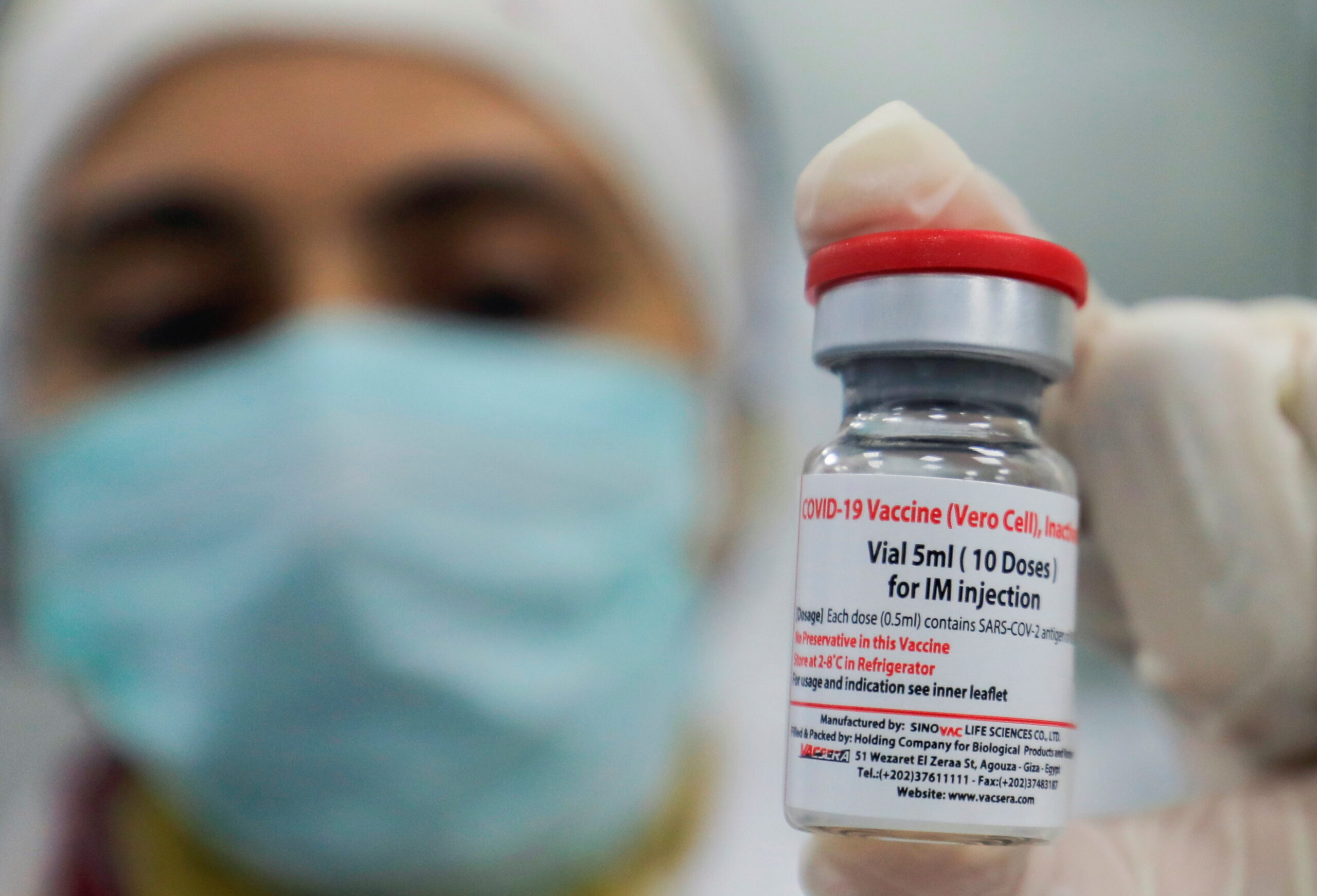
Doctors: Expired Sinovac-Vacsera doses being used in Cairo COVID-19 vaccination campaign
Medical teams are being instructed not to show recipients the ampoules if they ask
Health Ministry fast-tracks COVID-19 booster shots
The government began on Tuesday to administer third booster doses of the coronavirus vaccine.
Egypt announces first 3 Omicron cases
The announcement comes three weeks after the WHO announced the discovery of the strain
Your support is the only way to ensure independent, progressive journalism survives.
You have a right to access accurate information, be stimulated by innovative and nuanced reporting, and be moved by compelling storytelling. Subscribe now to become part of the growing community of members who help us maintain our editorial independence.
Join us