
Capital Intelligence downgrades Egypt’s credit score, citing delays in privatization, exchange rate liberalization

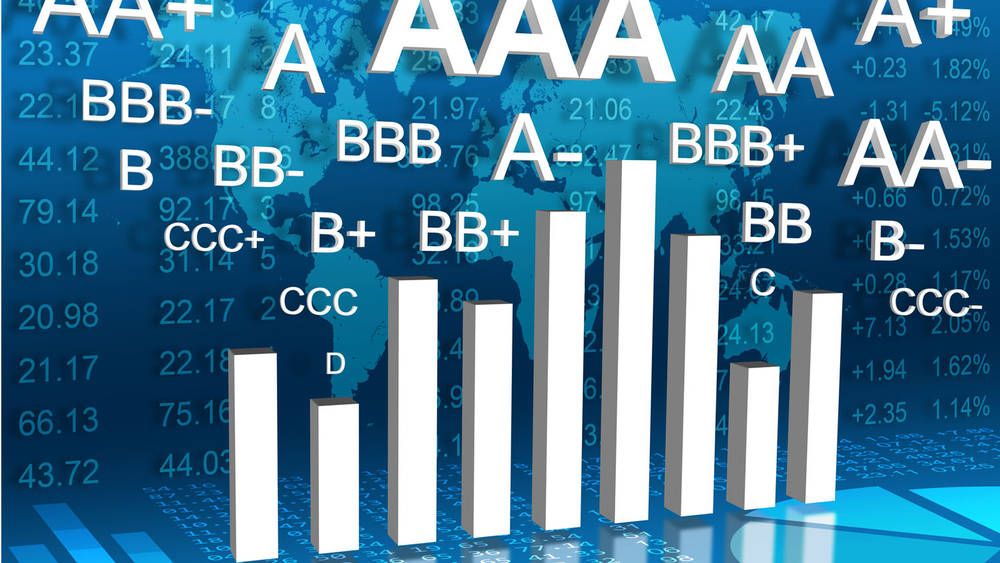
Credit rating agency Capital Intelligence downgraded Egypt’s long-term sovereign debt rating from B+ to B, citing delays in implementing structural reforms recommended by the International Monetary Fund.
Capital Intelligence is the latest agency to downgrade Egypt’s creditworthiness over the past period as the government struggles to secure foreign currency inflows amid an economic crisis marked by the depreciation of the national currency on foreign exchange markets.
“This is naturally related to the difficulty of obtaining low-cost external financing from international markets, which requires the government to rely more on financing through privatization and on local banks to provide foreign currency, in addition to trying to reach financing agreements at the level of international institutions,” an investment official at a US financial consultancy firm linked to the Egyptian file told Mada Masr.
In the report released Friday, which Mada Masr obtained a copy of, Capital Intelligence said it based its new rating on Egypt’s delays in implementing two measures: ensuring a flexible exchange rate and the privatization of state-owned assets. These delays, Capital Intelligence stated, “will adversely affect inflows of foreign direct investment and disbursements from multilateral and bilateral lenders, weakening the government’s capacity to service its external obligations in a timely manner.”
The credit rating company added that the slow pace in implementing these reforms continues to weigh on the country’s external financing risks, as evidenced by the continued delay in conducting its first review by the IMF under the Extended Fund Facility loan program.
The two measures have been among the most important conditions insisted on by the IMF for approving its latest loan agreement with Egypt in December. The agreement was supposed to see its first review in March, but it has been postponed several times.
“Persistent foreign currency shortages and very high inflation as a result of EGP depreciation and large-scale socioeconomic imbalances — especially increasing unemployment and poverty rates — continue to weigh on the ratings,” Capital Intelligence explained in its report.
The latest official state report on income and expenditure, released in December 2020, showed a 29.7 percent drop in the poverty rate compared to 32.5 percent in the previous report, which covered 2017/2018. However, the 2020 report only covers the period until the end of March 2020, meaning that it missed the largest hits from the coronavirus pandemic and the continued effect of currency depreciation on poverty and unemployment rates. The next report, which was scheduled to be issued by the end of 2022, has yet to see light.
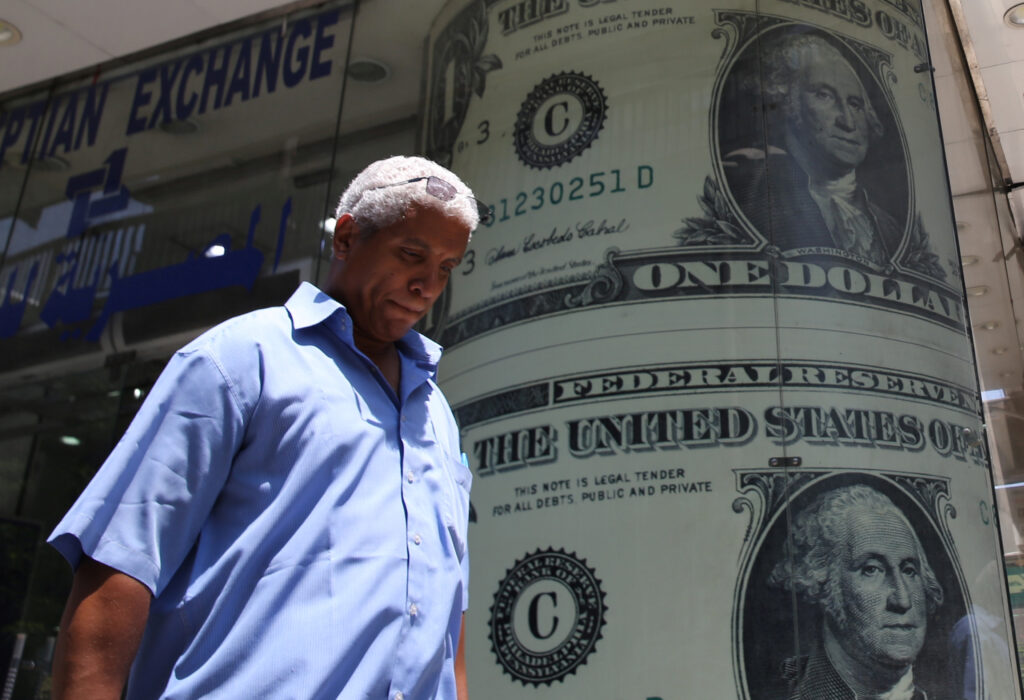
Since March 2022, the pound has lost 50 percent of its value against the US dollar through multiple devaluations. But the IMF still considered the currency’s exchange rate flexibility weak, lowering its forecasts for Egypt’s gross domestic product growth in the current fiscal year.
In mid-June, President Abdel Fattah al-Sisi stated that Egypt has “flexibility in its exchange rate,” while, in the same breath, excluding the possibility of another currency devaluation any time soon — a stance that has been anticipated by research centers and banks in their analyses of the Egyptian economy in recent months.
Halting movement on a devaluation has seen a marked erosion of Egypt’s foreign reserve holdings, with net foreign assets having fallen by as much as 120 percent year over year in July. That gap narrowed slightly last month.
Capital Intelligence highlighted “ongoing pressure on the country’s foreign exchange reserve,” while noting the slight improvement, “attributable to modest asset sales through the privatization program, as well as higher receipts from the Suez Canal.” However, the agency ruled out the possibility of Egypt rebuilding foreign exchange reserves to “appropriate” levels.
However, Ali Metwalli, a regional economic analyst at a consultancy firm in London, told Mada Masr that the rating agency’s inclusion of the foreign exchange reserve in the rationale for downgrading Egypt’s credit rating is unclear.
“Egypt’s reserves have been gradually growing since the initial shock at the beginning of last year, so the impact of its depletion should have been more detectable at the start of the crisis, but Capital Intelligence did not downgrade its rating at that time,” Metwalli told Mada Masr.
According to data from the Central Bank of Egypt, Egypt’s net foreign reserve could cover 5.6 months of imports in April, which is slightly higher than its level at the start of the year and much better than mid-2022, when it could not cover more than 4.6 months of imports. Yet, the reserve remains significantly lower than previous years.
According to Capital Intelligence, Egypt can still count on likely support from the IMF and Gulf Cooperation Council countries, but, as the agency noted, “external support is subject to a degree of conditionality,” as “with GCC assistance now linked to the country’s privatization program, the level and timing of inflows from the Gulf states is somewhat uncertain and dependent on the attractiveness of the state assets that are offered for sale.”
In July, the government announced that it had brought in $1.9 billion through the privatization of different shares in state-owned assets, but the amount was not obtained fully in foreign currency and was partially paid out in Egyptian pounds, and a number of sources close to the deals told Mada Masr at the time that they were yet to be finalized despite the government announcement.
The latest IMF loan program, which was meant to be a “certificate of trust” despite the faltering economy, has turned into a pressure cooker amid the government’s delay in implementing the mandated reforms, especially privatization and exchange rate flexibility. The international financing agency has repeatedly delayed its review of the loan program, essentially shelving the loan program.
Writing by Ahmed Bakr
أخبار ذات صلة
Morgan Stanley moves Egypt’s sovereign credit down to ‘dislike stance’
Egypt’s financing needs are estimated at $24 billion for the current fiscal year
Moody’s extends Egypt’s credit review for 3 months
Citing an attempt to “balance” government progress with concerns about Egypt’s foreign currency inflows, Moody's Investors Service extended its review of Egypt's…
Reaching a dead end? Where Egypt and the IMF stand on the stalled loan program
The state might have to renegotiate some debt servicing deadlines.
Moody’s credit rating agency ranks Egypt as stable
Moody’s rating follows an initial staff-level agreement between the Egyptian government and the International Monetary Fund.
Your support is the only way to ensure independent, progressive journalism survives.
You have a right to access accurate information, be stimulated by innovative and nuanced reporting, and be moved by compelling storytelling. Subscribe now to become part of the growing community of members who help us maintain our editorial independence.
Join us