
Belgian archaeologists discover rare statue of Pharaoh Sahure, dating over 4,400 years
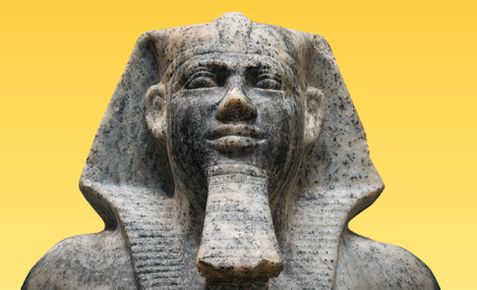
A team of archaeologists from Belgium succeeded in unearthing a statue of Pharaoh Sahure in the southern governorate of Aswan on Tuesday. It is reportedly one of a very few statues or artifacts attributed to the rule of Sahure, dating back to between 2487-2475 BC.
Sahure was the second ruler of the Old Kingdom’s Fifth Dynasty.
According to the leader of the Belgian archaeological team, Dirk Huyge, the name of Pharaoh Sahure was found inscribed on the base of a sandstone statue that they unearthed in the historically rich site of Al-Kab in Aswan, located on the eastern bank of the Nile River, over 580 kilometers south of Cairo.
While this Belgian team has unearthed only the bottom half of Sahure’s statue, further excavations are underway in hopes of digging-up further clues about the pharaoh.
In a statement issued by Egypt’s Ministry of Antiquities on its official webpage, it is mentioned that this bottom half of Sahure’s statue measures 21.7 centimeters in height, while the full height of the statue may reach up to 70 centimeters.
While there are only a handful of artifacts directly associated with Sahure. The pharaoh is renowned for expanding ancient Egypt’s diplomatic relations and trade routes from the Levant to the land of Punt (around present day Sudan to Somalia.)
According to the Ministry of Antiquities, the Belgian team’s discovery “is of great significance and importance,” as there are only two (intact) statues of Pharaoh Sahure – one in the Metropolitan Museum in New York, and the second in the Egyptian Museum by Cairo’s Tahrir Square.
Tuesday’s discovery has produced the third (incomplete) statue of Sahure to ever be unearthed.
The aforementioned Belgian team has been conducting excavations in al-Kab since 2009. The remains of several centuries worth of statues, artifacts, and temples have been discovered in this area of Aswan.
Belgian archaeologists have reportedly been involved in excavations in and around al-Kab since 1937.
Originally referred to as Nekheb, al-Kab had been inhabited since pre-historic times. It is believed to have served as a sort of regional capital for southern Egypt, during the rule of the earliest-dynasties, and intermittently until the Ptolemaic period (323-30 BC).

أخبار ذات صلة
Looking back to see the present through the Grand Egyptian Museum
The coincidental nature behind the establishment of the Grand Egyptian Museum
Staging a grand opening for the grand museum
In Cairo, sidewalks have been repainted, screens set-up and security measures tightened. People living nearby say fireworks have been test-run in Giza.…
All around the Grand Egyptian Museum
The museum will not be open to visitors until after the three-day celebration
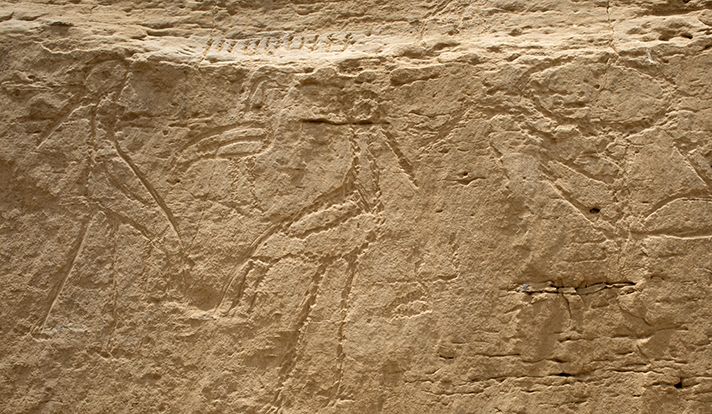
5,200-year-old rock inscriptions discovered in Luxor Governorate
A joint expedition of archaeologists from Yale University and the Royal Museums of Art and History was able to excavate several panels of rock…
Your support is the only way to ensure independent, progressive journalism survives.
You have a right to access accurate information, be stimulated by innovative and nuanced reporting, and be moved by compelling storytelling. Subscribe now to become part of the growing community of members who help us maintain our editorial independence.
Join us