
Ancient Greco-Roman city discovered in Beheira
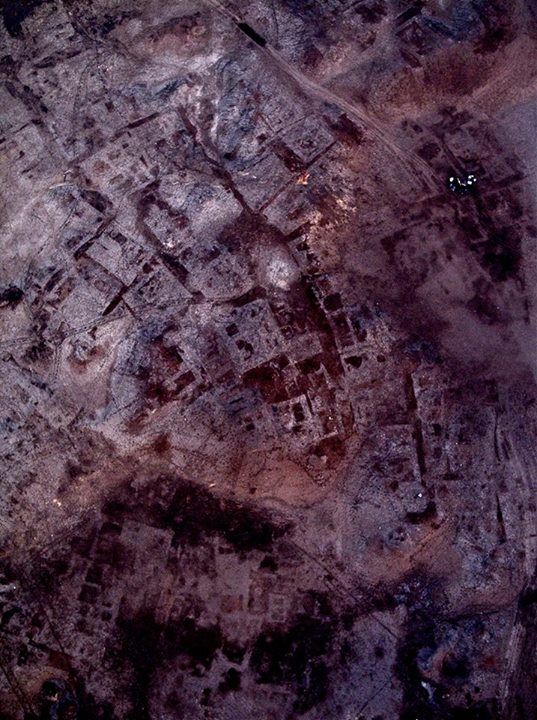
Buried for several centuries beneath a thick layer of silt, an ancient Greco-Roman city has been discovered in the Nile Delta Governorate of Beheira.
The discovery was made by a team of Italian archaeologists, working in coordination with Egypt’s Ministry of State for Antiquities.
The history of this small city reportedly dates back to between 343 BCE and 395 ACE, although some Egyptologists at the site claim that it’s origins may date back to the Late Period of Ancient Egypt — mostly under foreign rule — from 660 BCE to 330 BCE.
According to an official statement posted on the Ministry of Antiquities’ Facebook page, the city was constructed around the end of the Hellenic period in Egypt, and at the beginning of the Roman era.
It was initially located on Sunday below the modern-day village of Kom al-Ahmar — around 25 kilometers south of the Rashid/Rosetta branch of the Nile River, some 150 kilometers northwest of Cairo.
Using high-tech magnetic resonance equipment, the Italian team discovered the structural remains of a walled city, reported to contain houses, an administrative building and/or a temple.
It has yet to be wholly excavated, and a detailed analysis of its remains may take several months or even years in order to understand the ancient history behind it.
According to the Minister of State for Antiquities, Mamdouh al-Damaty, “This discovery is of great historical importance as it reflects the daily life of peoples during that period.”
Aerial photographs have been taken in coordination with teams of foreign archaeologists, scientists and historians. These photos reveal outlines of buildings and roads running in different directions — an indication of the evolving archaeological, anthropological, and engineering history behind this city.
According to the Ministry of Antiquities, the discovery of this buried city will also assist in shedding light on the presence of other Roman remains and artifacts around the area of Kom al-Ahmar and the nearby village of Kom al-Wasat.
Amongst these remains is an ancient Roman bath, which was discovered years earlier in the same area.
Further excavations and studies are due to be conducted by the Italian archaeologists from the Universities of Siena and Padova.

أخبار ذات صلة
Looking back to see the present through the Grand Egyptian Museum
The coincidental nature behind the establishment of the Grand Egyptian Museum
Staging a grand opening for the grand museum
In Cairo, sidewalks have been repainted, screens set-up and security measures tightened. People living nearby say fireworks have been test-run in Giza.…
All around the Grand Egyptian Museum
The museum will not be open to visitors until after the three-day celebration
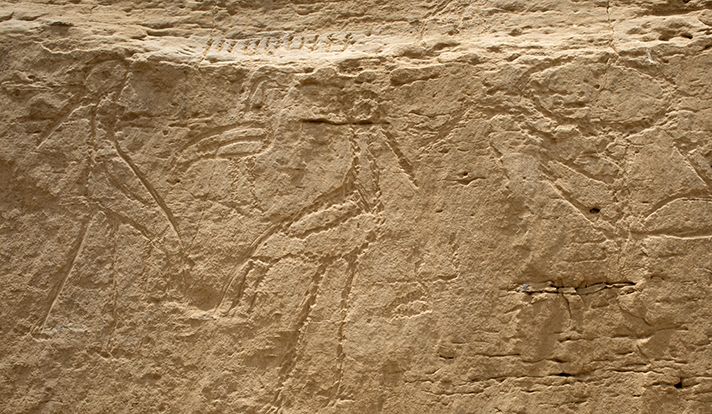
5,200-year-old rock inscriptions discovered in Luxor Governorate
A joint expedition of archaeologists from Yale University and the Royal Museums of Art and History was able to excavate several panels of rock…
Your support is the only way to ensure independent, progressive journalism survives.
You have a right to access accurate information, be stimulated by innovative and nuanced reporting, and be moved by compelling storytelling. Subscribe now to become part of the growing community of members who help us maintain our editorial independence.
Join us