
Ancient Egyptian temple discovered near Aswan
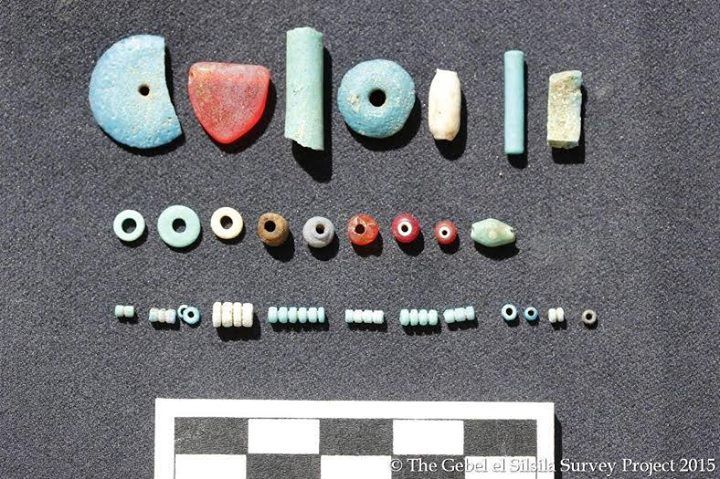
The foundations and remains of an ancient Egyptian temple estimated to date back over 3,300 years have been unearthed at a site known as Gebel al-Silsila in the south of Egypt.
Located on the eastern bank of the Nile River about 65 km north of Aswan — Egypt’s southernmost government — the temple has been identified by the names Kheny or Khenu. Archeologists believe it dates to the New Kingdom (1550-1077 BC), and may have remained in use until the time of Roman rule over the area (30 BC-641 AD).
The temple appears to have featured rows of columns and a blue, star-studded ceiling. Archeologists have uncovered more than 300 fragments of the temple’s ceilings, iconographic works, colorful limestone and sandstone artifacts, royal seals and ornamental beads, along with cartouches bearing the names of Pharaohs Amenhotep III (who reigned 1388–1350 BC) and Ramses II (who reigned 1279–1213 BC) from the site.
According to a statement issued on the Antiquities Ministry’s official website, the temple’s remains were excavated on Sunday. So far, findings indicate that Gebel al-Silsila and its environs served not only as sandstone quarries in ancient times, but also that Kheny or Khenu was considered a sacred site, and held religious significance.
This discovery was made by a team of Swedish archaeologists from Lund University, who have been digging in and around this ancient site since 2012. Their “Gebel al-Silsila Survey Project” has been conducting excavations based on an archaeological map published in 1934 by Ludwig Borchardt, a classical German Egyptologist.
Maria Nillson, the team’s chief archaeologist, explained in a statement that the principle ancient Egyptian deity associated with this area of the country was the crocodile god Sobek. However, it is not yet clear which god or gods this temple was dedicated to.
“We hope further archaeological work and research will reveal more,” Nillson told the Discovery News website.
Additional excavations, research and analysis are reportedly being undertaken at the Gebel al-Silsila site to better understand its origins, history and utility under both Egyptian and Roman rule.

أخبار ذات صلة
Looking back to see the present through the Grand Egyptian Museum
The coincidental nature behind the establishment of the Grand Egyptian Museum
Staging a grand opening for the grand museum
In Cairo, sidewalks have been repainted, screens set-up and security measures tightened. People living nearby say fireworks have been test-run in Giza.…
All around the Grand Egyptian Museum
The museum will not be open to visitors until after the three-day celebration
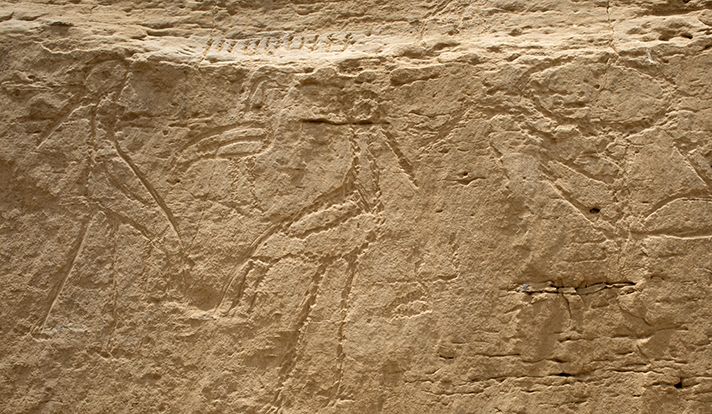
5,200-year-old rock inscriptions discovered in Luxor Governorate
A joint expedition of archaeologists from Yale University and the Royal Museums of Art and History was able to excavate several panels of rock…
Your support is the only way to ensure independent, progressive journalism survives.
You have a right to access accurate information, be stimulated by innovative and nuanced reporting, and be moved by compelling storytelling. Subscribe now to become part of the growing community of members who help us maintain our editorial independence.
Join us