
Student union elections: Is politics dying in Egypt’s universities?
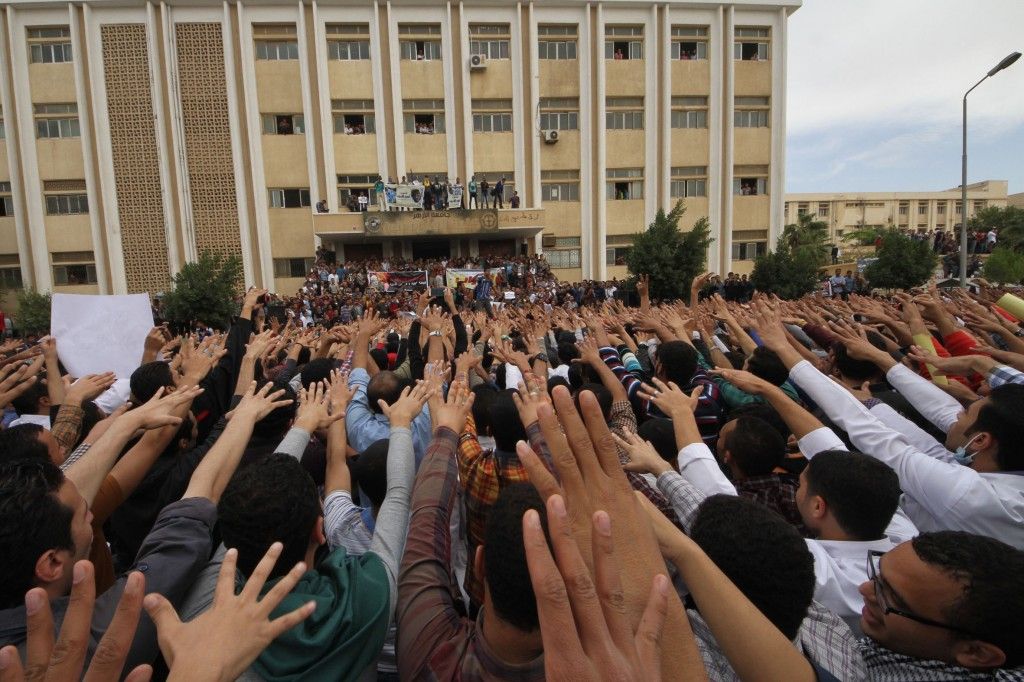
Student union elections are due to start this week, but when the acting student union president at Al-Azhar University enquired about the schedule, he was told there is no information, despite other universities already having their schedules out.
“I believe holding elections in such an atmosphere is a luxury,” Mohamed Atef says, describing the scene inside the university, where he says 10 police tanks are relentlessly blaring their sirens.
The activities of Al-Azhar University’s elected student union were frozen in 2013, following both the political standoff between the state and the Muslim Brotherhood and bloody clashes within the university between students and police forces.
Several leading figures in the university’s student unions, who are mostly affiliated with the Brotherhood, were arrested and are currently serving prison sentences. Some have been referred to disciplinary committees and suspended from study, while others were prevented from living in the university’s dormitories. Atef himself was suspended for two weeks and was unable to access the dormitories.
At Al-Azhar, as well as other universities across Egypt, the map of student electoral alliances reveals pervasive political apathy, with most students avoiding any political affiliation.
Three major powers are bracing for the upcoming elections, scheduled to start this week and to continue through December. The first alliance, Voice of Egypt’s Students, is largely viewed as being pro-government and advocates ending all political activities in universities.
Students affiliated with revolutionary youth movements and political parties are timidly emerging to campaign for academic freedoms and oppose the government crackdown on universities. These students are mostly concentrated in the central major universities: Cairo, Ain Shams, Helwan and Alexandria.
Independent students involved in community service activities make up the third bloc. They neither affiliate themselves with the students supporting the government nor those opposing it. Meanwhile, students belonging to the Muslim Brotherhood-affiliated Students Against the Coup have launched a campaign dubbed “Our Right,” calling for a boycott of the student elections, which they describe as “silly play.”
Omar Gaber, representing the pro-revolution Voice of the Square movement in Alexandria University explains that the movement is in the process of coordinating and forming alliances with those willing to campaign for suspended and detained students. The violence over the last two years has resulted in thousands of students being detained or suspended from universities, as well as the deaths of 17 students.
Gaber says that those most likely to enter into an alliance with them are students representing political parties like Dostour, Strong Egypt, the Egyptian Social Democratic and Popular Current parties, as well as others like the April 6 Youth Movement.
This time around, these groups are toning down their language.
“We are hardly trying to push for our revolutionary discourse, as students are no longer willing to absorb any radical political rhetoric, unlike during the 2013 elections,” he says. “We have taken many steps backward.”
Student union elections in 2013 saw intense political competition inside Egyptian state universities, which enabled pro-revolution students to win at least half of the seats of Egypt’s National Student Union. Students ran in elections through competing platforms and ideologies, with a huge turnout. Muslim Brotherhood-affiliated students saw great losses that year, having controlled the unions in 2011 and 2012 when pro-revolution students boycotted.
Alliances that are said to be close to the state are also toning down their political affiliations, denying any connection to the current administration.
Students representing Future of a Nation Party — founded by former president of the National Student Union, Mohamed Badran, known for his close relationship with President Abdel Fattah al-Sisi — declared their alliance with Voice of Egypt’s Students and Long Live Egypt coalitions.
Representative of Long Live Egypt, Mohamed Bassiouny, explains, however, that they have since withdrawn from the elections in protest over allegations that the coalition is affiliated with the state.
“We will compete for student union seats next year to prove to everyone that we are not affiliated with those in power and do not want to be associated with them.”
Meanwhile, leader at Voice of Egypt’s Students, Saad Nadim, denies any alliances with either groups, adding that his coalition is connected with major student activities across universities and is independent from anti or pro-regime groups.
“We wholeheartedly reject the presence of political parties and agendas inside universities, we should stop engaging in this endless political maze,” he says. “Of course we won’t ignore the rights of students connected to political cases, but this does not mean that we should be politicized.”
Independent students are thought to be the black horse of the current elections. Many of these students are active through engagement in community service activities.
Founder of Youth who Love their Country student activity group at Ain Shams University, Ahmed Adel explained that he is running in the elections but is staying away from politics.
“We depended on self-financing our activities without depending on political money and the agendas it carries that go beyond the interests of the students,” he says.
Although veering away from politics, Adel plans to campaign on the issues related to detained and suspended students.
“We don’t have to carry political agendas to call for the rights of students who suffer because of their political ideologies,” he explains. “Politicized student movements do not offer any real electoral platforms, they just represent their own political interests.”
Adel believes that approaching university administration peacefully and without confrontation is the most effective way of dealing with the issue of detained and suspended students.
Gaber of Voice of the Square disagrees, arguing that the issue is not how students approach issues, but a harsh security crackdown instead.
“We cannot register student activities because they are rejected by the administration, and any radical gestures can result in us being suspended or in jail,” he says. “We cannot even demand mere unpolitical educational demands like free education, reducing tuition fees and the rising prices of textbooks.”
Excluding politics?
Gaber’s suspicions are further confirmed by the latest amendments to university bylaws organizing the student union elections introduced by the Higher Education Ministry and published in the Official Gazette on October 18. The new amendments stipulate that students running for elections should have paid university tuition fees, and not be subject to any disciplinary penalties by the administration or be affiliated with any terrorist or unlawful organization.
Many press reports speculated that the new amendments may be used to prevent students affiliated with the April 6 Youth Movement and the Muslim Brotherhood from running in elections, as both groups were banned by a court order in 2013.
Deputy head of the high committee for student services and activities at the Higher Education Ministry Sobhy Hassanein denied these claims in a telephone interview with Mada Masr.
“Only students who were sentenced according to court orders or punished by a university disciplinary decision will be banned from contesting the elections, Hassanein asserts. “We cannot prevent students from their right to candidacy merely for their political affiliations.”
But head of the student rights and freedoms department in the Association of Freedom of Thought and Expression (AFTE), Mohamed Nagui, says that these decisions will be informally implemented. The powers of disciplinary committees have been used arbitrarily over the past two years against politicized students he explains.
“Preventing these students from contesting elections means they are punished twice, this is unjust and illegal,” he says.
There appears to be active competition only in central and major universities, while local universities mire in apathy. Momen Essam, representative of the Bread and Freedom Party at Assiut University explains that the elections there are limited to independent students, while electoral alliances are almost non-existent. For Essam, “politics is dying.”
Nagui of AFTE agrees. Reports from some universities show that the numbers of students contesting the elections are few, failing to reach the required quorum for the number of contested seats.
“This would leave the door wide open for the administration to push for students affiliated with the state or security to easily control the elections,” he fears. “Politics has completely died inside universities, just like political competition, which pushed politicized students to hide their political affiliations to be able to run for elections.”

Mai Shams El-Din
Mai graduated from the American University in Cairo with a degree in journalism. She worked mostly for local English-language news outlets but has also been writing in Arabic, particularly when…
تقارير ذات صلة
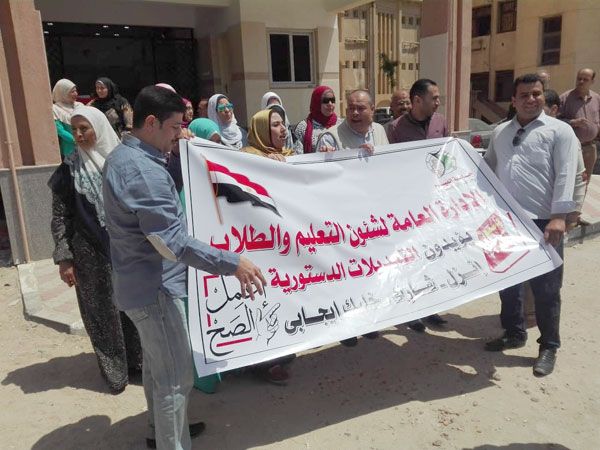
Carrots and sticks: How students were made into poster children for the constitutional amendments referendum
How youth were mobilized as a visible force supporting the referendum on constitutional amendments
Exclusion, intimidation and suppression at Egypt’s 2018 student union elections
At almost all universities, students were barred from union elections to "protect public interest"
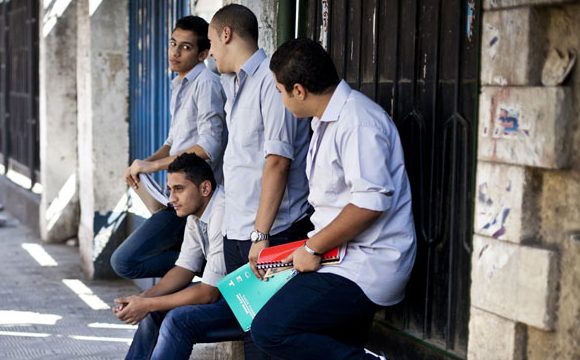
Discipline to what end: Egypt’s failing schools and a new Education Ministry initiative
Will the Education Ministry's focus on student behavior resolve the issues?
Your support is the only way to ensure independent, progressive journalism survives.
You have a right to access accurate information, be stimulated by innovative and nuanced reporting, and be moved by compelling storytelling. Subscribe now to become part of the growing community of members who help us maintain our editorial independence.
Join us