
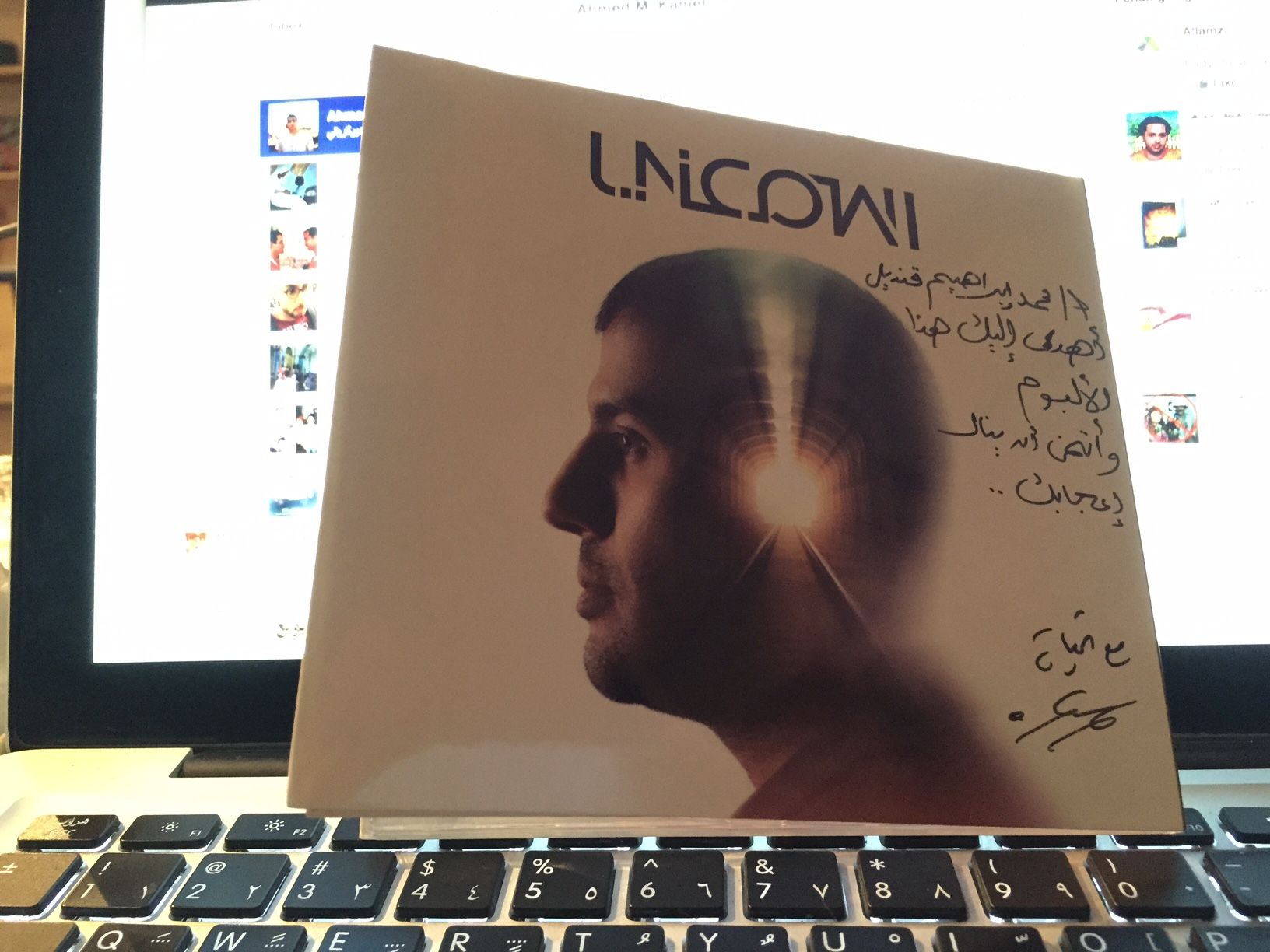
This album is so mediocre, it reminds me of one of the top five mediocre moments in my life.
In my first year in college, I was confused by everything. It took me months to figure out the best public transport plan to make it to Zamalek where my mediocre college was. I had to switch between overcrowded, cheap jurassic microbuses, the metro, black taxis and white taxis in a trip reflecting Cairo’s overlapping class system.
Speaking of mediocre colleges in Zamalek, you’re probably thinking I studied fine arts. The truth is, it was art education, an even more mediocre college, a cheap, rip-off of fine arts for students who don’t have enough grades to join fine arts. I thought I was an artist, and I thought the college was going to help me. It didn’t. I tried looking elsewhere.
It was 2004 B.Y. (before YouTube). Access to music was still heavily reliant on objects you had to insert into devices. I had a Walkman that I listened to on my long lost walks in Zamalek, and most of the tapes in it had tracks recorded from multiple sources with primitive technologies — buying tapes was a luxury I couldn’t afford. The LE10 to 20 a tape equaled 20 microbus trips from Giza to Kitkat. Yet one tape forced me to do this financial stunt and buy it. It was Sami Yusuf’s Al-Muallim. BOOM! Shut up and take my money!
Sami Yusuf is a British Muslim singing about Islam and stuff in English and Arabic. It was a fusion of types of music representing cultures where Islam is the religion of the majority. The lyrics were either about generic human values, peace, love and shit like that, or about specific details that fit into the Muslim lifestyle — a song about Eid and how people celebrate it, or about the Prophet Mohamed and a particular aspect of his struggle to spread the Dawah. Listening to this album for me was an exciting mode of communication with the other, who at the same time was very familiar and comfortable and agreed with. He was foreign, different and new, BUT Muslim and promoting values I agreed with and understood. We were both going to heaven so it was fine.
I was stuck in that boring area of choices of inspiration for a really long time, until I taught myself, and was taught by others, to take myself outside of my comfort zone and came across very new feelings and experiences that showed me a side of art and humanity that I’m still figuring out.
Hamza Namira’s album Ismaany (Listen to Me), released a few days ago, unfortunately reminds me of Sami Yusuf's 2004 album. Everything is moving very slowly.
Hamza Namira is a very hardworking artist, who I first heard of a few months before the revolution. Everybody was sharing his famous song Issmy Masr (My Name is Egypt), in which he addresses Israel as Egypt. The lyrics were strong and sharp and clearly critical of the official government stance towards the Palestinian cause. It announced that Egyptians think differently from their rulers. A lot of people liked that, the song got famous, the revolution happened. Hamza launched his album Insan (Human, 2011), in which he defined his obvious support of the revolution and mildly hinted at his disagreement with authoritarianism, aka the Supreme Council of the Armed Forces. This hazy stance was a bit confusing for many people, but this confusion turned into a certainty after Hamza made his next few choices.
The Hamza Namira Wikipedia page refers to him as a multazim (committed) artist. The term was introduced to Egypt’s urban dictionary with the mutation of middle-class understanding of religiosity in recent decades. A multazim in this sense is more than just a Muslim — he’s a person unusually committed to Islam’s teachings and worship. The label reflected a new social application of religiosity in Mubarak-era Egypt, strongly linked to the rise of the Muslim Brotherhood’s cultural influence over society. Hamza never announced any direct ties with the Brotherhood though, despite the very aggressive campaign against him by pro-military media outlets after his anti-June 30 opinions.
I started writing this article with the intention of avoiding politics and focusing on the artistic side of the story. That’s why I spent so much time at the beginning creating distractions and talking about my adolescence. But I have to admit, I’m finding it very difficult to ignore the Brotherhood-ness in Hamza’s work. The album, despite all the harassment Hamza has received in Egypt, and the fact that he had to flee to Turkey 🙂 to be able to produce it, came out in very good shape. It looks well-funded and comfortable. It was launched on YouTube with a simple video clip for each track, some bad video art piece that reflects on the song.
The album explores a very common Egyptian pop album formula, whereby there has to be an upbeat track, a traditional oriental track, a simple instrumental quiet oud track preferably about mothers, a modern techno track, a song with an Arabic dialect, and so on.
It’s interesting to see this formula being used by a (committed) artist who believes in a Muslim Egypt in which true Islam is finally properly understood and eastern traditions prevail. Classical Arabic lyrics about injustice and change come before or after a jolly dancey song about good mornings or whatever. Another track about departure from home, Maa al-salama (Farewell, a very personal one for Hamza), sounds with slight changes like any other love song about breakup you hear on local radio.
The album is indeed confused. Ya Lala is strongly all about being Arab, and about fleeting Arabian glory, complaining about modern-day Arab lifestyles submitting to western culture. The next track, Ismaany (Listen to Me), is an angry revolutionary song about oppression with a very shy, extremely watered-down visit to dubstep. The beat tries to go crazy, then awkwardly suppresses itself, running back to the safe zone herded by Hamza’s (committed) voice that keeps everything very conservative.
The album’s pop disguise is interesting. There could be some very inspiring results to combining revolutionary approaches and opinions with the material of an industry entirely built on the values of profits and consumerism, but maybe that requires awareness of these values as well as an intention to explore or dismantle them, rather than integrating with them.
I hope I’m not overloading the situation if I say that this precisely the main problem I have with the Muslim Brotherhood’s political struggle in Egypt in general. It calls itself a revolutionary movement, while believing in values that send people back to social models where equality and progress are controversial points of discussion. They sell themselves to the locals as revivers of heritage and reclaimers of the past, while selling themselves to the outside world as modern interpreters of belief and futuristic aspirers for a new order of peace and cooperation. They’re still having a hard time figuring out the riddle of identity, the mass production of personality traits that hundreds of thousands can understand, practice and live, in a world moving more and more toward an individualism, loneliness and remoteness.
The album reminded me of my own confusion in 2004. Wanting to be cool, not knowing how. My love/hate relationship with the West and my genetic bond with a culture I didn’t know much about and for years believed to be a utopia.
After listening to Hamza’s track Listen to Me, which has been played on YouTube more than 1 million times, the first thing I thought of was Ramy Essam’s recent clip, Ahd al-Ars (Age of the Pimp), played 60,000 times. Ramy’s vulgar, impolite song was transmitted from Sweden where he fled after the recent crackdown on revolutionary voices. Just like Hamza, in many ways, Ramy Essam's is a voice associated with the January 25 revolution and representing a section of young people in this country, their dreams and ambitions, but at the end of the day, 1 million views vs 60,000 views and Sweden vs Turkey opens a discussion about a lot more than music in this moment.
Correction: This article originally suggested that Ramy Essam fled to Switzerland, rather than Sweden. This was fixed on December 18, 2014.

Andeel
Andeel was born in Kafr al-Sheikh in 1986. His uncle told him that his paternal grandfather was a filmmaker who made a feature film called “Horses,” which he took to…
تقارير ذات صلة
DETOX | Better late than never
Women are rightfully angry, and they’re demanding to be heard.
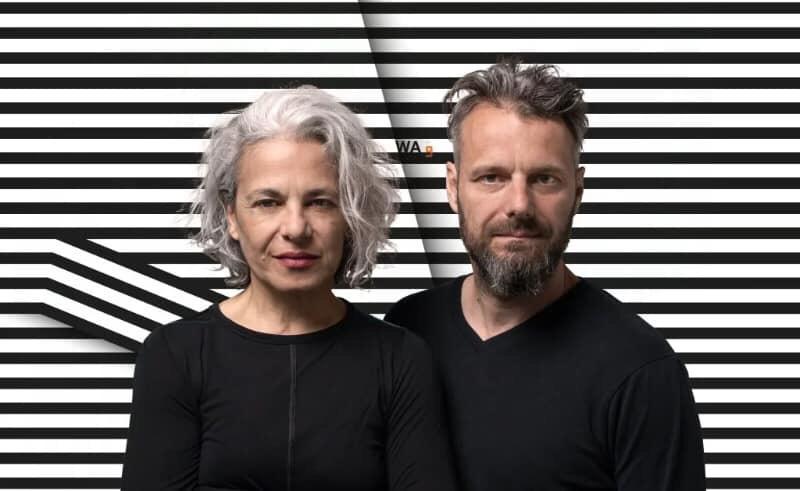
cosmic lovers meet Kamilya Jubran
We read Constantine Cavafy then listen to Kamilya Jubran at Bibliotheca Alexandrina. Cavafy's poetry lives in images of the past, but without nostalgia. They are images that locate memory in…
Detox | Issue 08: On birds, language and revolution
We have the usual assortment of recommendations for you, from articles to documentaries to playlists
Your support is the only way to ensure independent, progressive journalism survives.
You have a right to access accurate information, be stimulated by innovative and nuanced reporting, and be moved by compelling storytelling. Subscribe now to become part of the growing community of members who help us maintain our editorial independence.
Join us