
Economic bridges to nowhere: On the state’s faltering offering program
In a promptly concluded deal, the Cabinet announced earlier this month the Emirati-owned Global Investment Holdings’ acquisition of a 30 percent stake in Egypt’s biggest tobacco manufacturer, the Eastern Company, at a time when the Egyptian tobacco market has been witnessing a significant scarcity in supply, leading to a twofold increase in prices for several consecutive weeks.
Listed in the state’s privatization program, the Eastern Company deal was an exception among the companies listed in the government privatization program, of which only a limited number have been completed since February.
While the government previously attempted an IPO program in 2018 to lure investors, the scheme was later postponed due to hostile market conditions. A revamped version was launched earlier this year, at a time when the International Monetary Fund’s recent US$3 billion loan to the country included recommendations for the state to reduce its footprint in the economy.
Yet progress on the revamped privatization program was slow to nonexistent. Justifying the sluggish developments in asset sales, officials previously referred to investors’ anticipation of better conditions, in spite of the multiple alluring incentives offered by the state.
And then there was a seeming breakthrough. In a nationally televised presser in July, the state celebrated the completion of deals worth $1.9 billion. But the announcement was premature, as sources close to the program told Mada Masr at the time that the deals had yet to be finalized.
The continuous delay in selling off any state-owned assets was a point raised in a recently published Cabinet Information and Decision Support Center report that Mada Masr reviewed. There are real obstacles facing any substantial plans for the offerings, the report says, mostly due to the fact that the Cabinet has only been able to partially take stock of all state-owned assets.
The report notes that, while it has some information on the profitability of some companies, there are many companies under the state’s remit that it cannot reach a conclusive determination on. So far, all of the companies that have been offered to this point are classified as profitable. But, even then, according to the report, the state will allow investors to hedge against companies’ performance in the country’s volatile market by promising a guaranteed return on their investment.
In the midst of it all, Egyptian citizens, the legitimate owners of the assets, are unable to oversee the ongoings of the deals, let alone halt their completion.
Analysts and experts who have spoken to Mada Masr say that the state’s asset-offering program is a short-term fix rather than a real solution for the current economic crisis. Lacking a realistic plan, aside from hopes and promises to deal with the structural challenges facing the economy, the state is merely presenting “bridges” to cross the crisis, they say.
What does the state actually own?
Taking stock of state-owned companies is the main struggle facing the offerings scheme.
According to the report reviewed by Mada Masr, the government attempted to put in place a database to register over 705 companies in nine sectors with the Cabinet support center’s help.
These 705 companies are owned by 33 state bodies, 18 ministries, the Central Bank of Egypt, the Egyptian Financial Regulatory Authority, the Egyptian Radio and Television Union, the Egyptian Authority for Unified Procurement, the Upper Egypt Development Authority and the Suez Canal Authority. The Public Enterprise Ministry holds the largest portfolio, according to the document, with 45.2 percent of the state’s total assets. Companies owned by the Armed Forces and other sovereign bodies were absent from the report.
Upon completion of the inventory of assets, the government demanded additional information on the companies, mainly concerning their profitability and the state’s stakes in each. However, it was unable to accurately determine this information, with the Cabinet Information and Decision Support Center failing to identify the state’s percentages in 265 companies, according to the report.
Information on the companies’ profits and losses was similarly riddled with ambiguities, as the report indicated that for 36.3 percent of the 705 companies, profitability remained unclear.
Moreover, the Armed Forces’ control over the public sector complicates the offerings program, as they constantly refrain from publishing the accounts of companies operating in the economy due to concerns that such transparency would endanger their interests.
Setting unrealistic goals, over and over again
Despite the vagueness in data procurement, officials continue to promote the offerings in their public comments, presenting the scheme as the answer to mitigating the economy’s collapse by financing the chronic budget deficit and foreign currency scarcity.
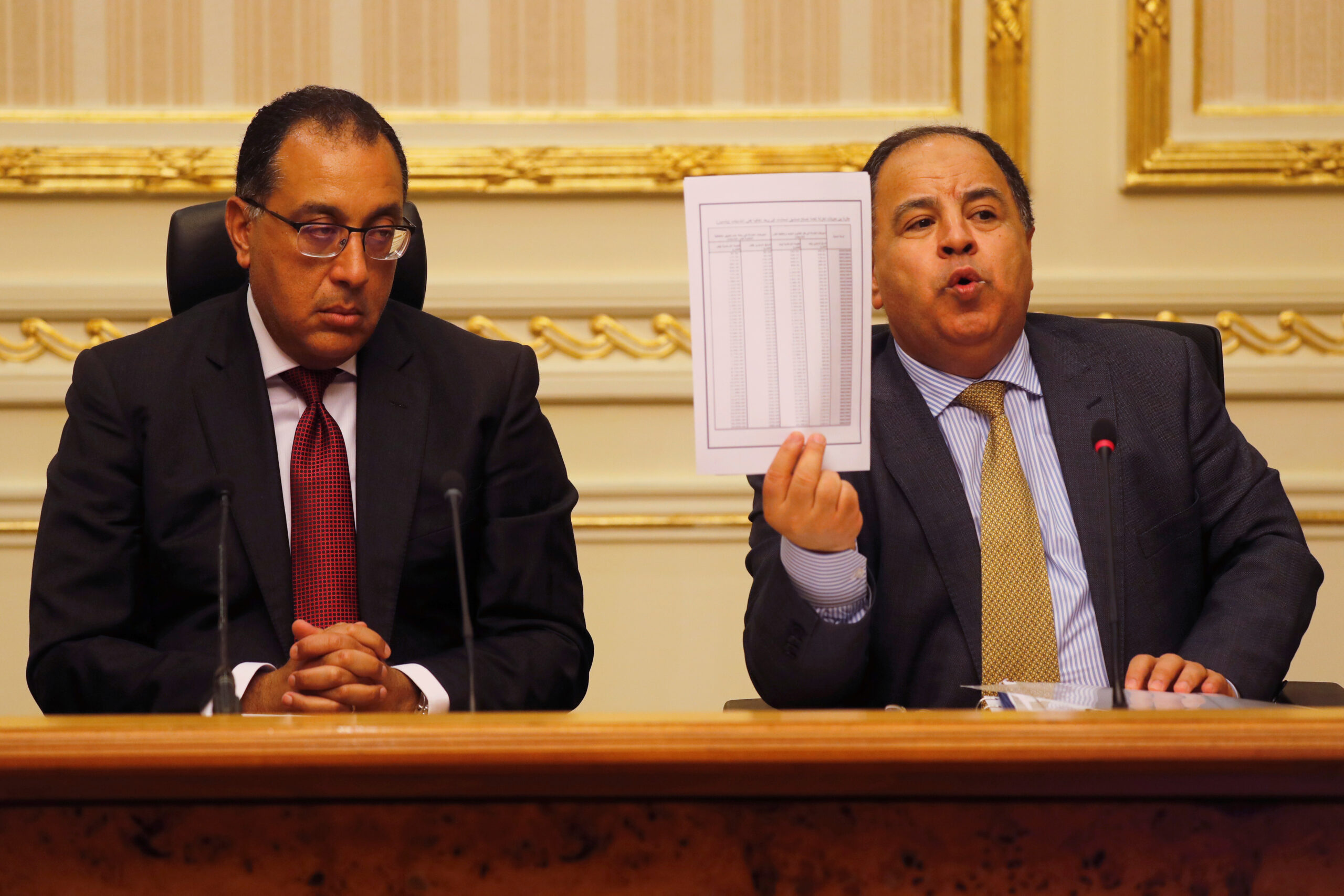
In a May 2022 presser, Prime Minister Mostafa Madbuly announced that the government was looking to offer $40 billion worth of its assets to the local and foreign private sectors over the course of four years.
Madbuly’s target seems large at first glance. But would it be enough to finance the state's foreign currency needs?
During the four years planned for privatization offerings, debt servicing will amount to $87.2 billion, according to the latest central bank report on the economy’s foreign obligations. The figure excludes internal debt payments, dollar-denominated maturity payments to foreign investments in hot money, monthly foreign currency needs for imports, and profit transfers to foreign companies operating in Egypt, among other obligations.
Mabduly stated at the time that the Cabinet intends to offer 10 of its companies, along with two military companies, on the Egyptian Exchange before the end of 2022. Now, over a year later, the prime minister’s scheme is yet to become a reality.
He appeared again in February 2023 to announce the latest iteration of the privatization program, which initially included 32 companies planned for sale by the first quarter of 2024 with the goal of raising $2 billion in asset sales before the end of June 2023.
The timeline was reportedly compliant with a key IMF condition necessary to move forward with the delayed first review of Egypt’s $3 billion loan program with the fund.
With yet another update to the public in July, after the June deadline had passed, the government announced it had signed deals worth US$1.9 billion since the program launched in February. Planning Minister Hala al-Saeed broke down the supposedly completed deals:
- A total of around $146 million from the state’s exit from the Paints and Chemical Industries Company - PACHIN and Telecom Egypt.
- A deal to sell the state’s entire 31 percent stake in Ezz El Dekheila Steel for $241 million, 60 percent in US dollars and the rest in Egyptian pounds.
- A pending deal to increase the capital of the Holding Company for Tourism and Hotels, which owns seven state-owned hotels, by 37 percent as a stake acquired for $700 million by a Talaat Mostafa group subsidiary, Arab Company for Tourism and Hotels Investments (ICON).
- Stakes ranging from 25 to 30 percent in the Egyptian Drilling Company, the Egyptian Linear Alkyl Benzene Company (ELAB) and the Egyptian Ethylene and Derivatives Company (Ethydco) were sold to Abu Dhabi Development Holding Company (ADQ) for $800 million within the sovereign fund’s pre-IPO sub-fund.
Despite the prime minister’s public celebration of the deals, a number of sources close to the program told Mada Masr at the time that the fanfare was premature, as the sales were yet to be completed at the time of the announcement. Besides, out of the $1.9 billion acquired from the completed sales, $1.65 billion is in US dollars and the rest is in Egyptian pounds.
Payment facilitations in local currency were not the only way the government attempted to incentivize investors to move forward with the deals.
"We are in highly critical times, and the risk of investing in Egypt is imminent, which is why the government is trying to provide investors with whatever reassurances they need to convince them to put any money in the country," says a financial analyst at an investment bank who spoke to Mada Masr on condition of anonymity.
So what is behind the guarantees in the ADQ deal?
According to the recent Cabinet report on the offerings, the central bank offered ADQ “guarantees” for its $800 million investments in three Egyptian industrial firms: Ethydco, ELAB and the Egyptian Drilling Company.
These guarantees will see the central bank ensure the Emirati fund the amount of its initial investment plus an eight percent return for four years (at least 32 percent in total). This means ADQ will reap more than a billion dollars after four years, even if the valuation of the assets goes down.
Economic analyst and finance professor Medhat Nafea tells Mada Masr that the government’s course to provide investors with guarantees is “puzzling.”
Nafea explained that states or companies can directly borrow from banks or offer bonds with maturity dates and, in both scenarios, bear the interest rate. The lender or bondholder, on the other hand, is excluded from company management rights and does not receive profits. In some cases, when the interest rate is increased, companies issue ownership shares as a way to collect the required funding without interest. In that case, risk is channeled to the buyer, who is therefore granted rights to join general assemblies or get seats on the company’s board of directors as a return for their risky investment.
In other minor cases, companies tend to offer preferred shares — a hybrid between common stocks and bond issuances — which grant their holders the right to stable dividends, aside from later gains upon distribution across common shareholders. In times of crisis, companies resort to this mechanism to secure quick financing without risking their debt metrics, which, if at a high rate, could indicate that the company is exposed to great risks (namely its reliance on debts for financing), while a decreased rate points to its relative stability (by not hinging on debts for financing and growth).
Similarities can be found between the strategy described by the financial analyst and the Emirati sovereign fund purchase of ownership rights guaranteed by the central bank.
“Investors acquiring stakes in the offered companies are buying shares or ownership rights, which is different from investments in debt instruments that guarantee a fixed yield, so the government is actually turning ownership rights into debt instruments by guaranteeing to investors a fixed yield, come what may in the market with the four years,” Nafea says.
The guarantee granted by the government comes initially as a way to hedge against the exchange rate, according to Nafea’s reading of the situation.
“In my assessment, and based on the lack of information, this is a governmental attempt to lure investors by pairing the deals with a medium-term guarantee of four years. And afterward, the investor will have the freedom to make an individually based long-term decision, either to keep the companies if they are turning a profit or sell them to guarantee a reasonable return on their investment. I think this has to do with the exchange rate. The government is predicting a 32 to 37 percent devaluation in the course of the next four years, which is a reasonable rate considering the 50 percent decrease in the pound’s value last year,” Nafea says.
The Cabinet report failed to indicate whether this mechanism was previously implemented in any of the completed deals or will be with upcoming offerings. Further, these conditions were not officially announced by the government, violating the transparency it pledged to as a way to encourage the investment climate.
When it comes to military companies, it’s more complicated
With Armed Forces companies, a higher level of secrecy is adopted by authorities. The Cabinet’s recent document did not include assets owned by the Armed Forces and other sovereign bodies, with the exception of military-owned Wataniya Petroleum and bottled water company Safi, both of which are nominally up for grabs.
However, high levels of confidentiality have been enforced for the two companies, as the government requires investors to sign a non-disclosure agreement in order to review their data, according to the Cabinet report.
The Armed Forces’ control over the public sector will always complicate the offerings program, says senior political economist at Oxford Economics François Conradie, pointing to the military’s constant refrain from publishing the accounts of their companies that operate in the civil sector due to concerns that it will threaten their interests, along with those of retired officers who manage these institutions.
Military companies have always been black boxes. There are no substantial records of the military’s expansion in economic activities or the nature of their general revenues. Therefore, upon its loan agreement at the end of last year with the Egyptian state, one of the IMF’s conditions was for the government to require state-owned companies, including those that are military-owned, to submit financial accounts to the Finance Ministry on a biannual basis. The ministry, in turn, was expected to ensure public access to the data.
The authorities committed to a significant number of other measures to bolster transparency, including a pledge to provide data on benefits granted to state-owned companies, whether wholly or partially, such as tax breaks or exemptions, before the end of April. It also promised to publish all public procurement accounts exceeding LE20 million, along with the Central Auditing Organization’s last three public audit reports, all before the end of January. Another promise was for the government to show progress in its companies’ governance and management policies, entrusting managerial positions to experts according to performance-based contracts and issuing guidelines for the selection criteria for company boards, as well as the qualifications and rewards of its members in each company.
None of these conditions were implemented.
In fact, the opposite took place when the draft law to “abolish tax exemptions for state bodies participating in economic and social activities” was discussed by the House in July. MPs excluded Armed Forces companies from the decision, along with authorities concerned with national security.
A financial analyst, speaking to Mada Masr on condition of anonymity, said that the government’s requirement that investors avoid disclosing any information is “very suspicious.”
“The government is continuously stressing its attempts at great transparency, as per its agreement with the IMF, a large part of which concerns disclosure reports for state-owned companies, including for military-owned entities. However, the state is now insisting on limiting the disclosed data and therefore is splitting up its companies and selling the divisions, which are offered to investors with the prerequisite of a non-disclosure agreement, a move that impacts citizens’s ability to review the agreed-upon valuation or follow-up on sales of state-owned companies, which are their property,” the analyst explained.
The ability to express opinions, let alone object, on state asset sales is restricted for Egyptian nationals. Back in January, the Official Gazette published a Supreme Constitutional Court ruling that rejected a lawsuit opposing the decision to limit appeals on contracts in which the state — or any of its bodies or companies — holds assets with rights limited solely to the contracting parties.
A State Council vice president who spoke to Mada Masr at the time described the ruling as an emphasis on the legal responsibility of “the guardian before God to dispose of public funds.” The State Council added that the Constitution does not grant citizens the right to protect public property but instead delegates that right to the legislator. Therefore, the sale of state assets and properties is not subject to judicial oversight.
Sources close to the privatization program point out that citizens are not alone in facing issues with sovereign entities. Senior officials at the Sovereign Fund of Egypt were met with similar problems during their employment, which recently prompted five of them to submit their resignations and take on positions in the private sector. The resignations came after months of difficulties in reaching common ground with “other state bodies due to different professional backgrounds, especially since sovereign fund employees only worked in the private sector,” a source at the sovereign fund says.
The privatization program’s continuous faltering reveals the lack of an actual plan to execute, the financial analyst adds.
“I don't think the scheme is well thought out. The government is merely building bridges to address the crisis, as officials hold a great conviction that the current crisis is due to global circumstances and not because of the government and its local policies,” the analyst says. “There is a conviction that it shall pass.”
تقارير ذات صلة

Surprise in the making: The little we know of what will become of Zohriya
Talk of the state's plans to "redevelop" the garden has circulated since 2021
How will the Israel-Iran war affect the Egyptian economy?
The Egyptian economy continues to tremble with uncertainty in the face of the widening regional war escalated when Israel attacked Iran on Friday night. By the end of Sunday’s trading…
New law to regulate state ownership: Pushing through the IMF review with the same old recipe
Sources say the draft state ownership law aims to appease the IMF
Your support is the only way to ensure independent, progressive journalism survives.
You have a right to access accurate information, be stimulated by innovative and nuanced reporting, and be moved by compelling storytelling. Subscribe now to become part of the growing community of members who help us maintain our editorial independence.
Join us