
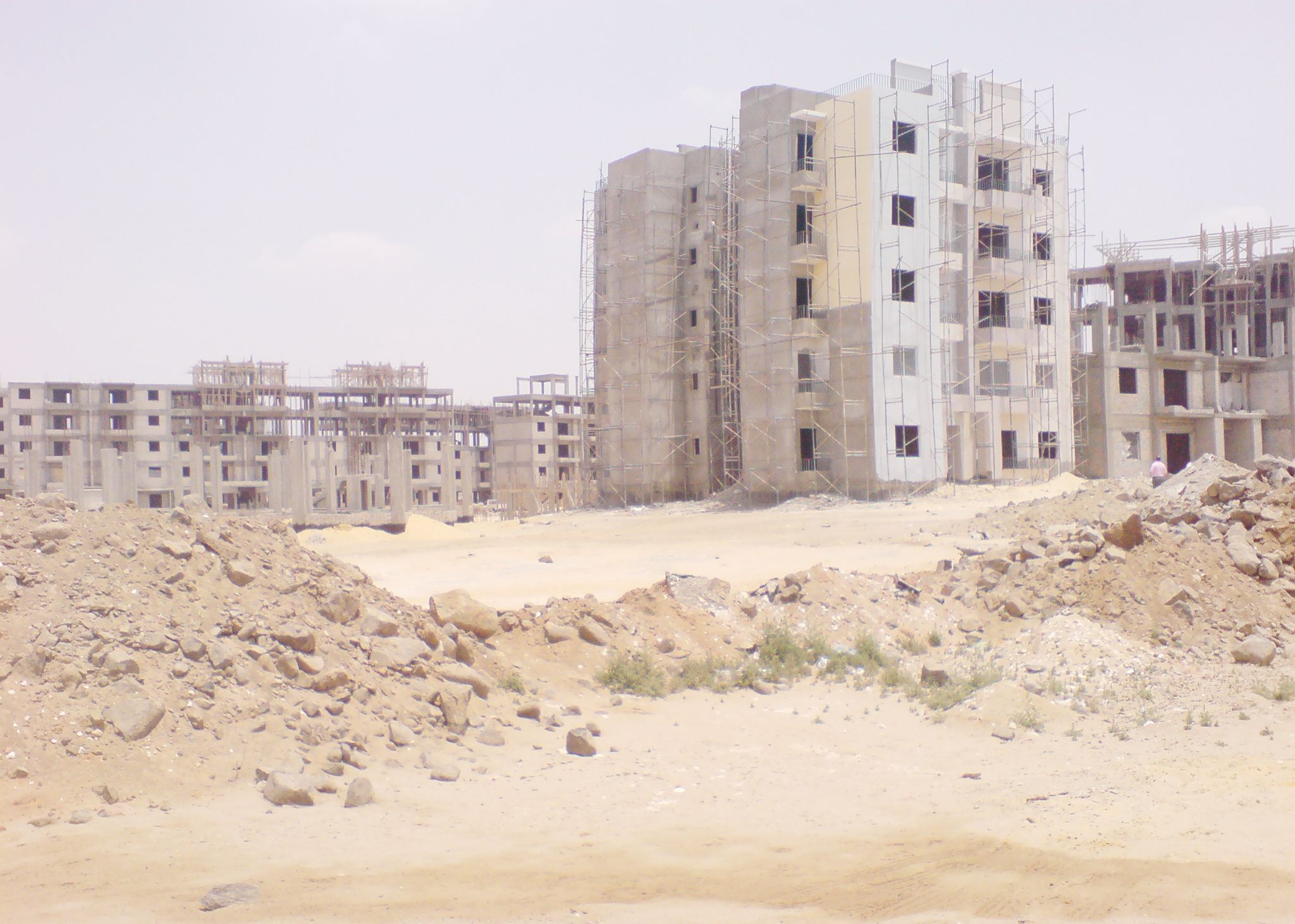
After weathering the revolution, Egypt’s real estate sector slows
For generations, Egyptians have prized real estate as the country’s safest and most desirable investment. Prospective brides often demand their suitors own a home rather than rent, parents try to secure apartments during their sons’ early teenage years and families use their disposable cash to extend their buildings ever upwards.
Even as the economy as a whole suffered during the tumultuous years since the revolution, the real estate sector remained solid. In fact, the sector benefited from trouble in other parts of the economy. As people shied away from the stock market and worried about the pound losing value, they looked to convert their cash to hard assets like bricks and mortar.
According to figures compiled by Pharos Research, prices in the sector have seen double digit annual increases since 2011. In 2014 alone, prices per square meter rose by as much as 50 percent.
Confidence in real estate's inevitable rise was shaken in 2015. In contrast to the heated post-revolution years, prices have risen by just 5-10 percent so far in 2015, barely keeping pace with inflation.
Real estate has also taken a beating on the stock market. Property developer Emaar Misr’s July Initial Public Offering proved to be a disappointment. Shares were offered at a reduced price, which slid further in trading, leading the firm to offer shareholders a buy-back to stabilize prices. Stocks for major real estate companies, like Amer Group, Talaat Moustafa, Palm Hills and SODIC, are also trading below their estimated fair value.
This has led to questions about the viability of the sector, and whether the market is finally saturated and has entered a period of stagnation.
Mohamed Abu Basha, an economist at investment bank EFG-Hermes, says Egypt’s real estate is still in good shape. “The population keeps increasing and investing in real estate. It's still a good way to protect your money from the high inflation rates, especially compared to banks, so the market's fundamentals are still fine," he explains.
"I don't think the sector is facing a problem. What is happening is fine, and there are always periods when markets cool down," he adds.
Hany Genena, head of research at Pharos Holding, agrees that the sector is still fundamentally healthy. “People always have reasons to buy in areas like 6th of October City and new compounds in general. They are a good investment and prices are always increasing,” he says.
In a time of economic uncertainty, the way real estate is sold also helps keep the sector attractive, Genena says. “Developers sell units themselves, and not through banks, therefore customers are not under the legal pressure that comes when they can’t repay bank loans,” he explains. Under Egypt’s strict bankruptcy laws, borrowers who face unexpected cash-flow problems and default on bank loans can wind up in prison. Buying directly from developers eliminates that risk. “The worst that can happen is that they will take back the unit when you don’t pay installments for a few months, and after it’s re-sold they will give you back the money you already paid, so the fear of going to jail does not exist” he explains.
Despite their overall optimism, both Genena and Abu Basha say the sector faces real challenges.
“Despite the fact that the market is pretty strong, you can’t say it is fortified against stagnation periods. In 2002-2003 the market went through a heavy stagnation period, and many companies were near broke. Overall there is a sense of volatility, but you can say that the market now is stable” Genena says.
If anything, the real estate market has been a victim of its own success, with overheated pricing outpacing what buyers can afford.
After shooting up in 2014, prices have softened. “This happened due to two reasons: the prices of square meters and properties as a whole increased dramatically in 2014, and the affordability matrix started deteriorating. The average price for square meters was LE3,000-4,000 before the revolution, and now reaches up to LE9,000-10,000,” Genena says. “The private sector focuses on a certain income bracket, and most of the people with this income level already bought units in the last few years, and are up to their noses in installments” he explains.
"Every once in a while there is a problem in affordability, this is the trend. Companies try to solve this by constructing smaller units and selling them for lower prices, or by trying to extend payment periods, to be five or six years instead of two or three," Abu Basha adds.
In what was considered by Pharos Research to be one of the signs that the market is facing dwindling demand, Emaar Misr has already started marketing payment schedules that extend for up to seven years. Experts are expecting other major companies to follow suit, in what analysts at Pharos consider evidence that “consumers’ purchasing power is no longer capable of absorbing new launches, as has been the case over the past three years.”
One of the major problems is that the private sector — which is responsible for around 95 percent of real estate investment — focuses on the richest 20 percent of Egyptians. Most new projects are based in satellite cities, like the 5th Settlement and 6th of October City, in the shape of closed compounds with prices starting from two million and up. Another popular area is the North Coast, where units, which are primarily marketed as vacation homes, have prices in the same range. This leaves the vast majority of Egyptians facing a huge housing problem that private developers seem unable to tackle.
“The private sector cannot invest in projects targeting lower income groups, since it is not beneficial, and the prices won’t cover the costs well. This is the case all around the world not just in Egypt,” Genena says.
He believes that for the private sector to be able to start investing in other areas and targeting other groups of Egyptians in a way that helps to solve the housing problem, the government needs to help with financing. “Subsidies on materials should be offered, alongside mortgage loans and so on. The government has made some efforts to help. The auctions held by the Housing and Development Bank are an example,” Genena adds.
Other governments in the region have been able to launch similar programs. "Morocco had a very successful experience in budget housing with the help of the private sector. The government provided incentives, focused tax cuts and decreased land prices. The government also worked on helping buyers with financing," Abu Basha says.
However, according to a paper published by the Egyptian Initiative for Personal Rights in 2014, government efforts attempting to solve the problem through megaprojects like Iskan Mubarak and the Million Units Project, with around LE33 billion spent on both, were not very efficient, and ended up benefiting high and middle income brackets. Meanwhile, the poor still struggle to find homes, with many living in informal areas surrounding Cairo.
Abu Basha says the government has made some efforts to cooperate with the private sector, but they are scattered and can at times hinder progress. He points to the example of Haram City, a budget housing project constructed by Orascom Development. The project was going well initially, he says, but faced problems from the government when they tried to expand.
Others in the sector point to additional barriers to further growth. During the Euromoney conference in September, many participants argued that the government needs to enable growth through suitable infrastructure in the new cities. Problems with water, electricity and roads have led to some new cities, like El-Shorouk, turning into ghost towns, despite billions spent on developing them, they said.
For its part, the government is expecting the sector to grow by 6.3 percent in the current fiscal year, contributing 13.8 percent to overall economic growth.
It may not be so simple. Genena believes the current period of “soft growth” will extend into 2016. Whether it will ease in 2017 depends on macroeconomic conditions in the country, and whether income levels will increase in the coming two years.

Shahd Essam
An economics student with a passion for writing and researching, Shahd started her career in journalism shortly after her 19th birthday at Business Today Egypt magazine, where she focused on…
تقارير ذات صلة
Floods hit Zarayeb garbage collectors the hardest
"It’s difficult to calculate the number of families ... we receive survivors every 5 minutes."
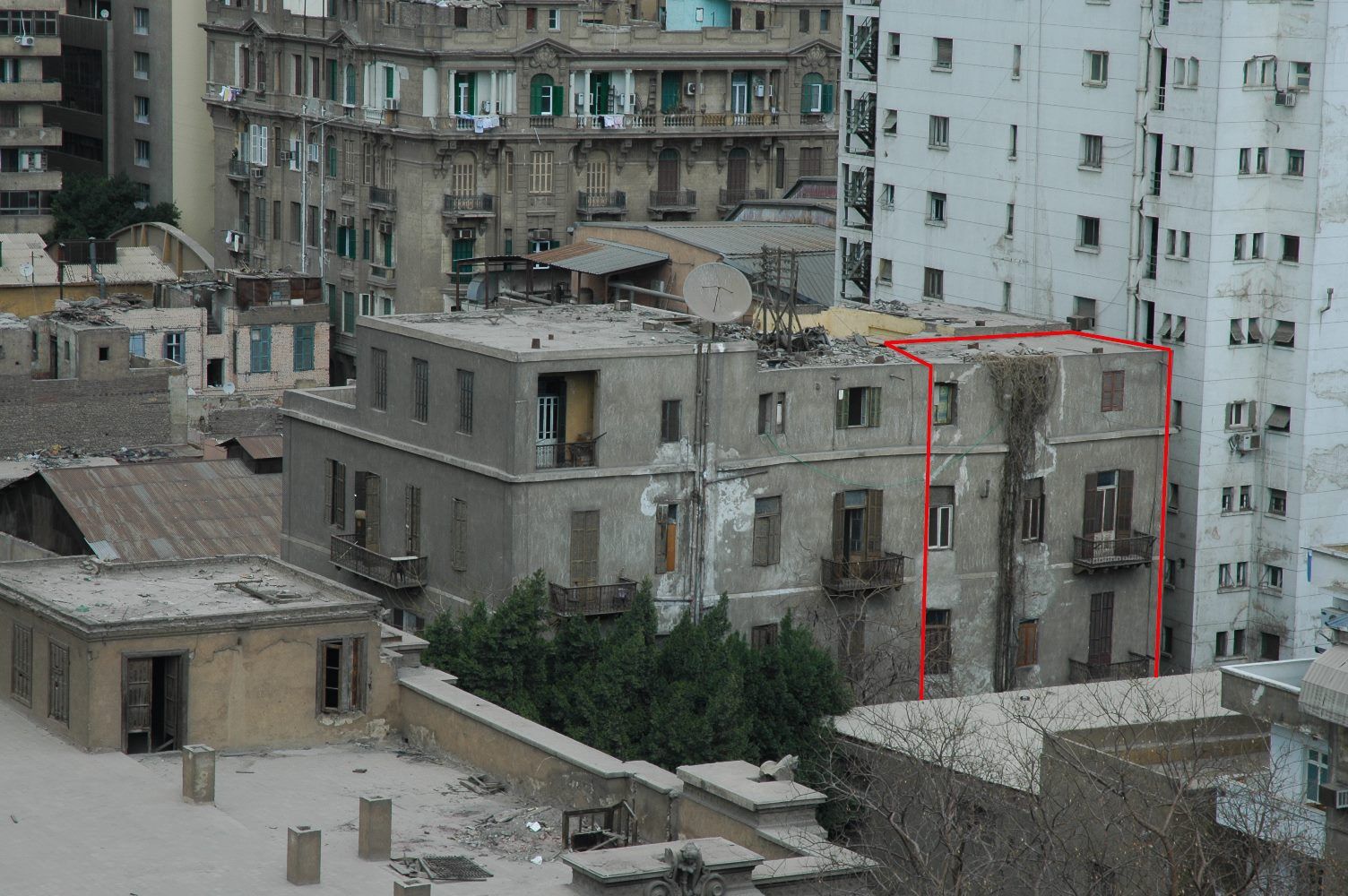
10 Nabrawy Street, in danger again, points to web of interests behind demolitions
Why are so many owners of historic buildings in Egypt eager to let their buildings fall? Rowan El Shimi investigates.
Ministry announces more plans to solve Egypt’s urban housing crises
Egyptian Housing Minister Mostafa Madbuly announced on Sunday that the government will invest LE10 billion to “develop 248 slum areas across Egypt by 2018.” Priority will be given to “first-…
Your support is the only way to ensure independent, progressive journalism survives.
You have a right to access accurate information, be stimulated by innovative and nuanced reporting, and be moved by compelling storytelling. Subscribe now to become part of the growing community of members who help us maintain our editorial independence.
Join us