
A short errand among ‘yes’ voters
On the way to a Heliopolis polling station, a neighbor waves, “are you going to vote?” Before waiting for an answer, he quickly adds, half menacingly, half jokingly, “don’t you dare say no!”
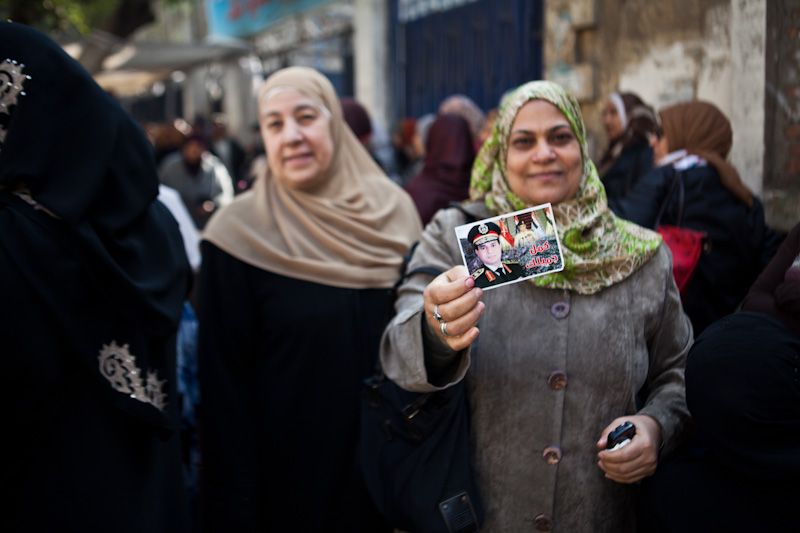
At the polling station, there is a long line of men waiting to cast their ballots, albeit shorter than the lines during previous polls. A few of them, keen voters, waive a flag, which sporadically covers the faces of others in line. They grimace, before regaining their enthusiasm for the civic act of voting.
A medley of "Tisslam al-Ayadi" (Bless your hands) is playing in the background; the popular ode to the military, in support of Egypt’s latest roadmap, the first step of which is seen as the passing of this constitution. It’s playing from a number of sources — phones, ring tones, loudspeakers erected on cars; the soundtrack to the referendum.
There is a similar atmosphere at another female-only polling station in Heliopolis; flags, Tislam al-Ayadi, lines not too long and not too short. But, a vivid addition is the ululation uttered by two middle-aged women on their way out of the polling station.
“I am happy,” said Tahani Ahmad al-Shazly, “I feel safe.”
She praised Head of the Armed Forces Abdel Fattah al-Sisi, “May God protect you, Sisi. We would die for you.”
Asked whether she had read the constitution or not, she said, “I haven’t, but I would blindly trust anything involving Amr Moussa. Egypt is bracing itself for an opening,” before sending out another ululation to the amusement and pleasure of onlookers.
Moussa, her trusted man, is the head of the 50-member committee, tasked with writing the draft. He is also a former diplomat and was an official in the Hosni Mubarak regime.
She is not the only one who hasn’t read the draft, with voting predictably becoming an act of support for the military, rather than one of acquiescence to the constitution.
“It’s a constitution of trust,” said Zeinab Zakaria, 45. She had just voted at a polling station in Nasr City, about a kilometer away from the Rabea al-Adaweya mosque, a site of forgotten bloodshed not so long ago. There, in August 2013, a sit-in of Muslim Brotherhood supporters objecting to the forced ouster of President Mohamed Morsi was violently dispersed; hundreds died.
Zakaria said that she feels good; that Egypt is heading in the right direction, with the military stepping up to restore order, while democracy prevails. She coined the term, “military democracy,” to describe her desired ruling framework for Egypt, adding a new contribution to Egypt’s novel political dictionary.
Back in Heliopolis, Sofia Lotfy, 60, said she is voting out of hope. She also didn’t read the constitution, but trusts those who wrote it. The Christian housewife was one of many who worried when the Brotherhood took over. “But, I said, maybe the prisons they were in for years taught them to be human. I was wrong.”
For Ali Helal — the man who identified himself as former Mubarak regime man Ahmad Shafiq’s look alike — this phase reveals the Brotherhood as the true “third party.” The third party was always the invisible hand, blamed repeatedly by every ruling authority for any clashes between security forces and protesters. “They are the ones in Tahrir Square, those looting museums and those responsible for training thugs,” he said triumphantly, as though he had unearthed the big mystery of the Egyptian revolution.
Asked whether the sporadic threats of sabotaging the polls made her think twice about going to vote, Mona al-Wakeel, a businesswoman, said not for a second. “Nothing scares us anymore. The Islamists have turned us into feda2yeen.” The word, which literally translates as “a man who makes a sacrifice,” has been closely associated with Palestinian resistance against Israel. Although, some anti-Palestinian sentiments have also been looming among those who support the military-sponsored crackdown on the Muslim Brotherhood, out of a belief that the latter coordinated a plot to take over Egypt with their Palestinians allies.
“They should go back underground, from where they originally came,” she stressed.
“This country needs someone strong but also someone who loves us. Maybe an iron fist doesn't matter as much as love does,” Lofty adds.
The reporter didn’t find any “no” voters, but didn’t try very hard to find them.

تقارير ذات صلة
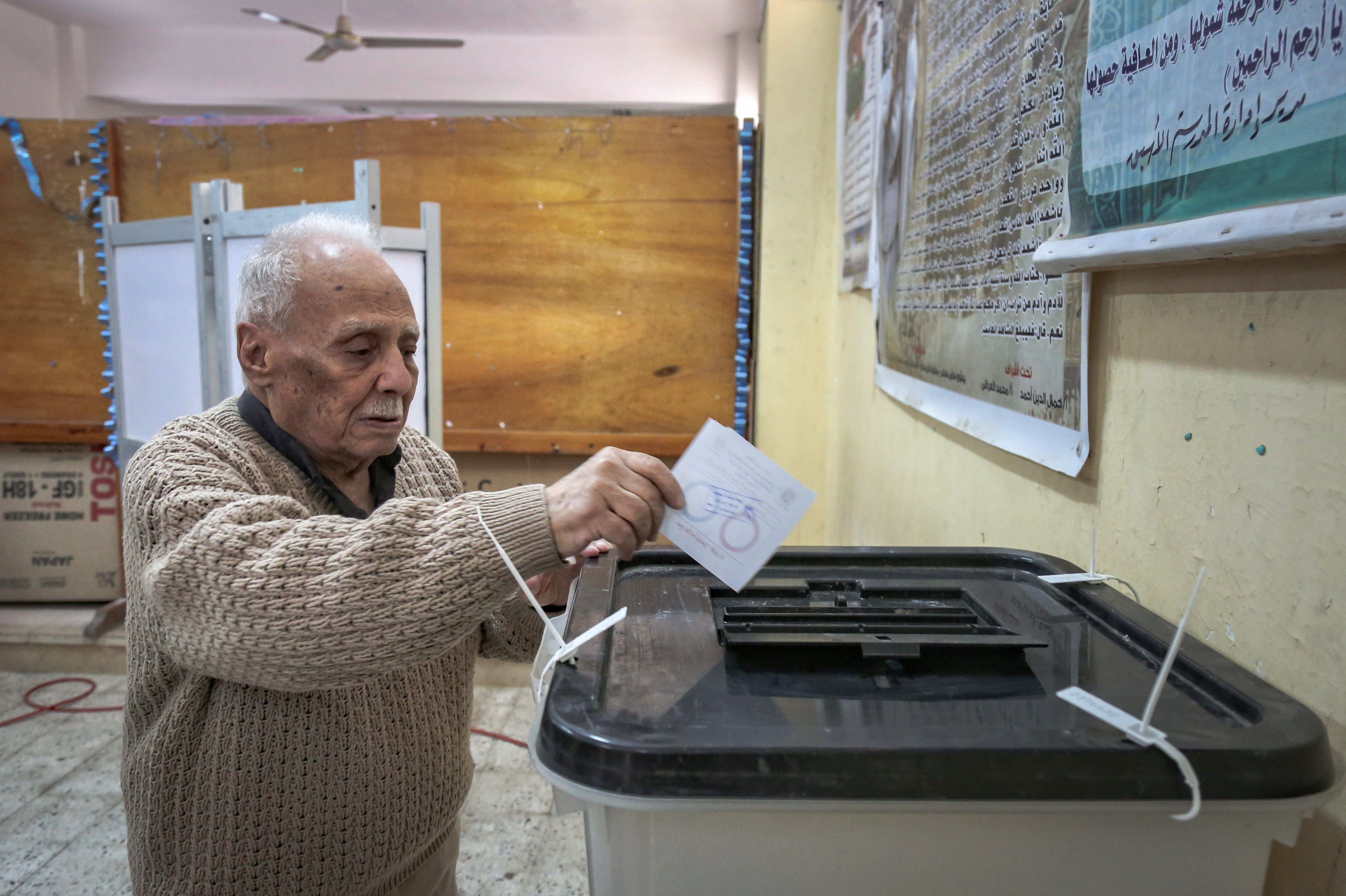
Voting in the dark: Ramming the constitutional amendments through
“What difference does it make what [voters] know or don’t know?” says one parliamentary source.
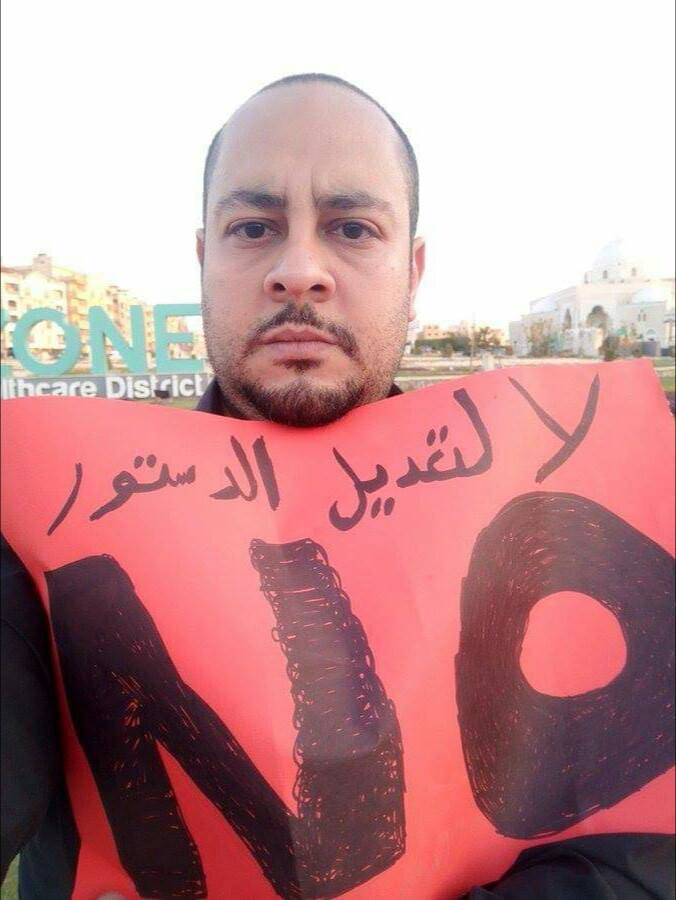
Ballot-box politics: What has pushed Egypt’s opposition to vote ‘no’?
Unlike in previous votes, more opposition members are calling for a 'no' vote than for a boycott.
A disintegrating coalition: Rifts re-emerge after Dostour Party’s default leadership election
Rifts have re-emerged within the Dostour Party days after the default election of Khaled Dawoud as party president
Your support is the only way to ensure independent, progressive journalism survives.
You have a right to access accurate information, be stimulated by innovative and nuanced reporting, and be moved by compelling storytelling. Subscribe now to become part of the growing community of members who help us maintain our editorial independence.
Join us