
A New Tradition of Care
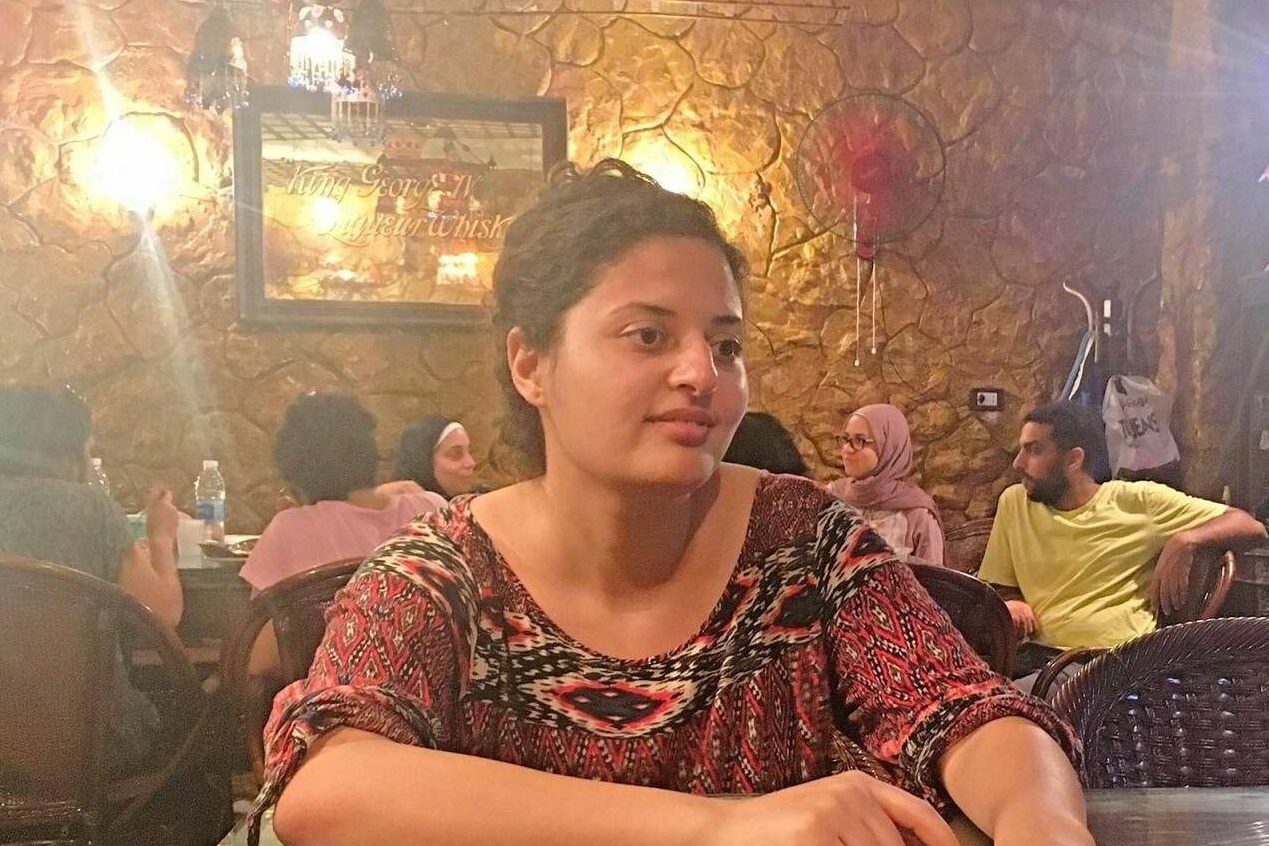
Editor’s note: The following correspondence, brief as it is and only in its incipient stages, was a way to try to suture the distance between two friends, colleagues, comrades. The first email was sent at the end of 2021 from Cairo and only followed by a response from Beirut shortly after Waad’s passing on March 25. We hope it sheds some light on the particulars of a political life as generous as hers.
From: Waad Ahmed <w*****@gmail.com>
To: Daniel O'Connell <d*****@gmail.com>
Dearest Daniel,
I have been thinking for a while now, wouldn't it be nice if we start a new tradition of care to send letters (i.e. e-mails) to each other?
I finally decided to take the initiative and see how you feel about this when I was reading a text by Walter Benjamin for class. In the text, called "Illuminations" in a chapter called "Theses on the Philosophy of History," I came across this:
“A Klee painting named "Angelus Novus" shows an angel looking as though he is about to move away from something he is fixedly contemplating. His eyes are staring, his mouth is open, his wings are spread. This is how one pictures the angel of history. His face is turned toward the past. Where we perceive a chain of events, he sees one single catastrophe which keeps piling wreckage upon wreckage and hurls it in front of his feet. The angel would like to stay, awaken the dead, and make whole what has been smashed. But a storm is blowing from Paradise; it has got caught in his wings with such violence that the angel can no longer close them. This storm irresistibly propels him into the future to which his back is turned, while the pile of debris before him grows skyward. This storm is what we call progress.”
I read this and my heart stopped.
It is interesting how just three weeks into the program I have come with a revelation. I have been stuck in 2011 for the past decade. I was not fully aware of it until I met my colleague in the Classic Social Thought class, she is studying Economics and Development and she is taking this class as an elective. She stopped us in the middle of the class and looked around. There were only three other students including me. The other two were her age 21, just beginning their MA right after graduating from their BA. The other two who are majoring in anthropology are "revolutionary" anti so many things and above all very young. The Development student said: Wait a minute, does everyone in here actually believe that the revolution actually happened? Do you actually believe there was such a thing? Of course, it was a question that was meant to be dismissive rather than one that sought an answer. The professor, Hanan Sabea, also a 60 years old revolutionary from "the circles" was patient and tried to discuss the matter with her. I only mentioned once in the middle that I am actually older and I was there. Then the Development student aggressively dismissed the revolution suggesting it to be a conspiracy and asserted so firmly that she is certain everyone who died would not have done it with what we know now (i.e. it was a conspiracy). At this moment, I jokingly said trigger warnings would have been nice then left the class, went to the toilet and cried. And that was how it suddenly hit me, the world has moved on and I am still haunted by the ghosts of what happened, what did not happen, what could have happened and the lost sense of self.
I spoke to two of my close friends about this, Maha, and Nada Riyadh. They both shared similar feelings though articulated differently. It seems the event was overshadowing any possibility of developing a sense of self in relation to the world without it being integrally about that "moment." And it seems this is a time when we are all, the lost souls, ten years later, and after more than a year of the world slowing down because of Covid-19, are awakening to this realization. Can we make sense of ourselves in separation from this "moment." For those who were there, can there be a life, an existence, being in the world that is not haunted by 2011? None of us had answers, maybe hopes to figure things out but that was it.
These reflections have also led me to question my current life trajectory. I have always sought to build stability and continuance for myself in Egypt (against all hardships and I say this sarcastically - laughing at myself now). Now I am seriously considering taking up research on informal labor elsewhere, maybe India or somewhere in Latin America (certainly a country in the global south).
Anyways, this is becoming an immensely long email, and I could go on much longer, but out of care I will stop here.
I hope to hear back from you and more of your thoughts and reflections, what you feel comfortable sharing.
Best wishes,
--
Waad R. Ahmed
Journalist
From: Daniel O'Connell <d*****@gmail.com>
To: Waad Ahmed <w*****@gmail.com>
Dearest Waad,
To write this here and now is to acknowledge that I did not write in the proper time. You urged me, as I waited for the right moment to take up your proposal to establish a New Tradition of Care away from all the daily stresses of my life, to take my time. You reassured me that this was an exercise, this email correspondence, in finding our own pace. I think of our unfinished chain of communication like the choreographed sway of grass in the wind that swept through my Beirut a few days ago. For me, the grass's dance was emblematic of that feeling that I know we both longed for, that feeling of being moved not as an individual but as a whole, of not having to think about community so much as feeling it as a proprioceptive flicker of our emplotment in space, in time, in the political field. I did not think that our time was so short.
I feel that we have each been turning over in our own way a question that your beloved Matar asked in The Return (Do not be mad at me for I still have your copy sitting on my bookshelf in Cairo, a place now beyond my reach). I have distilled its essence: "How can we live away from places and people we love? Return and you will face the absence or the defacement of what you treasured. Never leave the homeland, for if you do, your connections to the source will be severed. What do you do when you cannot leave and cannot return?"
But you and I, we both know a homeland isn't a place per se -- we can always argue in a friendly spirit about Samir Amin and the efficacy of the national question vis a vis the situatedness of a national economy within the wider world economic hierarchy. What I mean to say is that, for you, the homeland seemed to be that "moment" over ten years ago now that you asked me about in our last exchange: "Can we make sense of ourselves in separation from this "moment." For those who were there, can there be a life, an existence, being in the world that is not haunted by 2011?"
I faltered in responding to your question, your entreaty to think along with. Imagining you having fled the class of Revolution Skeptics and sitting in the toilet sobbing to yourself, I could not truly feel what you felt faced with that denial of a focalizing truth.
But now, as my life increasingly unravels, here, in Beirut, where I write these words, unable to attend your funeral because of the callousness of a political system that has barred me from ever entering Egypt, I think I finally feel what you mean. My homeland might be the summer of 2019 in Egypt, or perhaps a few months before, when we gathered in Alya's apartment for my birthday, before my life was severed, from those I love, from you, from Alya, from Omar, from what I consider to be my community. I do not know if I will ever be able to define myself away from that "moment," even if I know that, in order to survive, I must.
But, Waad, I say this to you as I say it to myself: the "moment" wasn't a time and space. It wasn't 2011 in Egypt, just as it isn't 2019 in Egypt for me. Yes, the disasters from those particular points in time are all around us. We have watched what was once a burning promise of a life fade into the dark night, becoming just a hazy dot. But you, better than most of us, found those hazy dots. Your eyes locked onto them, and they were your compass in moments where it would have been easy to turn away, to think only of self preservation.
I have thought about the life we chose to lead, about the choices that have hurt us so much, all the pain that I know we both felt. In the last weeks, I have been filled with regret. There was nothing I wished for more than to have opted for a less contentious life, where the losses wouldn't have been so steep. Maybe I still wish that, for me, for you, knowing that we wouldn't be lost souls haunted by some distant sense of wholeness. Maybe I wish for it now more than ever, because I know it means that you'd still be with us, that we could go for a walk in Maadi together. After you've brunched with Randa, we could have a coffee. But I also know that, even as I cry while writing this email to you that you will not read, to have opted for something otherwise would have changed you, made you something other than the deeply compassionate friend and comrade I loved. Yes, disaster was nigh. Sometimes it engulfed us, broke us. But I would like to think we had a choice to show care in the face of the structural conditions that always tell you what is possible in advance.
I wish I could tell you a million and one things in the phone call we were supposed to have had in the past few days. But most of all I want to say that I love you and I am so sad that the overflowing care you had for everyone was so dangerous.
Perhaps, now, I too must imagine leaving to take up research into informal labor in an elsewhere you once dreamed of. Should it be India? Somewhere in Latin America? Should it be a place where we can laugh and think together (certainly somewhere in the Global South)? What were you planning before you departed? I want to know.
I will end as you ended: "I hope to hear back from you and more of your thoughts and reflections, what you feel comfortable sharing."
Write back soon,
Daniel.


Waad Ahmed
Waad holds a degree in economics and management from the University of London's International Programmes. She also attended the Arab Academy for Science, Technology and Maritime transport in Alexandria. Waad…
تقارير ذات صلة

Saif al-Islam: The death of a myth
Saif al-Islam Qadhafi, from power’s pinnacle to Zintan’s mountains and the shadows of myth

linuxawy: Let’s free the world
To see the moment it all began, you have to get in a time machine, back to a now defunct blog
Hossam Shabat’s last article
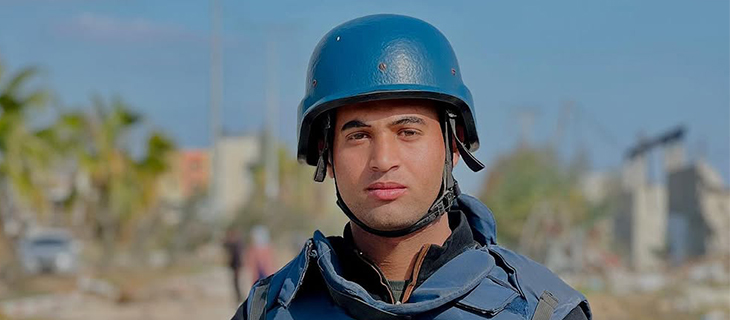
Hours before he was killed in an Israeli airstrike targeting his car, journalist Hossam Shabat wrote about Israel's resumption of its scorched earth policy in Beit Hanoun, his hometown. This…
Your support is the only way to ensure independent, progressive journalism survives.
You have a right to access accurate information, be stimulated by innovative and nuanced reporting, and be moved by compelling storytelling. Subscribe now to become part of the growing community of members who help us maintain our editorial independence.
Join us