
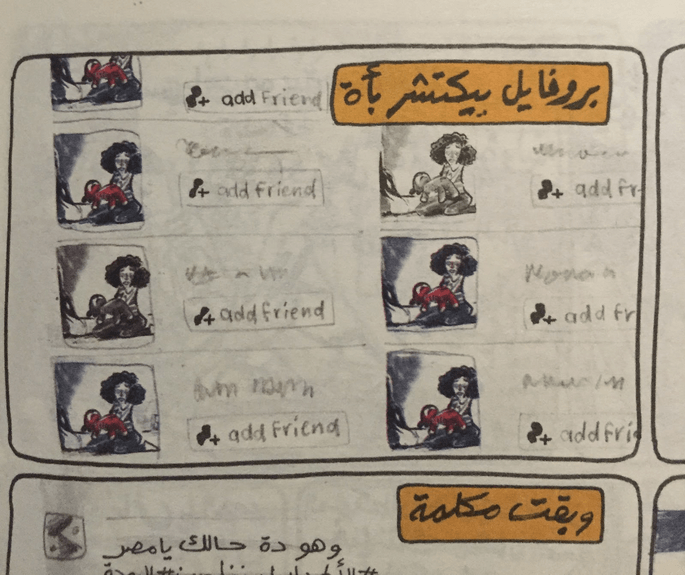
A handful of glitter: A new comic masterpiece from Tok Tok
Quarterly comics magazine Tok Tok celebrated the launch of its thirteenth issue on February 14. Two years after it began in January 2011, it rewarded its audience with a color issue.
Since the start, Tok Tok's most obvious feature has been smart manoeuvres around local production challenges. Even though it's mostly been printed in black and white, it has a high level of attention to detail and print quality.
Tok Tok has explored the challenges in a publishing market that is incoherent and risky, despite its grand size and history. It has also adventurously probed potential horizons for comics talents in a society that has a very specific, complicated relationship with visual arts in general.
When the publication started in 2011, in the midst of a growing taste for independent arts, it was self-funded and its artistic content revolved around the styles and tastes of the founders — Shennawy, Makhlouf, Hicham Rahmah, Tawfik and myself. (Starting with the next issue, it will be self-funded again after the expiry of a European Union grant.)
A spontaneous harmony existed between the group, maybe because most of us worked together as cartoonists in newspapers such as Al-Masry Al-Youm and Al-Dostour, or maybe because of similar influences. Obvious attempts to seek inspiration from 1960s cartoonists showed in the drawing styles as well as story types and interests. The first issue featured a drawn adaptation of a story by Ibrahim Aslan, which established a connection between the publication and a literary heritage that it tried to mix with an aspiration for modernity.
Yet there was also an obvious investment in bringing in experiments that were far from the concerns and styles of the core group, experiments that sometimes felt divergent or didn’t perfectly sync but always created an interesting feel.
The bigger challenge at the time was talent, finding people who were interested in experimenting in a field like comics in Egypt — one that is not considered very financially rewarding and not even an art with long roots in local consumption. In the beginning the horizon seemed dark but since then, though not much time has passed, the scene is now brimming with new fanatics, people pumping new blood and taste and influences into it, making it grow faster than expected.
February’s special color edition features works by artists such as Hagrasy, Migo, Mohamed Ali, Ahmad Saad and Mohamed Salah. All are very fresh additions who are moving Tok Tok in more diverse directions and helping deliver it to different types of comics-hungry readers and find a solid place for itself on the reading shelf.
The issue — which has love as a main theme — opens with my favorite work: A beautiful story written and drawn by Mohamed Salah, titled A Handful of Glitter.
Salah has contributed to Tok Tok before with a series called The Tens of this Century, in which he comments on scenes from young Egyptians’ life in the current decade, as the title suggests. In the penultimate page of each issue, in every episode he told the struggle of two young men trying to live “properly.” The series makes fun of their miserable attempts to get on the globally accepted civilization bus through very shallow examples of social communication or bids for recognition or attention. The series’ humor is very dark and it contrasts the low-saturated colors of a somber city like Cairo with unconvincing, uncomfortably bright colors that precisely reflect a fake, ideal realm that these young people are trying to achieve.

In A Handful of Glitter, Salah explores the miserable relationship between an artificial fun and lazy, chagrined stoicism through a classic plot that sinks into deliberate tackiness. We follow a grumpy police officer investigating a mysterious crime that has dazzled Egyptian society. Salah flies over the city to perform an epic documentation of a bored place hysterically reacting to a nothing. He makes fun of all the feelings that are being cheesily pretended. The police officer’s fragile seriousness is put at risk when he has to investigate something that is for him a joke, and by the collective bubbly reactions from a society that feels oppressed and threatened.

The script doesn’t fall into the naive trap of self-indulgences, nor waste its time with superficial originality or humor. Salah has clearly made an effort to tighten the story’s structure, controlling its pace and the expected classical climax, which makes the jokes funnier and integrates them well into the story. A comically verbalized sentence from an ordinary soldier from the countryside which giving his opinion about the crime gets used later in a classy way. In my opinion this is an obvious example of the difference between comedy and clowning, with all due respect to both.
Drawing wise, Salah tells the story very clearly. The controlled frame sizes and cinematic compositions unerringly keep the classic epic mode one expects from a noir story such as this. The lines loosen up and leak through the frames confidently with accidental brush strokes that suit the comicness of the whole thing, reflecting Salah’s own mocking of the story and its main character’s need to take himself seriously.
The use of colors is very economic and symbolic in a way that suits the nature of the story and even the nature of the publication. One would expect an artist drawing a color story for a publication that usually prints in black and white to dip the pages in every possible color as much as possible, but Salah actually leaves most of the initial pencil sketches in a very rough state and introduces colors only very calmly. That makes the transition from black-and-white to colors feel mature and meaningful.

The existence of this story in Tok Tok makes me feel — as one of the people who founded this project, and is not ashamed of writing such a celebratory article of it! — hopeful about Tok Tok’s maturity and excited about the future of comics in Egypt and about Mohamed Salah’s next comic story.

Andeel
Andeel was born in Kafr al-Sheikh in 1986. His uncle told him that his paternal grandfather was a filmmaker who made a feature film called “Horses,” which he took to…
تقارير ذات صلة
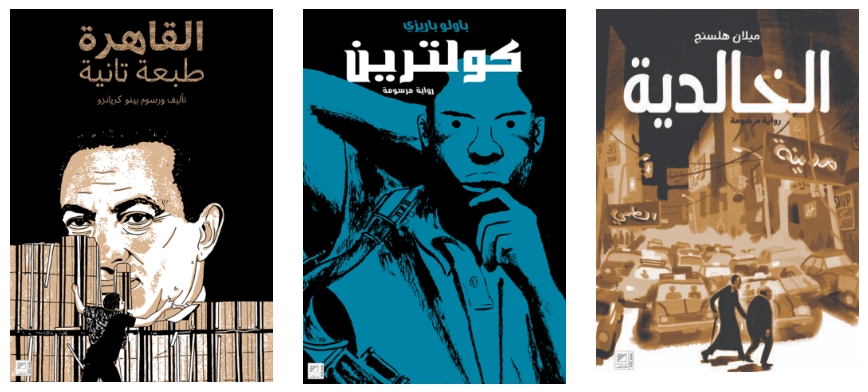
Cairo, Coltrane and a fictional village
Three newly translated graphic novels
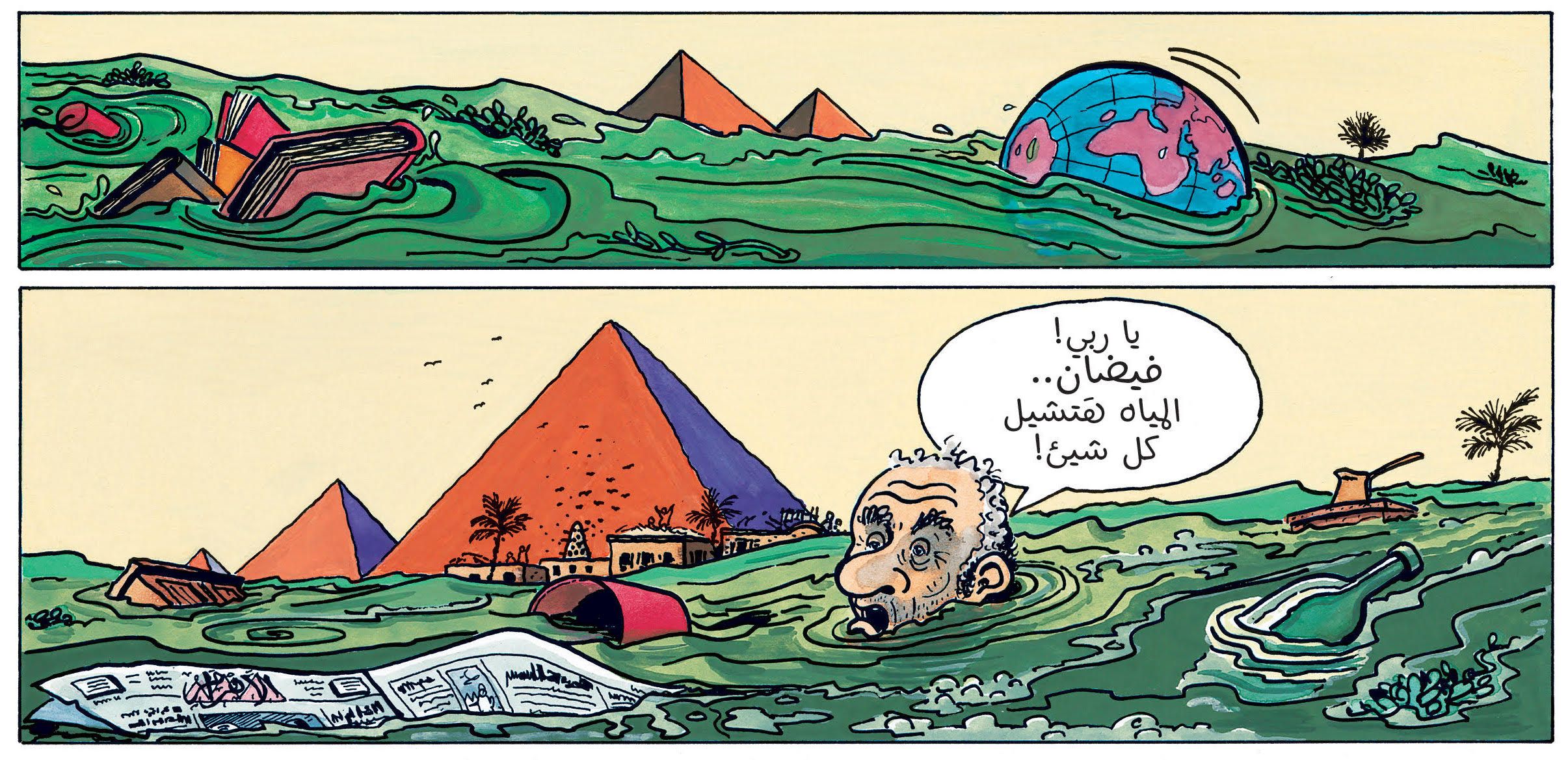
New Arabic translation gives Golo’s adaptation of Albert Cossery’s Proud Beggars more layers of life
Sherif Abdel Samad looks at the new Arabic translation of Golo’s and Albert Cossery’s Proud Beggars
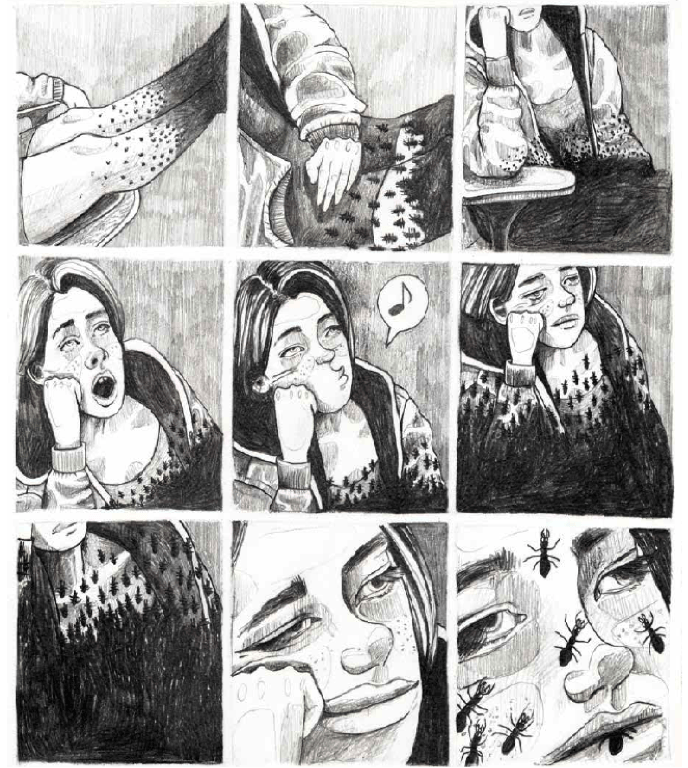
From Egypt to Colombia: On the content of comics
Sara Ahmed Abdel Aziz compares the comics scene in Columbia in Egypt, and discusses why all comic-making is political.
Your support is the only way to ensure independent, progressive journalism survives.
You have a right to access accurate information, be stimulated by innovative and nuanced reporting, and be moved by compelling storytelling. Subscribe now to become part of the growing community of members who help us maintain our editorial independence.
Join us